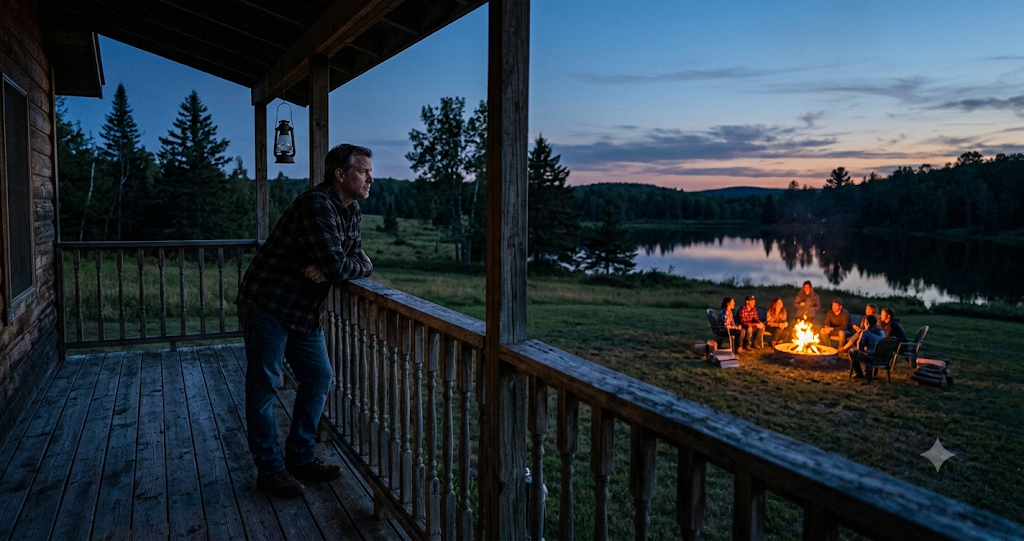

Some fights aren’t mine to win. But my peace isn’t up for negotiation either.
For the past few weeks, something strange keeps happening.
I’ll spend the entire week sitting with a situation, praying over it, turning it around in my head, and trying to figure out how to handle it right. Then Sunday morning comes, and the sermon lands right on top of it.
Not close. Dead on.
It’s the same Scripture I’d already been reading and the same struggle I hadn’t told a soul about. Somehow, the question I’ve been carrying all week gets answered from the pulpit before I even know how to ask it.
I don’t think that’s coincidence anymore.
I think God knows exactly what I’m carrying, and He keeps meeting me where I am.
Because lately, protecting your peace has become the fight I didn’t know I’d have to have.
Because lately, I’ve been carrying a lot.
I’m learning that protecting your peace as a Christian doesn’t mean walking away from people. It means refusing to let someone else’s choices pull you away from who God is calling you to be.
More Than One Fight at Once
I won’t get into the details. Some of this isn’t mine to tell, and people deserve their privacy even when their choices affect more than just themselves.
But here’s what I can say.
There are people I love making decisions that don’t match the faith they say they believe in.
When those choices start affecting family, it gets harder to sit still and watch. It gets even harder when the people getting hurt didn’t choose any of it.
Jesus gave us a process for addressing wrongdoing in Matthew 18:15–17. You go to the person privately first. If that doesn’t work, you bring one or two others.
I’ve tried to handle things the way Scripture says to handle them.
However, Scripture doesn’t promise the conversation will end the way you hoped. It gives you responsibility for your approach, but it doesn’t give you control over somebody else’s response.
That’s a harder truth than I wanted it to be.
Some of what I’m dealing with doesn’t have a clean ending in sight. Honestly, it may get worse before it gets better.
And I’m having to accept that I can’t force someone else to recognize what they refuse to see.
The Anger That Almost Took Over
There’s a particular kind of anger that shows up when you’re trying to do things right while somebody else keeps doing things wrong. It gets worse when they seem to walk away without consequences.
You know what happened. They know what happened. Meanwhile, other people are carrying the fallout.
Somehow, you’re the one left wondering whether speaking up made you the problem.
That almost got the best of me this past weekend.
Not in some dramatic, movie-scene kind of way. Just close enough that I noticed what was happening inside me, and close enough that it bothered me.
Ephesians 4:26 tells us not to sin by letting anger control us. It doesn’t say anger never shows up. It says anger doesn’t get to take the wheel.
I felt it. Honestly, I still feel some of it.
But I don’t want somebody else’s choices to turn me into a version of myself I’ve worked too hard to leave behind.
The enemy doesn’t need me to abandon my faith. He just needs me to lose my peace long enough to act like I forgot who I belong to.
Stepping Back Without Walking Away
So here’s where I’ve landed.
I’m stepping back.
That doesn’t mean I stopped caring. If anything, I probably care too much sometimes.
However, caring about someone doesn’t mean I have to let their choices dictate the atmosphere in my home. It doesn’t mean every problem becomes my responsibility, either.
And it definitely doesn’t mean I have to keep inserting myself into situations where I’ve already said what needed to be said.
I’ve written before about the weight you don’t put down and how easy it is to carry responsibilities that were never fully yours to hold. This situation has forced me to face that same lesson again.
There’s a difference between loving someone and giving dysfunction unlimited access to your life.
I can pray for people without chasing them. I can care about what happens without trying to control it.
Most importantly, I can leave the door open for reconciliation without leaving my peace exposed to whatever walks through it.
That isn’t bitterness.
That’s a boundary.
Protecting your peace and cutting someone off aren’t the same thing, even though they can look alike from the outside.
Protecting Your Peace Starts at Home
God built rest into creation itself.
Genesis 2:2 tells us that after finishing His work, God rested. Later, Jesus reminded people that the Sabbath was made to meet people’s needs, not the other way around, in Mark 2:27.
Rest wasn’t an afterthought. It was part of the design.
Lately, I’ve realized how easily other people’s problems can steal the very time I’m supposed to spend being present with my family and with God.
Sunday is supposed to reset something in me.
It’s time for church, family, and breathing room. It’s a chance to hear God clearly without every unresolved situation demanding my attention.
Instead, I’ve let other people’s decisions follow me home.
I’ve replayed conversations in my head and carried tension into rooms that should have felt peaceful. The people closest to me ended up feeling the weight of situations they didn’t create.
I don’t want that anymore.
Sunday is for my family, my peace, and my God. But honestly, it can’t stop with Sunday.
My house needs to be a place where peace is protected all week long.
That doesn’t mean nobody struggles. It doesn’t mean difficult conversations never happen.
It means chaos doesn’t get an open invitation.
And if something threatens that peace, it doesn’t get unlimited access to my home.
This Isn’t Retreat. It’s Armor.
I’m not walking away from people.
I’m standing guard over what God has been building in me: a better marriage, a stronger relationship with my family, and a steadier faith.
I’m still growing. But I’m not willing to go backward just because somebody else refuses to move forward.
Ephesians 6:10–12 tells us to put on the full armor of God because our real fight isn’t against flesh and blood.
That matters here.
The fight isn’t against the people I love. It’s against everything trying to turn pain into bitterness, anger into sin, and someone else’s choices into chaos inside my home.
I don’t win that fight by proving I’m right. I don’t win it by getting the last word, either.
And I definitely don’t win it by bringing the battle home to my wife and family.
I fight by staying planted.
That means praying when I’d rather argue. It means keeping my mouth shut when another conversation won’t change anything. It also means leading my family with steadiness instead of letting frustration decide who I become.
Faith takes intention. As I wrote in You Don’t Drift Toward God, you don’t become stronger by accident.
Sometimes standing firm looks less like confrontation and more like refusing to be pulled into one.That’s what protecting your peace actually looks like most days — not a dramatic stand, just a quiet refusal to be pulled somewhere you know you shouldn’t go.
Some People Won’t Understand
Some people may read this and think I’m being too harsh. They might say I’m too distant or not patient enough.
They might even believe stepping back means I’ve stopped caring.
It doesn’t.
It means I finally understand there are things I can’t fix for someone else.
I can’t make someone tell the truth. I can’t make someone change. And I can’t make someone take responsibility for the damage their choices have caused.
I also can’t spend the rest of my life trying to manage outcomes that belong to God.
What’s true doesn’t need me chasing people down to prove it.
God can handle what I can’t.
That doesn’t mean I’m wishing anyone harm. It doesn’t mean I’m keeping score or waiting for somebody else to fail.
It means I’m willing to let God deal with hearts I can’t reach.
They’re still loved. They’re still prayed for.
But love doesn’t always mean closeness, and forgiveness doesn’t always mean the same level of access.
Sometimes the healthiest thing you can do is love someone from a distance while God works on what you can’t.
What’s Actually Mine to Carry
I don’t know how these situations end, and I don’t know when anything changes. I can’t promise things won’t get harder before they get better, either.
But I do know this.
I’m responsible for who I am while I wait.
I’m responsible for whether I stay steady or let somebody else’s choices pull me under. And I’m responsible for whether my home becomes a place of peace or a battlefield I carried through the front door.
What they do next is between them and God.
What I do next is between me and Him.
So I’m keeping my armor on. I’m keeping my focus where it belongs, and I’m protecting the peace God has helped me build.
I’m not backing down.
I’m standing guard.