
Trusting God When Overwhelmed With Fear, Pressure, and Responsibility
Nobody’s talking to me. Nothing’s on fire.
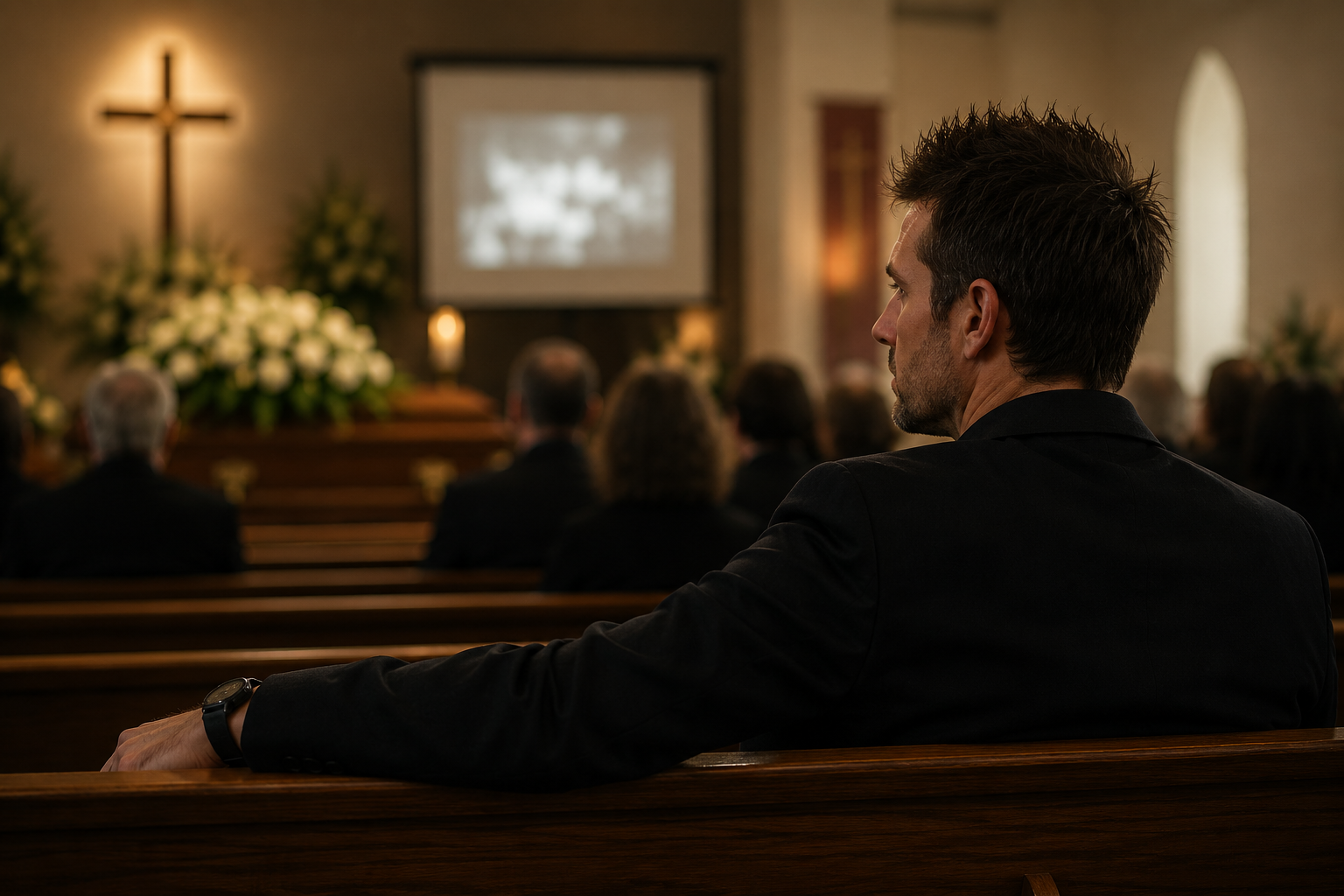
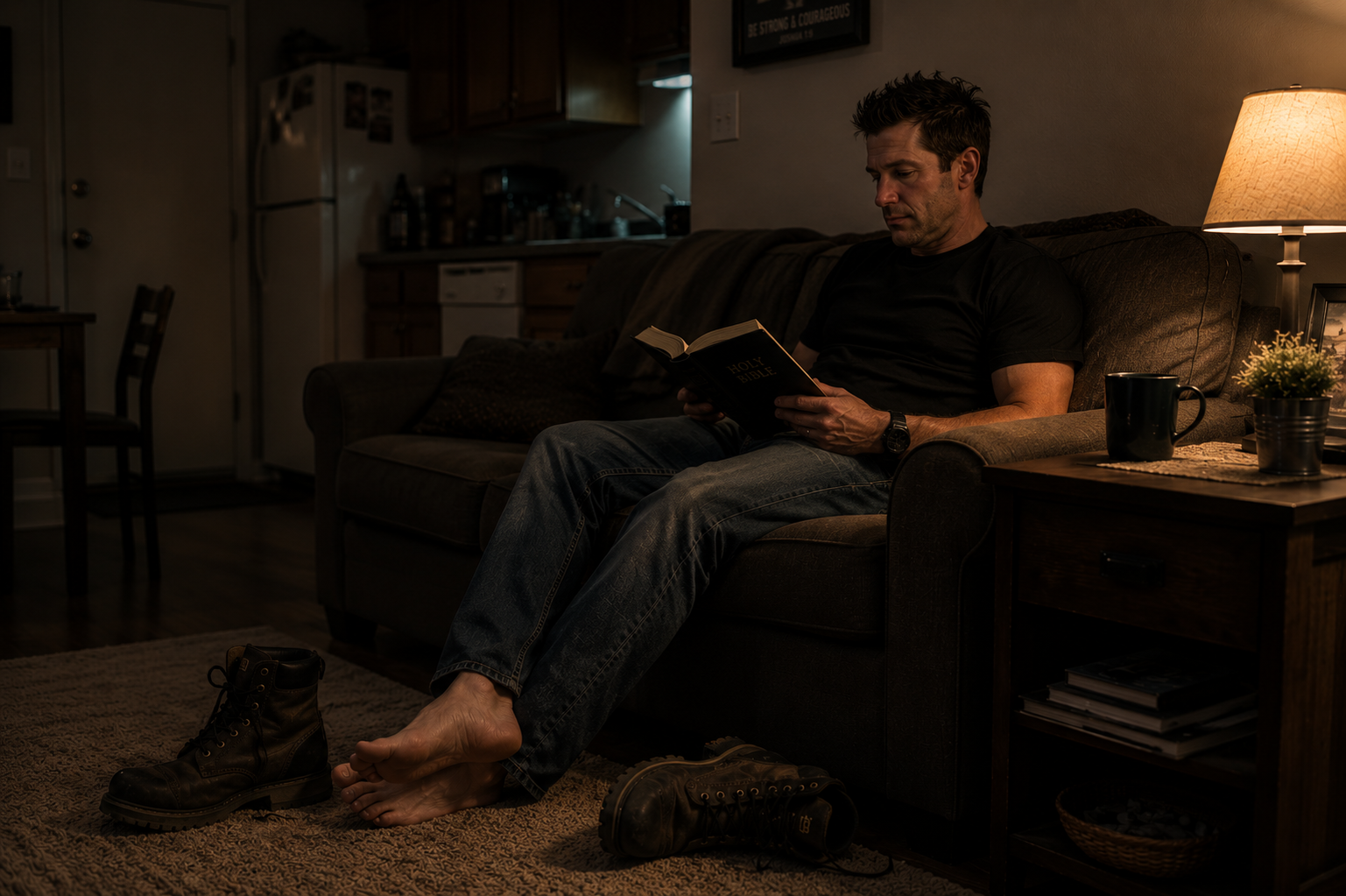
I’m just sitting in my chair in the living room, most nights this week, after work. And my mind won’t get the message that the day is over.
Bills.
A doctor’s appointment and an outcome sitting in the back of my mind — cardiology labs, and a CT scan coming up to make sure everything’s still okay after the Watchman implant and two ablations.
Something I took responsibility for that isn’t going the way I hoped.
Family stuff.
Work.
An “I told you so” I saw coming and couldn’t stop.
None of those things by itself is enough to explain how weighed down I feel. It’s all of it, at once. Whether I think it should bother me or not, it does. This is what it means to trust God when overwhelmed — when nothing around you has actually changed yet.
From the outside, I probably looked fine. I was getting things done. I wasn’t fine.
That’s the part nobody tells you about being the guy people depend on — the heaviest things you carry never actually make it into your hands. Nobody can see them. There’s no cast, no crutch, no obvious sign. Just you, sitting in a chair after a long day, doing the math on things that don’t have an answer yet.
You handle it. You take care of your family. You pay the bills. You solve the problem. You make the call. You show up. You keep moving. And if people depend on you, you don’t hand them your worries too. So you carry them.
Carrying It Alone
You can have faith in God and still feel every bit of that pressure. That’s something I think Christians sometimes have a hard time admitting — because we’re supposed to trust God, we’re supposed to pray, we’re supposed to give our worries to Him. And I believe all of that.
But I’ve prayed plenty of prayers where the problem was still waiting for me when I said amen. The bill was still due. The appointment still had to happen. The family situation was still unresolved.
Monday still shows up. It doesn’t care that you prayed on Sunday.
So what does trusting God actually look like when the weight doesn’t disappear?
I Thought Faith Meant the Weight Would Go Away
For a long time, part of me expected faith to work like this: I worry, I pray, I give it to God, I feel better, problem solved. That’s not what it looks like to trust God when overwhelmed. That’s what it looks like to trust a vending machine.
Sometimes God does give immediate peace. Sometimes circumstances change fast. But sometimes they don’t.
“Give all your worries and cares to God, for he cares about you.” — 1 Peter 5:7, NLT
Notice what that doesn’t promise. It doesn’t say every problem disappears. It doesn’t say the thing keeping you awake suddenly works itself out. It tells us what to do with the worry, and it reminds us who cares for the person carrying it.
That difference matters.
Maybe trusting God isn’t pretending something doesn’t bother me. Maybe it’s admitting that it does — and refusing to believe I have to carry it alone.
Rest Isn’t the Same as Removal
Jesus gives an invitation to people who are weary and carrying heavy burdens:
“Come to me, all of you who are weary and carry heavy burdens, and I will give you rest.” — Matthew 11:28, NLT
I’ve read that verse plenty of times. Lately I’ve been thinking about what He doesn’t say.
He doesn’t promise to erase every responsibility. He doesn’t promise we’ll never have another sleepless night. He doesn’t promise that following Him means nothing heavy will ever land on our shoulders again.
He promises Himself. He promises rest for people who are tired of trying to carry everything alone.
Rest isn’t always the removal of the weight. Sometimes it’s realizing you don’t have to hold every part of it by yourself — the same way I had to learn God doesn’t just hand you what you asked for, He changes what you’re even asking for in the first place.
I wrote about that shift here →
Responsibility and Control Aren’t the Same Thing
This might be the part I’m still learning the most.
There’s a difference between being responsible for something and believing I’m responsible for the outcome.
Those two things can feel exactly the same if I’m not careful.
I can be responsible for showing up. I can make the call. I can go to the appointment. I can have the hard conversation. I can work hard. I can manage the money the best I know how. I can pray. I can make the best decision I can with what I know.
Those things may be mine to carry.
But controlling exactly how everything turns out?
That’s where I start picking up weight God never handed me.
I start mentally running every possible outcome. What if this happens. What if that doesn’t work. What if I made the wrong call. What am I going to do six months from now if something that hasn’t even happened yet, happens.
Apparently my brain believes rehearsing disasters is a productive use of its free time.
It isn’t.
Worrying About People I Love
Some of that weight isn’t even about outcomes I could fix if I tried. It’s watching people I love making their own choices, in their own lives, and knowing they don’t want to hear from me about it — even when I can see where it’s headed.
That’s a particular kind of hard for a father.
You don’t stop caring just because they stopped asking. You don’t stop praying just because you don’t get a vote anymore.
So I’ve had to learn to pray differently.
Not “God, make them see it my way.”
Just “God, give them wisdom.”
Not control over their decisions — just peace that Someone bigger than me is already in the room with them, even when I’m not.
There are things I’m responsible for.
There are outcomes I’m responsible to trust God with.
Learning the difference between those two might be one of the hardest parts of faith. This is where I’m learning to trust God when overwhelmed by things I can’t fix — not by fixing them, but by handing them over.
How to Trust God When Overwhelmed (Even Without an Answer)
“Don’t worry about anything; instead, pray about everything… Then you will experience God’s peace, which exceeds anything we can understand.” — Philippians 4:6–7, NLT
I’ve always loved that passage. But notice the order.
It doesn’t say God explains everything and then you have peace. It doesn’t say the situation gets fixed and then peace arrives.
Sometimes the peace makes no sense, because nothing around you has changed yet.
That’s the kind of peace I need.
Not peace because I finally controlled the outcome.
Peace while the outcome is still God’s.
That’s much harder for somebody who likes fixing things. Give me a problem with a solution and I’m good. Give me something I can’t control and tell me to trust God with it — that’s where faith gets real. Learning to trust God when overwhelmed doesn’t mean the overwhelm disappears. It means you’re not carrying it by yourself anymore.
Even that upcoming CT scan I kept circling back to in the chair — it didn’t change one bit while I was worrying about it.
I’ve been through this before.
Stents back in 2008. A 99% blockage in the widow-maker artery that had me knocking on the door of a heart attack.
Now it’s AFib, the Watchman, the ablations, the regular checkups.
Praise God, I never had a heart attack. But I came close enough to know how quickly life can change, and I have a body that still needs watching.
Worrying about a scan doesn’t move the appointment up or change what they find.
It was never mine to control in the first place.
Some Things Have to Be Put Down More Than Once
Here’s another thing I’ve learned.
Sometimes I give something to God in prayer and pick it right back up twenty minutes later.
I don’t think I’m the only one.
I’ll pray about something in the morning. I’ll genuinely surrender it. Then sometime that afternoon, there I am, running the whole situation through my head again like God somehow misplaced the paperwork.
So I give it back.
Again.
And sometimes again.
Maybe surrender isn’t always one dramatic moment.
Maybe it’s a decision you keep making.
“Give your burdens to the Lord, and he will take care of you.” — Psalm 55:22, NLT
That’s something I need to remember when I catch myself reaching for the same weight again.
Put it down.
Do what you’re responsible for.
Then trust God with what you’re not.
You Don’t Have to Pretend It Isn’t Heavy
I don’t have a clean ending where I tell you I prayed one perfect prayer and none of this bothers me anymore.
Some of what I was thinking about in that chair is still unresolved.
There’s still a bill.
Still an appointment.
Still a family situation I wish I could fix.
What changed isn’t that I stopped caring.
It’s not the weight.
It’s realizing I was never supposed to be holding all of it.
I can carry responsibility without carrying the illusion of control.
I can care deeply without believing everything depends on me.
I can show up without having every answer.
I can admit something scares me and still trust God.
I can put something down tonight, knowing I may have to put it down again tomorrow.
Maybe that’s what surrender looks like in real life.
Not walking around pretending nothing is heavy.
Just finally understanding whose shoulders were meant to carry the parts that are too heavy for mine. If you’re trying to trust God when overwhelmed tonight, that’s enough. You don’t have to have it figured out.
You can be dependable without pretending you’re invincible.
Related reading: Continue with The Age My Father Never Got Past and Protecting Your Peace.
Keep Reading
Explore more articles about faith in hard times
A question to consider: What weight are you carrying today that you need to place back into God’s hands?