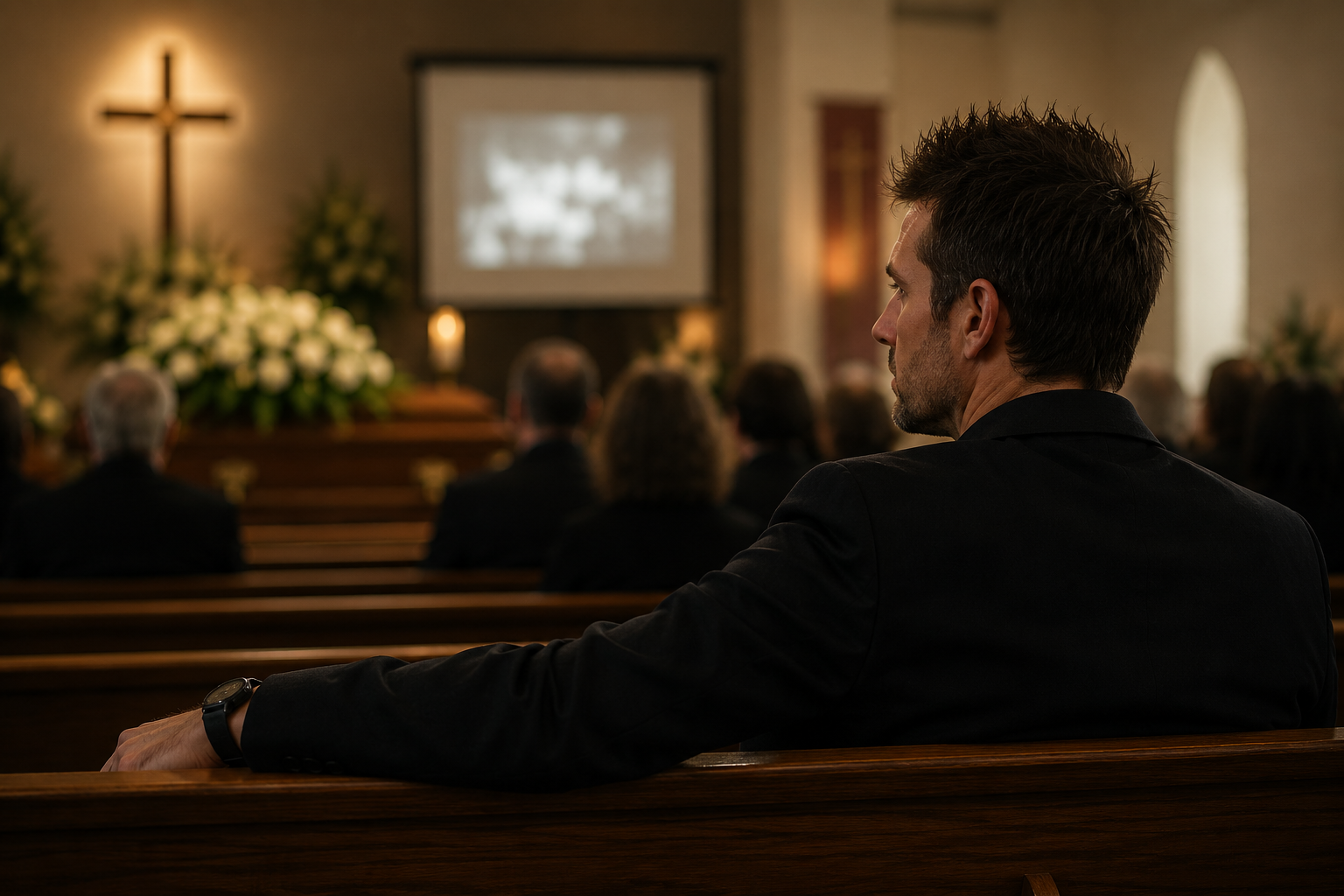
There are days when spiritual warfare feels anything but spiritual. It feels like anger. It feels like bitterness. It feels like resentment toward someone who hurt you. It feels like lying awake replaying conversations that happened months or even years ago. It feels like imagining what you wish you had said, what you wish someone else would suffer, or how badly you want justice. It feels like fear about tomorrow, despair about today, and an exhausting inability to stop thinking about yesterday.
I know those thoughts because I fight them.
Over the past year, there have been times when bitterness, resentment, anger, hatred, fear, loneliness, and thoughts I am ashamed to admit have flooded my mind. Sometimes I recognize them immediately. Other times I entertain them far longer than I should. I rehearse the wrongs done to me. I construct arguments in my head. I imagine justice according to my definition of justice. Before long, something that began as legitimate hurt can become something much darker.
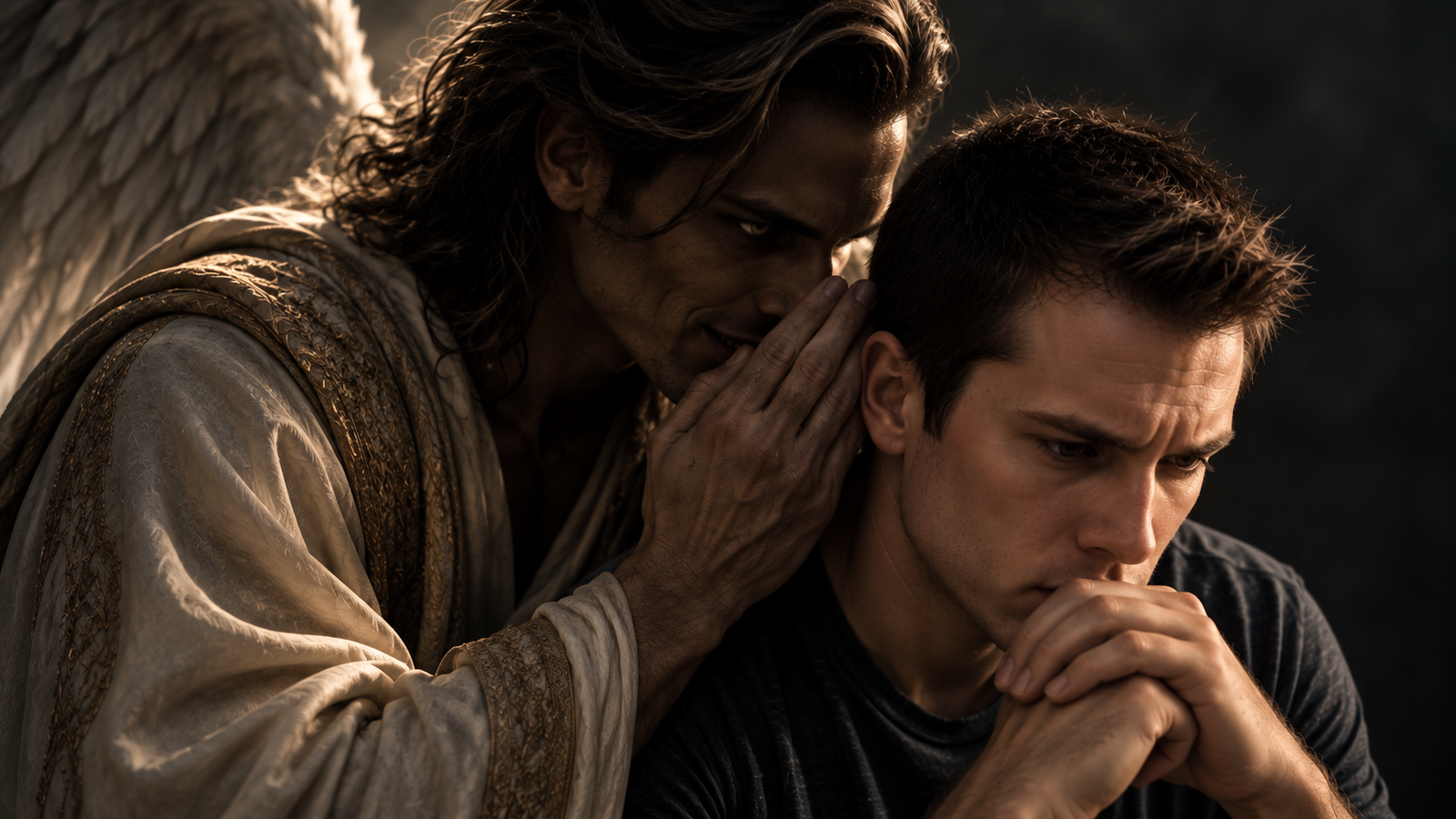
That is one reason I have become increasingly interested in what Scripture actually teaches about Satan and demonic powers. I don’t want to give Satan more credit than Scripture gives him, but I also don’t want to make the opposite mistake and pretend he isn’t real. Peter gives us a sobering warning in 1 Peter 5:8: “Your adversary the devil prowls around like a roaring lion, seeking someone to devour.” Paul tells us in Ephesians 6:12 that “we do not wrestle against flesh and blood, but against rulers, authorities, cosmic powers over this present darkness, and spiritual forces of evil.”
There is a war happening that our eyes cannot see.
Satan Is Not God
Before going any further, there is something extremely important to understand about the enemy in that war: Satan is not God.
Satan is powerful, but he is not all-powerful. Satan is intelligent, but he is not all-knowing. Satan is active in this world, but he is not everywhere at once. Omnipotence, omniscience, and omnipresence belong to God alone. David asks God in Psalm 139:7–10, “Where shall I go from your Spirit? Or where shall I flee from your presence?” God says in Jeremiah 23:24, “Do I not fill heaven and earth?” Hebrews 4:13 tells us that no creature is hidden from God’s sight.
Scripture never gives Satan those attributes.
Satan is a creature, a fallen and extraordinarily dangerous one, but still a creature. In Job 1:6–7, Satan describes himself as going to and fro on the earth. In Matthew 4:1–11, he comes to tempt Jesus in the wilderness. In Luke 22:31, Jesus tells Peter that Satan demanded to sift him like wheat. In 1 Thessalonians 2:18, Paul says Satan hindered him.
Satan moves. Satan acts. Satan schemes. But Satan is not simultaneously standing beside every Christian on earth whispering into every ear. That raises an interesting question. If Satan isn’t omnipresent and isn’t omniscient, how does the kingdom of darkness seem so effective at discovering human weaknesses?
Scripture gives us at least part of the answer. Revelation 12:9 calls Satan “the deceiver of the whole world.” Jesus calls him a liar and the father of lies in John 8:44. Paul warns in 2 Corinthians 2:11 that “we are not ignorant of his designs,” and Ephesians 6:11 speaks specifically about the “schemes of the devil.”
Those words describe strategy.
The Bible also reveals an organized spiritual kingdom. Ephesians 6 speaks of rulers, authorities, cosmic powers, and spiritual forces of evil. Daniel 10:12–14 gives us one of Scripture’s strangest glimpses behind the curtain, describing spiritual conflict involving the “prince of the kingdom of Persia.” Revelation 12:7–9 describes Michael and his angels fighting against the dragon and his angels.
We should be careful not to build an elaborate system of demonology where Scripture remains silent. But Scripture gives us enough information to understand that Satan does not operate alone.
I think it is also reasonable to believe that after thousands of years of observing fallen humanity, Satan and the forces aligned with him don’t need omniscience to recognize predictable patterns in human behavior. Scripture doesn’t explicitly tell us that Satan has spent thousands of years “studying human psychology,” so I don’t want to present that idea as biblical fact. But the Bible certainly presents him as an ancient and experienced deceiver who uses recognizable strategies.
He used deception against Eve in Genesis 3:1–6. He appealed to hunger, pride, power, and presumption while tempting Jesus in Matthew 4. Luke 22:3–6 describes Satan entering Judas as Judas prepared to betray Christ. Satan sought to sift Peter. Paul warns married believers in 1 Corinthians 7:5 about Satan exploiting temptation, and he warns Christians in Ephesians 4:26–27 not to allow unresolved anger to give the devil an opportunity.
At the same time, we cannot blame every temptation on Satan. James 1:14–15 says each person is tempted when he is lured and enticed by his own desire. Sometimes the enemy doesn’t need to create the fire. He only needs to throw gasoline on it.
But How Do We Know the Invisible World Is Real?
Someone reading this who isn’t a Christian may understandably stop me here. Satan? Demons? Spiritual forces? An invisible war? How do we know any of this is real? That’s a fair question.
I cannot put Satan under a microscope. I cannot photograph a demon. Christianity doesn’t require me to pretend that I possess scientific measurements of the spiritual realm when I don’t. Ultimately, my belief in Satan and demons is connected to a much larger question: Can Jesus Christ be trusted? Because Jesus unquestionably treated the spiritual realm as real.
Jesus didn’t speak about Satan merely as a metaphor for humanity’s capacity for evil. During His temptation, Jesus told him, “Be gone, Satan!” in Matthew 4:10. Jesus said in Luke 10:18, “I saw Satan fall like lightning from heaven.” He described Satan as a murderer, liar, and father of lies in John 8:44, and called him “the ruler of this world” in John 12:31.
Jesus also repeatedly encountered demons. In Mark 1:23–27, an unclean spirit recognized Jesus as “the Holy One of God,” and Jesus commanded it to leave. In Mark 5:1–13, Jesus encountered a man living among the tombs who possessed extraordinary strength and could break chains. When Jesus asked the spirit its name, the answer came, “My name is Legion, for we are many.”
Perhaps even more striking is Matthew 8:28–29, where demons ask Jesus, “Have you come here to torment us before the time?” According to Scripture, these spiritual beings not only knew who Jesus was; they knew judgment awaited them. James makes an equally startling statement in James 2:19: “Even the demons believe—and shudder!”
The demons aren’t atheists. They know God exists. They know who Jesus is, and they apparently know how their story ends.
It is also interesting that the Gospel writers don’t simply categorize every illness or unusual behavior as demonic. Matthew 4:24, for example, distinguishes among people suffering from diseases, pains, seizures, paralysis, and demon possession. That distinction matters. The biblical writers weren’t simply using “demon” as a generic explanation for every illness they didn’t understand.
The unseen world also appears throughout Scripture rather than in one isolated story. Job 1 describes Satan appearing before God. Daniel 10 provides its strange glimpse of spiritual conflict behind earthly kingdoms. In 2 Kings 6:15–17, Elisha’s frightened servant sees an enemy army surrounding them. Elisha tells him not to fear because “those who are with us are more than those who are with them.” God then opens the servant’s eyes, and he sees the mountain filled with horses and chariots of fire. The spiritual reality had been there all along. He simply couldn’t see it. Paul writes in 2 Corinthians 4:18 that Christians look not only toward things that are seen but toward things that are unseen.
None of this constitutes laboratory proof that demons exist. But Christianity rises or falls primarily on the identity, death, and resurrection of Jesus Christ. If Jesus truly is the resurrected Son of God, then I have an enormous reason to take seriously what He taught about the spiritual realm, and Jesus treated that realm as absolutely real.
The Invisible War
Chip Ingram has an excellent teaching series and book called The Invisible War: What Every Believer Needs to Know About Satan, Demons, and Spiritual Warfare. At the center of that teaching is Ephesians 6:10–20, one of the clearest passages in Scripture concerning spiritual warfare.
Paul begins by telling Christians to “be strong in the Lord and in the strength of his might” and to put on the whole armor of God so that they can stand against the schemes of the devil.
Notice what Paul doesn’t say. Be strong in yourself, try harder, become spiritually tough, outsmart Satan. Paul says to be strong in the Lord. That distinction changes everything. Christians aren’t fighting an uncertain war hoping somehow to defeat Satan. We stand upon a victory Christ has already accomplished.
Colossians 2:13–15 says that Christ disarmed the rulers and authorities and triumphed over them. Hebrews 2:14–15 says that through His death Christ destroyed the one who has the power of death, the devil. 1 John 3:8 tells us, “The reason the Son of God appeared was to destroy the works of the devil.”
The question isn’t whether Jesus is powerful enough to defeat Satan. He already has. The question is whether I am going to stand in that victory.
The Serpent, Gethsemane, and the Coming Crushing
This story goes all the way back to the Garden of Eden. After the serpent deceived Eve, God gave one of Scripture’s earliest promises of redemption in Genesis 3:15. The offspring of the woman would be wounded, but He would crush the serpent’s head. The serpent would strike. Christ would crush.
Thousands of years later, another garden became part of that story: Gethsemane. Jesus knew exactly what awaited Him, betrayal, arrest, false accusations, beating, mocking, nails, and crucifixion. His anguish was so great that He prayed in Matthew 26:36–46 for the cup to pass from Him if possible, yet He submitted Himself completely to the Father’s will. Luke 22:39–46 likewise records Jesus praying in agony.
It is important to clarify that the crushing of the serpent’s head described in Genesis 3:15 did not literally take place in the Garden of Gethsemane. Scripture does not describe Jesus stepping on a serpent there, nor does it identify Gethsemane itself as the fulfillment of that prophecy. One of the most memorable images in Mel Gibson’s film The Passion of the Christ shows Jesus crushing the head of a serpent in the garden. That scene is not found in the Bible. It is a cinematic symbol, not a recorded biblical event. Still, I have always thought it was a powerful visual representation and metaphor of the larger biblical promise. The serpent that deceived humanity in Eden would ultimately be defeated by Christ. Gethsemane was not the final crushing, but it was part of Christ’s obedient path toward the cross, where Satan’s defeat was decisively secured, and it points forward to the day when that victory will be fully and finally realized.
In Eden, humanity essentially said, “My will instead of Yours.” In Gethsemane, Jesus said, “Not my will, but yours, be done.” Then came the cross. Then came the tomb. Then came Sunday morning. Jesus Christ walked out alive. 1 Corinthians 15:54–57 declares that death has been swallowed up in victory and gives thanks to God for victory through Jesus Christ. Satan’s greatest weapon became the stage for Christ’s greatest victory, and yet the story still isn’t finished. Romans 16:20 contains an incredible promise: “The God of peace will soon crush Satan under your feet.”
Then Revelation takes us to the end. Revelation 20:7–10 describes Satan’s final rebellion and judgment, culminating with the devil being thrown into the lake of fire. Genesis begins humanity’s story with a serpent deceiving. Revelation ends Satan’s story with the deceiver defeated forever.
Satan is dangerous, but he isn’t sovereign. He is intelligent, but he isn’t omniscient. He is active throughout this world, but he isn’t omnipresent. He has schemes, snares, demonic forces, and thousands of years of experience dealing with fallen humanity, but Satan does not have the throne. Jesus does.
Jesus says in Matthew 28:18, “All authority in heaven and on earth has been given to me.” 1 John 4:4 reminds believers that “he who is in you is greater than he who is in the world.”
So How Do We Actually Fight?
This is where teaching about spiritual warfare can become frustrating if we aren’t careful. Someone tells me, “You’re experiencing spiritual warfare.” Okay. Now what?
Thankfully, Paul doesn’t merely tell Christians that they have an enemy. He tells us how to stand against him. The answer is found throughout Ephesians 6:10–20: the armor of God.
The first piece Paul identifies is the belt of truth. That makes perfect sense because Satan’s primary weapon has always been deception. His first recorded attack against humanity begins with the question, “Did God actually say…?” in Genesis 3:1. Jesus calls Satan the father of lies in John 8:44. So spiritual warfare begins with truth.
That has enormous implications for me personally. When my mind tells me, “God has abandoned you,” I have to compare that thought with Scripture. Hebrews 13:5 tells me that God will never leave nor forsake His people. When my mind tells me that my entire future has been destroyed, Romans 8:28 reminds me that God works all things together for good for those who love Him. When bitterness tells me that hatred is justified, Ephesians 4:31–32 tells me to put away bitterness, wrath, anger, and malice and instead pursue kindness, tenderheartedness, and forgiveness. Spiritual warfare often means identifying a lie and replacing it with truth.
Paul next describes the breastplate of righteousness. This isn’t merely knowing what is right. It involves actually living according to God’s will. That’s an uncomfortable part of spiritual warfare because sometimes I want God to protect me from Satan while simultaneously holding onto the very attitudes Scripture tells me to surrender.
I cannot pray against bitterness while deliberately feeding bitterness. I cannot ask God to protect my mind while repeatedly entertaining sinful thoughts. I cannot resist Satan while refusing to submit an area of my life to Christ. That is why James 4:7 doesn’t merely say, “Resist the devil.” It begins, “Submit yourselves therefore to God.” Submission comes first.
Paul then describes our feet as prepared with the gospel of peace. The gospel reminds me where I stand with God. Romans 5:1 says that because we have been justified by faith, we have peace with God through Jesus Christ. Satan accuses. In fact, Revelation 12:10–11 calls him “the accuser of our brothers.” The gospel answers the accusation. Romans 8:1 declares that there is now no condemnation for those who are in Christ Jesus. That doesn’t mean my sin doesn’t matter. It means my sin has been paid for.
Then comes the shield of faith. Paul says faith extinguishes the flaming darts of the evil one. I love that imagery because sometimes that is exactly what thoughts feel like. They arrive suddenly. Anger. Fear. Hatred. Doubt. Lust. Despair. Revenge. Hopelessness. One moment I’m fine, and suddenly something hits my mind. Not every wicked thought is necessarily demonic. James 1 reminds me that my own sinful desires are perfectly capable of tempting me. But regardless of where a thought originated, I don’t have to entertain it. Faith raises the shield. Faith says, “I don’t care what this moment feels like. I know what God has said.”
Then Paul gives us the helmet of salvation. The battlefield is so often the mind, which makes this piece of armor particularly meaningful to me. Romans 12:2 tells us to be transformed through the renewal of our minds. 2 Corinthians 10:3–5 tells us to take thoughts captive to obey Christ. Philippians 4:8 tells us to think about what is true, honorable, just, pure, lovely, commendable, excellent, and worthy of praise. I cannot always control which thought knocks on the door. I can decide whether I invite it inside.
Then comes the one explicitly offensive weapon in Paul’s description: the sword of the Spirit, which is the Word of God. Jesus demonstrated this perfectly during His temptation in Matthew 4. Satan tempted Him. Jesus answered with Scripture. Satan tempted Him again. Jesus answered with Scripture. Again Satan attacked. Again Jesus responded from God’s Word.
That tells me something important about why I need Scripture stored in my mind before the battle arrives. Psalm 119:11 says, “I have stored up your word in my heart, that I might not sin against you.” I don’t want to start looking for ammunition after the enemy is already shooting. I want God’s Word already in my heart.
Satan and a Christian on His Knees
Finally, Paul brings us to prayer. Ephesians 6:18 tells believers to pray at all times in the Spirit with prayer and supplication. There is a popular Christian idea that Satan trembles when he sees a believer on his knees. The Bible doesn’t actually use those words, so I don’t want to turn a catchy saying into Scripture.
But Scripture gives us something even better. James 4:7–8 tells us to submit to God, resist the devil, and he will flee from us, followed immediately by the command to draw near to God. 1 Peter 5:8–9 similarly tells Christians to resist Satan, firm in the faith, and remember James 2:19: the demons believe and shudder.
Satan has no particular reason to fear my intelligence, willpower, education, determination, or ability to argue. But prayer isn’t ultimately about my power. Prayer acknowledges God’s power. Prayer says, “I cannot win this battle by myself.” Prayer moves my attention away from the enemy and toward the King, and the enemy knows exactly who that King is.
What Spiritual Warfare Looks Like in My Life
For me, spiritual warfare usually doesn’t resemble a scene from a horror movie. It’s sitting alone thinking about everything that has happened. It’s replaying something painful for the hundredth time. It’s resentment toward my wife. It’s anger about my circumstances. It’s bitterness over things I cannot change. It’s imagining conversations that haven’t happened. It’s thinking thoughts that I know aren’t pleasing to God and nevertheless allowing myself to enjoy them for another few minutes. That’s where much of my invisible war happens.
Maybe I’ve spent too much time trying to figure out whether a particular thought came from Satan, a demon, my own flesh, exhaustion, anger, or some combination of them. Sometimes the source isn’t the most important question. The better question is: What am I going to do with the thought?
Does it agree with God’s Word? Does it lead me toward Christ? Does it produce the fruit described in Galatians 5:22–23: love, joy, peace, patience, kindness, goodness, faithfulness, gentleness, and self-control? Or does it produce bitterness, hatred, accusation, fear, division, pride, and despair?
If it’s a lie, I put on truth. If I’m tempted toward sin, I choose righteousness. If I’m condemned, I remember the gospel. If doubt comes flying at me, I raise the shield of faith. If the battle enters my mind, I remember my salvation. If deception comes, I answer with Scripture, and through all of it, I pray. That’s spiritual warfare.
It isn’t screaming at demons. It isn’t seeing Satan behind every flat tire, bad day, lost job, argument, illness, or disappointment. It isn’t becoming obsessed with darkness. It’s standing. Paul uses that word repeatedly throughout Ephesians 6. Stand. Stand firm. Having done everything, stand.
Sometimes victory means nothing more dramatic than refusing to move. I’m still here. I’m still praying. I’m still reading God’s Word. I’m still refusing to let bitterness own me. I’m still taking thoughts captive. I’m still trusting Christ when my circumstances give me every temptation not to. I’m still standing.
My Battle Isn’t Ultimately Against People
Perhaps the hardest part for me is remembering Paul’s statement that “we do not wrestle against flesh and blood.” Because flesh and blood have names. They have faces. They make decisions. They say things.They hurt us, and when someone has caused enormous pain in my life, it is much easier to identify that person as my enemy than to think spiritually about what is happening inside my own heart.
None of this erases human responsibility. Spiritual warfare isn’t an excuse for someone’s sinful behavior. It doesn’t make wrong right. It doesn’t eliminate accountability. It doesn’t mean abandoning wise boundaries or pretending injustice doesn’t exist, but it does mean refusing to allow another person’s actions to transform me into someone Christ has not called me to become.
That may be one of Satan’s greatest opportunities in suffering. Someone hurts me. I become angry. Anger becomes resentment. Resentment becomes bitterness. Bitterness becomes hatred. Hatred begins controlling my thoughts, and eventually the person who hurt me doesn’t have to do anything anymore. The bitterness continues hurting me all by itself.
Hebrews 12:15 warns about a root of bitterness springing up and causing trouble. Ephesians 4:26–27 makes an especially sobering connection between unresolved anger and giving the devil an opportunity.
That doesn’t mean Satan created everything that happened to me. It doesn’t mean demons caused every painful circumstance. Other people make choices. I make choices. We live in a fallen world. My own flesh is perfectly capable of producing sin without supernatural assistance, but Scripture warns me that the enemy looks for opportunities. I don’t want to give him one.
The War Has Already Been Won
The more I study spiritual warfare, the more I realize that the Christian response shouldn’t be an obsession with Satan. It should be an obsession with Christ.
Satan is real. Demons are real. Spiritual warfare is real, but Jesus is greater.
The serpent deceived in Genesis. Christ defeated the deceiver at the cross. The tomb is empty. Jesus is alive.
Satan’s sentence has already been written. His final destination has already been revealed, and one day the God of peace will crush Satan under our feet.
Until then, I stand. When bitterness comes back tomorrow, and it probably will, I have a decision to make. When resentment tells me to rehearse the offense one more time, I have a decision. When anger tells me hatred is justified, I have a decision. When fear tells me God has abandoned me, I have a decision. When my mind wanders somewhere it shouldn’t go, I have a decision.
I can entertain those thoughts until they become strongholds, or I can take them captive and bring them before Christ. I can replay everything that was done to me, or I can get on my knees. I can feed bitterness, or I can feed my mind with Scripture. I can obsess over the people I believe are against me, or I can remember that my ultimate battle is not against flesh and blood.
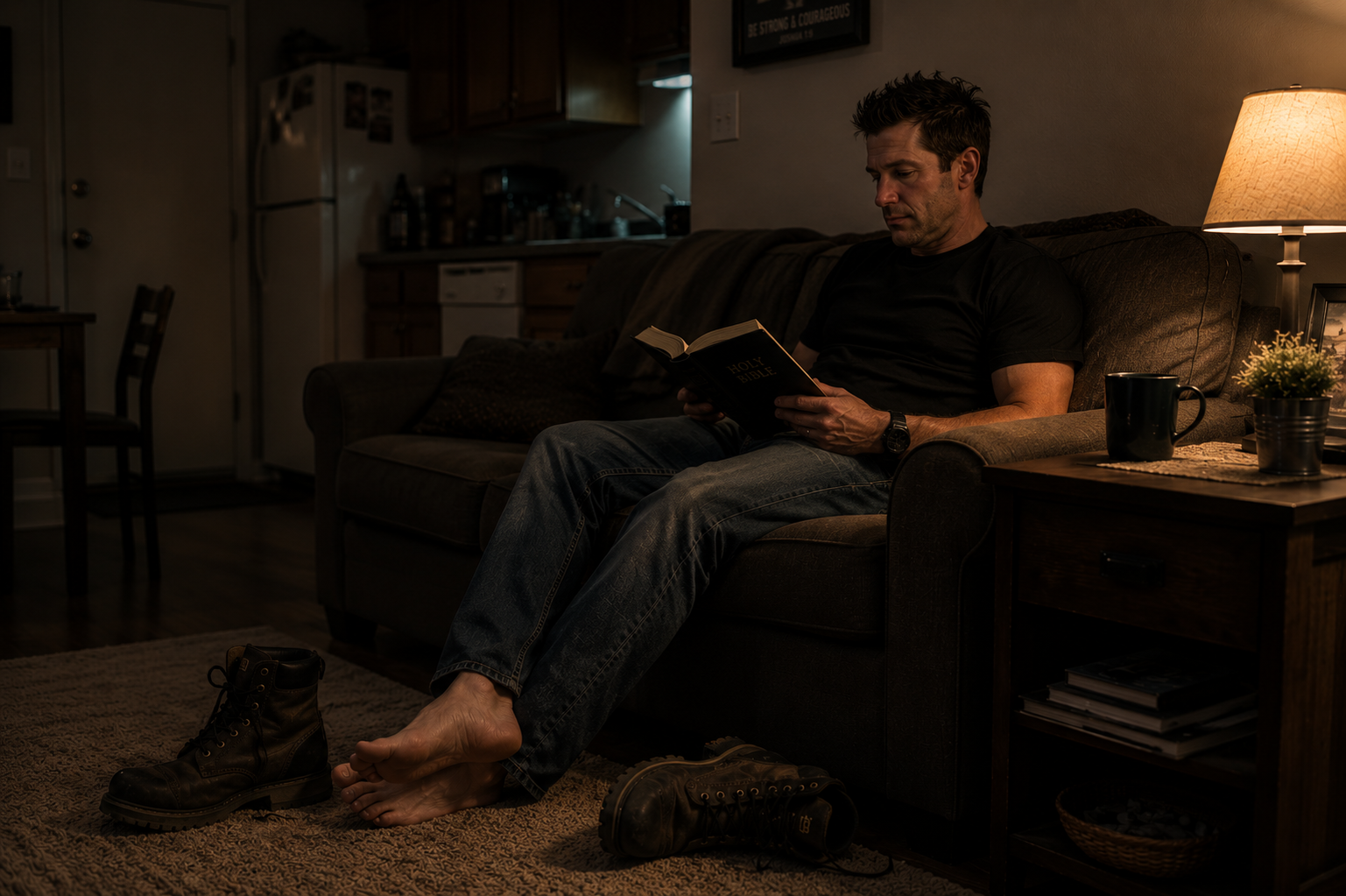
Sometimes spiritual warfare looks dramatic in our imaginations. In real life, perhaps some of the fiercest battles happen in a quiet apartment when nobody else is watching, a tired man with a Bible open in front of him, fighting thoughts that desperately want to become bitterness.
Sometimes victory looks remarkably unimpressive. Closing my mouth. Opening my Bible. Forgiving again. Refusing to rehearse the offense. Taking another thought captive. Getting down on my knees and praying. “Father, not my will, but Yours.”
The devil is powerful, but he is not God. The serpent has already been dealt his fatal blow. The tomb is empty. Christ is alive, and the God who has promised Satan’s final defeat is the same God who tells me today:
“Finally, be strong in the Lord and in the strength of his might.” — Ephesians 6:10