The house is loud in the best way.
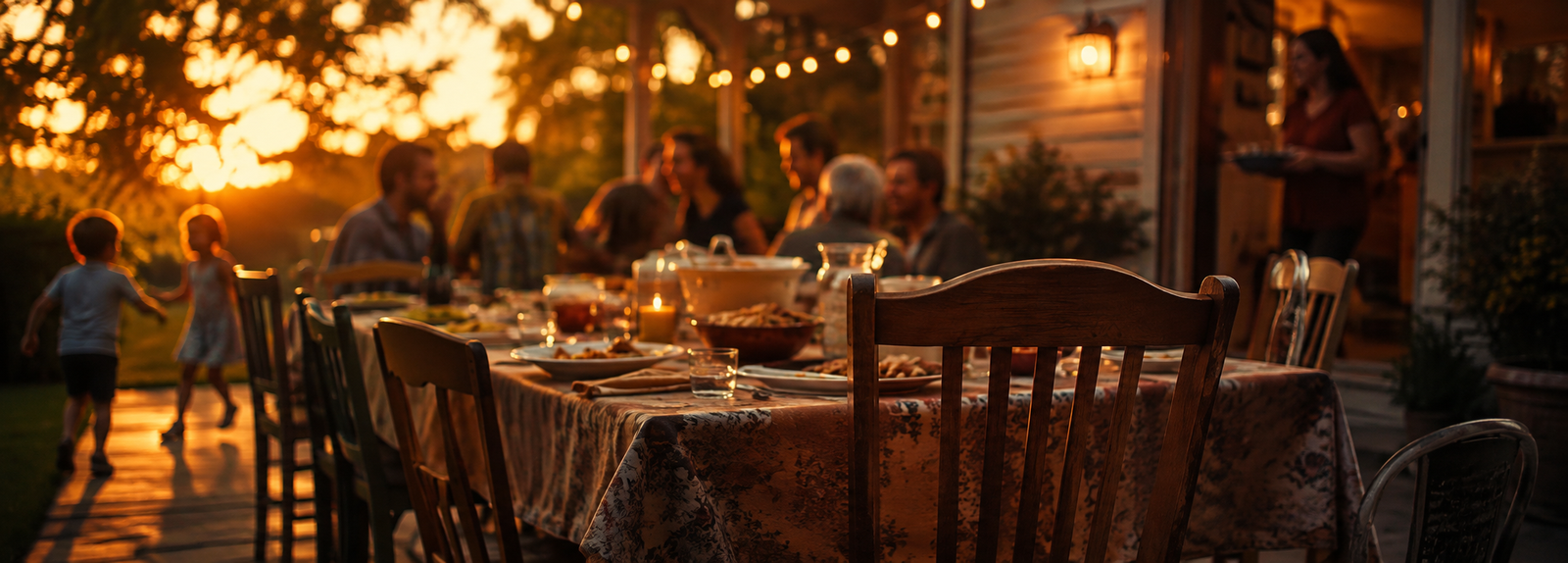
Kids running through the living room. Grandkids laughing. Food on the counter. Everybody talking over everybody. It’s what I always wanted our home to be.
And then, out of nowhere, it happens.
Somebody blows up. Voices get loud. Words get said that should never be said — and they get said in front of the kids. Just like that, the whole room changes.
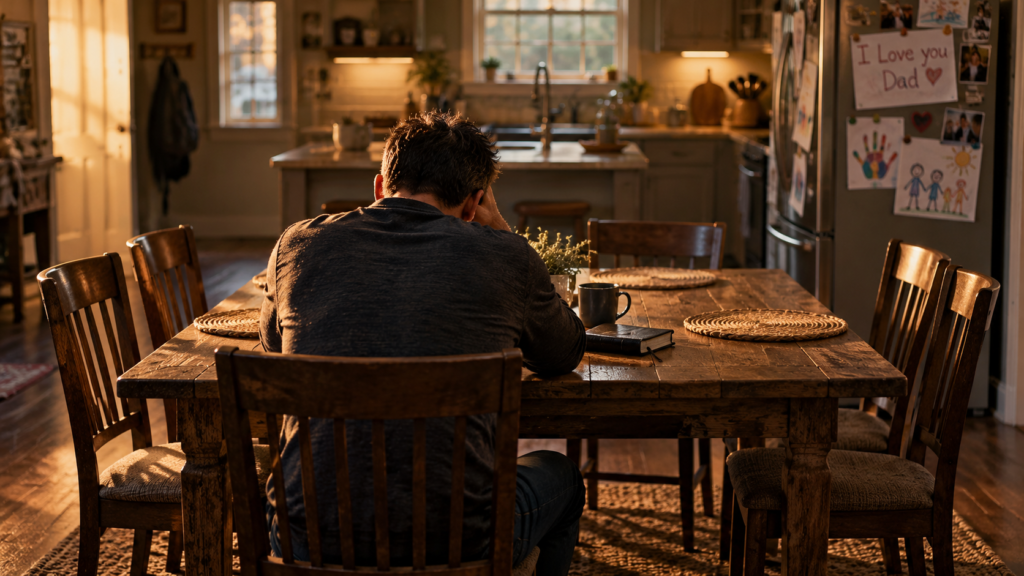
The last time, I was in the family room. I didn’t see it happen — I heard it. The house went quiet. Some mumbling, then people heading out the door. I sat there dumbfounded. When I asked what happened and somebody told me, I almost erupted. I held most of it back. But I said what needed to be said.
Because what happened that day crossed a line. And that line won’t be crossed in my house again.
If you’ve been there, you know the worst part of family conflict isn’t the outburst. It’s the feeling that you’ve seen this before.
I’m not writing this to put anybody on trial. I know my own part in it. I’m writing because I want a different kind of Sunday for my family — and because I believe God can still bring real change and real restoration.
Like Watching the Same Play on Replay
Here’s how it usually goes in families like mine.
Something blows up. People get hurt. There are conversations. Sometimes there are apologies, and there is forgiveness. For a little while, things feel better.
Then — boom. Same play. Same result. Like watching the same football play on replay, knowing exactly how it ends before the ball is even snapped.
That wears you down. And it raises a hard question:
How do I stay Christlike when the same family conflict keeps coming back?
First, My Own Part
I can’t answer that honestly without starting with me.
When the tension shows up, I pull away. Other times I get angry and say things fast — things I didn’t think through. Later I sit with the shame of letting it get the best of me.
“You must all be quick to listen, slow to speak, and slow to get angry” (James 1:19, NLT).
I’m not there yet. If I pray for everybody else to change and never let God touch my own temper, I’m only praying half the prayer.
So I’ve had to own my part. I’ve watched others in my family own theirs too — sit down, have the hard conversation, say “I was wrong,” and actually try to do better. Nobody gets it right every time. Healthy families just keep showing up to do the work.
Sorry Isn’t the Same as Changed
Here’s what I’ve had to learn the hard way: an apology is not the same as change.
Paul wrote that godly sorrow leads us away from sin, while worldly sorrow — sorrow without repentance — leads nowhere good (2 Corinthians 7:10).
Worldly sorrow says, “I’m sorry I got caught.” Godly sorrow says, “I see what I did, and I’m going to change it.”
One is a reset button. The other is a turning point.
When the same family conflict keeps repeating after every apology, it’s usually not a forgiveness problem. It’s a change problem.
The Brother Who Sold Joseph
Joseph’s brothers hated him, sold him, and let their father believe he was dead (Genesis 37). The one who came up with the idea to sell him was Judah (Genesis 37:26–27).
Years later, the brothers came to Egypt for food. Joseph recognized them. They didn’t recognize him. And Joseph didn’t rush to reveal himself. He told them, “This is how I will test your story” (Genesis 42:15, NLT).
Then the moment came. Benjamin — their father’s other favored son — was about to be lost. And Judah, the same man who once sold a brother, offered to become a slave in Benjamin’s place so his father wouldn’t lose another son (Genesis 44:33–34).
The man who caused the wound became the man who stepped in front of it.
That’s what real ownership looks like to me. Not a speech. A different choice when the same test comes around again.
When Joseph saw it, he wept so loud the Egyptians heard it (Genesis 45:2). Later he told his brothers, “You intended to harm me, but God intended it all for good” (Genesis 50:20, NLT). That doesn’t make the harm good. It means God wasn’t stopped by it.
Joseph taught me this: forgiveness and trust are not the same thing. Forgiveness has to be real, from the heart. Trust gets rebuilt — one honest word and one kept promise at a time.
When Family Conflict Keeps Returning
This is the hardest part to write.
What do you do when the conversations have happened, and the pattern still comes back?
I don’t always know what’s happening in another person’s heart. I can’t see every battle someone is fighting, and I can’t choose their next step for them. That’s between them and God.
“Do all that you can to live in peace with everyone” (Romans 12:18, NLT).
All that you can. Not all that they will.
That’s my assignment: pray, speak honestly, seek wise counsel, and set boundaries when they’re needed. Keep my side of the street clean and my door open.
That doesn’t mean I pretend. I can keep loving people without acting like trust has been rebuilt, or like harmful patterns don’t matter. Love isn’t naive.
Don’t Give the Enemy a Seat
I’ve been reading Louie Giglio’s Don’t Give the Enemy a Seat at Your Table. The whole book sits on Psalm 23, and one verse stopped me:
“You prepare a feast for me in the presence of my enemies” (Psalm 23:5, NLT).
The enemies are still in the room. David doesn’t pretend they’re gone. But they’re not at the table. They don’t get to pull up a chair and run the meal.
Family is never the enemy. But anger, bitterness, and division are. And for too long, I’ve let them sit down — every time I replay an argument long after it’s over, rehearse what I should have said, or let the last blowup decide how I walk into the next gathering.
What Our Table Looks Like Now
So here’s where I’ve landed, for my home.
We’ll keep having the hard conversations. Avoiding them is how a problem keeps coming back. When something needs to be said, it gets said — privately, honestly, and with love (Matthew 18:15).
But a family gathering with the kids watching isn’t the place.
In our home, yelling at kids and tearing people down don’t get a seat. If it starts, we’ll calmly ask for it to stop. If it doesn’t, we’ll ask that person to step outside or call it a night. No drama. No lecture. Same boundary, every time — calm, even when it’s firm.
And when the complaining and the talk about other people starts? I’m done supplying the wood. “Fire goes out without wood, and quarrels disappear when gossip stops” (Proverbs 26:20, NLT).
Nobody Is Too Far Gone
There’s another side to this I can’t leave out.
Sometimes a person doesn’t just repeat a pattern. They drift. Back to the familiar place — the old habits, the old way of handling life. It doesn’t always look like obvious sin. Sometimes it’s just the quiet decision that you can run your life without God.
And the further you drift, the harder it is to believe you could ever come home.
Peter knew that place. After denying Jesus three times (Luke 22:54–62), he went back to what he knew: “I’m going fishing” (John 21:3). He fished all night and caught nothing. At dawn, Jesus called from the shore, asking if they’d caught anything. Giglio puts it in today’s language: How’s that working for you?
I’ve had to answer that question myself. There was a season when church wasn’t part of my life, and God used my own daughter — without her even knowing it — to bring me back. The familiar place never gave me what I thought it would.
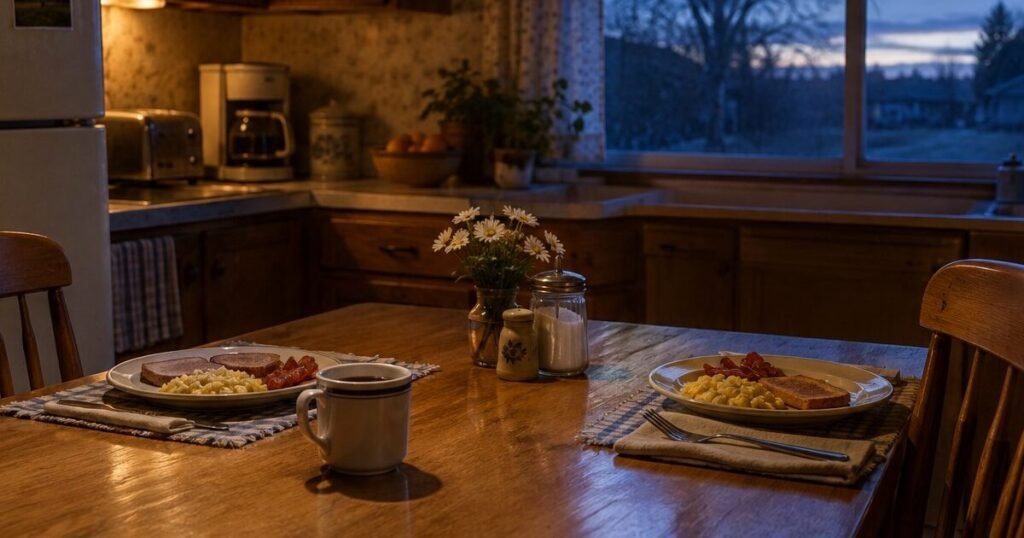
Jesus didn’t meet Peter’s failure with a lecture. He met it with breakfast over a charcoal fire — the same kind of fire where Peter had denied Him. I wrote about those two fires in Jesus Doesn’t Forgive You From a Distance. Peter’s failure was real. It just wasn’t the last word on who he was.
That’s what shame tries to steal. It takes something you did — or something done to you — and stamps it on you like a permanent label. Damaged. Hopeless. Done. But in Christ, your failure is something that happened. It isn’t your name.
“Those who look to him for help will be radiant with joy; no shadow of shame will darken their faces” (Psalm 34:5, NLT).
If you’re the one who feels too far gone, hear this: God hasn’t stopped loving you. He’s standing on the shore, calling you in. Breakfast is ready.
What Restoration Actually Looks Like
Coming home is a beginning, not a finish line. And it takes work — on both sides.
For the One Coming Home
- Be honest. The prodigal son’s turning point was when he “finally came to his senses” (Luke 15:17, NLT). No more excuses.
- Turn around. Confess it to God, and trust Him to forgive (1 John 1:9).
- Make it right with people. Real apologies — specific, with no excuses attached (Matthew 5:23–24).
- Get help. Nobody climbs out alone. A pastor, a counselor, a godly friend who will ask the hard questions (James 5:16).
- Keep going. “Prove by the way you live that you have repented of your sins” (Luke 3:8, NLT). Not one good Sunday. A pattern of new choices over time. Right foot forward — then the next one.
For the Rest of Us
- Run to meet them, like the father did (Luke 15:20). Don’t make them crawl.
- Watch your own heart. The older brother stood outside and refused to join the celebration (Luke 15:28). You can be right about everything and still miss what God is doing.
- Help them back gently (Galatians 6:1).
- Let trust grow at the speed of changed actions. Welcome right away. Trust over time. Both can be true.
What Needs to Change in Me
So the question I keep coming back to isn’t just “Why won’t things change?” It’s “What needs to change in me?”
Notice my anger before it comes out of my mouth. Pray first, speak second. Make it right when my words hurt someone. Hold the boundary without holding a grudge. Never be the older brother outside the party. And keep praying for the people who frustrate me most — not just about them, for them.
I’m tired. I’ll admit it. But I’m not done. “So let’s not get tired of doing what is good” (Galatians 6:9, NLT).
Judah couldn’t change his brothers. What he could change was his own choice — and it changed the story.
Stronger Together
Here’s what I’m really after.
Not a family that never fights. A family that holds together when it does. Where every one of us owns our part, gets the help we need, and keeps showing up. Where we stand by each other and protect each other — in hard times and every other time.
One family. Not perfect. But whole.
I’m praying for the day restoration actually happens. Not a patched-up truce. The real thing — ownership taken, work done, trust earned back.
I think I know what that day will feel like. Like a breath I’ve been holding for years finally letting go. Like Joseph, after all the testing and all the tears, embracing his brothers — and then, after all that time, they could simply sit and talk with him again (Genesis 45:15).
Honest, solid relief. The kind you feel when you walk into a family gathering and your stomach isn’t in a knot — because you know the replay is finally over.
And I want it for my grandkids more than anything. They’re watching all of us, learning what love sounds like and what adults do when things get hard. I want the bond between them to be so strong it can’t be broken. So that years from now, when life gets heavy and they look around their own tables, they’ll know exactly who’s sitting there with them.
And what never gets a seat.
A Prayer
Lord, You see where our family is hurting and how tired we are of the replay. Show each of us what we need to own, starting with me. Make me quick to listen, slow to speak, and slow to get angry. Give me courage to hold a boundary and grace to hold it without bitterness. For anyone who feels too far gone, call them home from the shore and lift their shame. Bring us to the day of real restoration, and let us feel the relief of it together. Hold our family together as one. Protect the children who are watching us, and build a bond between them that nothing can break. Don’t let the enemy take a seat at our table. Lead us, Shepherd. Amen.