
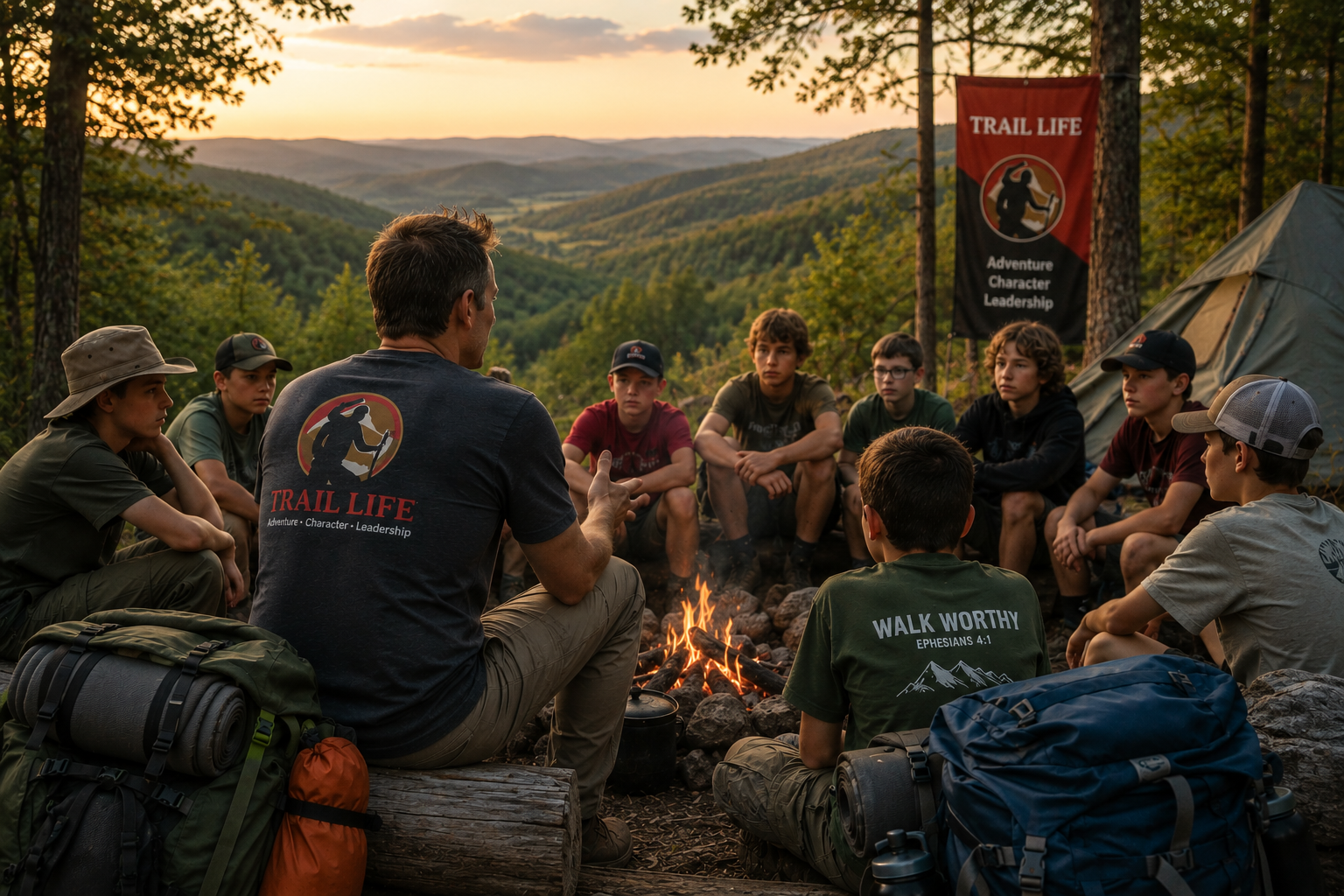
Over the past year, I’ve lost a lot. Some losses were obvious. Others were things I didn’t fully appreciate until they were gone. One of those was ministry. For years, ministry had been woven into my life as a father. I served alongside my boys, taught other young men, planned activities, built programs and tried to use the skills God had given me to serve others. Then almost overnight, all of that disappeared. For a while, I thought I had lost my ministry. What I didn’t understand was that perhaps God wasn’t finished with my ministry at all. He was changing the assignment.
The Ministry I Lost
For years, one of the greatest joys in my life was serving with Trail Life USA Troop OH-4181 at Hope Christian Church in Avon, Ohio. I had been part of the registered adults team since the troop’s inception, and all three of my boys participated over the years. That made the ministry particularly special to me. I wasn’t simply volunteering somewhere for a few hours each month. I was serving alongside my sons, investing in other boys, sharing things I loved, and hopefully pointing young men toward Jesus along the way. And that last part was always the most important.
Trail Life wasn’t simply about teaching boys how to camp, hike, shoot a rifle, build a fire or tie a knot. Those things were tools. The greater purpose was helping boys grow into Godly young men. As leaders, we had opportunities to take practical lessons from the outdoors and connect them with God’s Word and Christian principles. Whether we were sitting around a campfire, hiking down a trail, preparing a meal or teaching a new skill, there was almost always an opportunity to bring the lesson back to Scripture.
The outdoors actually provided an incredible classroom for doing that. When we talked about creation, we could point to the world around us and remember, “The heavens declare the glory of God; and the firmament sheweth his handywork” (Psalm 19:1). When we taught the boys to care for the land and leave a campsite better than they found it, we could talk about stewardship and our responsibility to care for what God has entrusted to us. When something didn’t go according to plan, we could teach patience, perseverance and self-control. When another boy was struggling with his pack or couldn’t figure out a skill, we could teach service and remind them to look out for one another instead of only themselves.
Even something as simple as building a fire could become a lesson about preparation, patience and responsibility. Backpacking taught perseverance. Cooking taught independence and service. Navigation taught the importance of knowing where you’re going. Working together taught humility and brotherhood. Outdoor safety taught that our decisions affect people besides ourselves. Those were the lessons I cared about most.
I didn’t simply want these boys to know how to survive in the woods. I wanted them to understand what it meant to become men of character who followed Christ. I wanted them to become young men who could lead without being arrogant, serve without needing recognition, work hard without complaining, protect those who needed help, take responsibility when they made mistakes, respect authority and ultimately understand that their strength, identity and direction came from God. Proverbs 22:6 tells us, “Train up a child in the way he should go: and when he is old, he will not depart from it.” I understood that verse wasn’t promising that every boy we taught would always make the right choices, but it reminded me why investing in young men mattered. We were planting seeds.
Over the years, I had the opportunity to teach just about every age group, from the youngest boys all the way through the teenagers. Because I’ve spent much of my life enjoying the outdoors, I tried to incorporate that knowledge wherever I could. We talked about camping, hiking, backpacking, outdoor safety and survival skills, but I always wanted those lessons to point toward something greater. Learning to survive in the wilderness was useful. Learning how to walk with Christ through whatever wilderness life eventually brought them was infinitely more important.
My responsibilities changed as the troop grew. I started primarily as a teacher, but because my professional background is in marketing and communications, I eventually became something of the troop’s communications director. I helped with registrations, communications, fundraising and other organizational needs. I was also building a website for the troop and became increasingly involved in planning activities and curriculum.
Another project I was especially excited about was creating an outdoor library for the troop. I had begun collecting books that the boys could check out and use to expand what they were learning during meetings and campouts. The collection included books on bushcraft and survival skills, backpacking tips, wildlife and plant identification, edible plants, national parks, maps, trail guides, travel guides and all kinds of other outdoor resources. I wanted the boys to have a place where their curiosity could continue beyond whatever lesson we were teaching that week—to pick up a book, discover something new and maybe become excited about an outdoor skill or destination they had never considered before. I had already assembled much of the collection and still have those books today, but like the website, curriculum and backpacking plans, the outdoor library was another project I never had the opportunity to fully implement.
One of the programs I especially enjoyed helping organize was an annual junior shooting sports program at the North Olmsted Sportsman’s Club, where I was a member. We introduced the boys, at age-appropriate levels, to rifle shooting, archery and slingshots while emphasizing safety, responsibility, discipline and self-control. Those Christian principles were every bit as important as whether a boy could hit a target.
But one of the things I was most excited about was what we were developing for our older boys in the Navigators and Adventurers programs. I wanted these young men to leave Trail Life knowing more than how to pitch a tent at a campground. I wanted them to understand genuine backpacking and backcountry camping: carrying what you need on your back, establishing a campsite, preparing your own food, finding and treating water, building a fire safely, and possessing enough basic wilderness knowledge that if they ever found themselves in a difficult situation, they wouldn’t immediately panic. More importantly, I wanted those experiences to help develop young men who understood that when life became difficult, their first response shouldn’t be panic there either. They needed a foundation stronger than anything we could put into a backpack. They needed Christ.
We weren’t preparing them for glamping. We wanted to teach them how to rough it. But underneath all of those outdoor lessons was something much more important: we weren’t merely preparing boys for the wilderness. We were trying to prepare young men to walk faithfully with God when life itself became a wilderness.
The leader of the Navigators and Adventurers was a friend of mine and a retired Navy SEAL who brought a tremendous amount of real-world experience, discipline and practical knowledge to what we were trying to accomplish. Together, we began developing a series of increasingly challenging outings designed to build on one another, teaching the boys practical outdoor skills while preparing them for a larger backpacking adventure. One of our first campouts focused heavily on fire building. We taught the boys how to safely chop and prepare wood, construct and maintain a fire, and demonstrate the skills necessary to earn their fire cards. They did incredibly well. The goal wasn’t for them to stand around watching experienced adults do everything for them. We wanted them to learn by doing, to gain the knowledge, confidence and responsibility to accomplish these things safely on their own.
The next campout was about something even more practical: food. And I’m not talking about putting a cast-iron skillet over a campfire while an adult cooks dinner. The troop had purchased lightweight backpacking stoves and backpacks, and we were beginning to assemble the equipment necessary for real backcountry trips. For this particular outing, we told the boys that dinner, breakfast and lunch were going to be their responsibility. We provided basic ingredients, equipment and recipe cards, demonstrated how to safely operate the backpacking stoves, and then stepped back and let them cook.
More than twenty boys were suddenly preparing their own meals outdoors. Parents told us how much they appreciated seeing their sons learn something so practical. One of the older boys came up to me afterward and thanked me. He told me that this was something he had always wanted to learn and something he knew he could actually use later in life. That moment stuck with me. It wasn’t an elaborate Bible lesson. There wasn’t a stage, microphone or worship band. It was just a young man standing in the woods telling me that something we had taught him mattered. Sometimes ministry looks like that.
Another outing focused on swimming and water. We conducted the required Trail Life swim test at our community pool and then taught the boys about finding and treating water in the backcountry. We explained why even crystal-clear water can contain microorganisms that can make you sick and walked through different methods of filtration and purification. That particular outing also produced the worst accident we had during any of these events. My son Jacob accidentally came into contact with boiling water and suffered a significant burn. Thankfully, he recovered. Naturally, if something was going to go wrong on one of the outings I helped plan, it had to be my own kid.
After that came our planned ruck test. This wasn’t technically a campout. The boys would carry backpacks loaded according to an appropriate percentage of their body weight and hike a predetermined distance. Completing the ruck was intended to demonstrate that they were physically prepared for the larger adventure we were working toward: a genuine backpacking trip in Pennsylvania planned for the spring of 2026.
I couldn’t wait. I was developing the curriculum for the entire year. I was working on the troop website. We were acquiring equipment. We had already begun teaching the skills. I could picture these boys eventually standing somewhere along a Pennsylvania trail carrying everything they needed on their backs and realizing, I can actually do this. But I never got to see it.
When Everything Stopped
Right before the ruck test, my life changed dramatically. I was arrested and eventually spent time in jail. A protection order was entered that prohibited contact with my sons. Because my oldest son participated in the troop, I knew immediately that continuing in leadership wasn’t appropriate or practically possible. So I voluntarily stepped down. I also wanted to protect the integrity of the troop. Whatever was happening in my personal and legal life, I didn’t want Trail Life or its leadership dragged into the middle of it.
But I was devastated. There was the obvious loss of being separated from my boys, but there were secondary losses everywhere I looked. Trail Life was one of them. One day I was building a website, developing curriculum, organizing activities and thinking about taking a group of young men backpacking through Pennsylvania. Then suddenly I wasn’t.
Not long afterward, two other men who had been heavily involved with the Navigators and Adventurers also stepped away for reasons completely unrelated to my situation. One of them was my friend, the retired Navy SEAL who had been leading the group and working alongside me to develop the outdoor curriculum and backpacking program, the other served as the troop chaplain. With several of us leaving around the same time, much of the experience and momentum behind what we had been building disappeared as well. I later learned that participation declined that year, much of the curriculum and outdoor program we had envisioned never came to fruition, and some of the backpacking equipment we had purchased ended up sitting in storage. It was difficult knowing that something we had invested so much time, planning and excitement into never had the opportunity to become what we believed it could be.
That hurt. For a while, I could only see what had disappeared. I had lost the opportunity to minister alongside my sons. I had lost relationships with boys I had watched grow up. I had lost the outdoor program we were building. I had lost the Pennsylvania trip. I had lost the website project. I had lost the curriculum. I thought I had lost my ministry. I didn’t understand yet that God wasn’t finished.
The Ministry I Never Expected
Early into my journey without my family, I had been talking with a friend at a church group when he mentioned getting involved with Prison Fellowship. The idea mildly interested me, but that was about it. Prison ministry? I didn’t feel particularly called to it. I certainly didn’t feel prepared for it. At that point, I had only sat in a jail cell for 3 hours, so I didn’t fully understand the brevity of my circumstances. I knew I wanted to serve somewhere, but prison wasn’t necessarily where I imagined myself serving.
Then I experienced real incarceration myself. Sitting in jail has a way of changing the way you think about people behind bars. While I was there, I read Rick Warren’s The Purpose Driven Life. As I worked through that book in jail, something began changing in me. The idea my friend had casually mentioned months earlier didn’t seem so casual anymore. I began to understand that perhaps one of the ugliest chapters of my life could someday become part of how God used me to reach somebody else.
After I was released, I contacted Prison Fellowship. I met two men who run Prison Fellowship at Grafton Correctional Institution. I completed the necessary training and eventually went to GCI for orientation. I was ready to serve. My hope was to become involved with Celebrate Recovery and work directly with incarcerated men. Then I encountered another closed door. Because I was still on probation, I learned that I could not yet serve as a regular volunteer. I had found the ministry I wanted to enter, gone through the training, arrived at the prison, and discovered that I had to wait.
But God still gave me a glimpse of what that ministry could become. During the process, I had the opportunity to meet incarcerated men who professed faith in Christ and were involved with Celebrate Recovery. Even more remarkably, I was given the opportunity to share my testimony with a large group of prisoners. Think about the strange path that led there. I had spent years teaching boys how to survive in the wilderness. Then I walked through a wilderness of my own. Eventually I found myself standing before incarcerated men talking about Jesus, failure, suffering, consequences, grace and hope.
Some of those men prayed for me. They prayed for my family. They prayed for reconciliation and restoration. I left knowing there were men behind prison walls hoping that someday I would be able to come back and serve alongside them. For now, I can’t. My current legal circumstances prevent me from formally entering that ministry as a regular volunteer. I hope that restriction will eventually be lifted and that the door will open again. Until then, I have to wait. That’s difficult because now I do feel called to it. But perhaps waiting is part of the ministry too.
When the Wilderness Becomes the Classroom
There is an irony in all of this that isn’t lost on me. For years, I taught young men how to prepare for the wilderness: carry what you need, know where your water comes from, learn how to make it safe, know how to build a fire, learn how to feed yourself, prepare for bad weather, know what to do when something goes wrong, don’t panic and keep moving. Then suddenly I entered a wilderness for which no backpack could have prepared me.
There wasn’t a Trail Life badge for losing your family. There wasn’t a fire card for sitting in a jail cell. There wasn’t a water filter that could make bitterness safe to drink. There wasn’t a map showing me exactly how to find my way home. I had spent years teaching survival skills. Then God allowed me to discover what I really believed about spiritual survival.
Paul wrote something from prison that means considerably more to me today than it once did: “But I would ye should understand, brethren, that the things which happened unto me have fallen out rather unto the furtherance of the gospel” (Philippians 1:12). Paul could have looked at the chains around his wrists and concluded that his ministry was over. Instead, the chains became part of the ministry. I’m certainly no Paul, but I understand that verse differently now.
I never would have chosen jail. I never would have chosen separation from my children. I never would have voluntarily traded teaching boys in the woods for talking to incarcerated men inside a correctional institution. But I also wouldn’t understand those men the way I do now if I hadn’t sat where some of them have sat. Maybe God can use that. Actually, I believe He already has.
We Confuse Ministry With Position
I’ve started realizing that Christians sometimes confuse ministry with position. We say, “This is my ministry,” but what we sometimes mean is, “This is my program,” or my title, my church, my class, my organization, my leadership position or my platform. Those things aren’t necessarily our ministry. They’re places where God has allowed us to minister for a season. There’s a difference.
Acts 8 tells us that persecution scattered the early Christians. From a human perspective, that should have damaged the church. People were displaced. Communities were disrupted. Believers were forced from familiar places. But Acts 8:4 says, “Therefore they that were scattered abroad went every where preaching the word.” They lost their location. They didn’t lose their mission.
Sometimes God changes the assignment. Sometimes people do things that close doors for us. Sometimes circumstances beyond our control change everything. Sometimes our own choices have consequences. Sometimes somebody else makes a decision we don’t understand or agree with. But none of those things automatically mean God is finished using us. I’ve seen that lesson play out in another person I love very much: my mom.
The Ministry My Mom Lost
My mother faithfully served for many years in American Heritage Girls, a ministry at my sister and brother-in-law’s church. She wasn’t doing it for recognition. She wasn’t building a platform. She was serving because that’s what she believed God had called her to do. Then our family’s crisis happened. My parents continued to love and support me through it, and eventually my mother’s ministry at that church came to an end. She was asked to leave the ministry and the girls that she had poured years of her life into.
That has been difficult for me to watch. My mom didn’t create the circumstances surrounding my marriage or legal problems. She didn’t cause the broken relationships that followed. My parents were simply Mom and Dad, trying to love their son through one of the darkest periods of his life. Yet they became caught in the middle.
My sister and brother-in-law have not had a meaningful relationship with me or my family for more than twenty years. We have occasionally seen each other at family holidays, but beyond that, there have been no meaningful conversations, regular visits or real involvement in one another’s lives. I don’t say that out of bitterness; it’s simply the reality of our relationship.
Yet for the second time during a difficult season in my marriage, they involved themselves in circumstances that, from my perspective, they could not fully understand because they had never meaningfully spoken with me about them. They formed strong conclusions about me and, eventually, about my parents as well, without ever hearing both sides of the story. They are free to disagree with me. They don’t have to like me, approve of my decisions or see events the way I do. I can live with that. I know where I stand with the one who created me.
What has been much harder to accept is watching my parents become collateral damage. They didn’t create the problems in my marriage, yet their relationships within the family, including with their grandchildren, have suffered because of them. My mother also lost a ministry she had faithfully served in for years. Whatever anyone thinks about me, I don’t believe my parents should have to pay a relational price simply because they chose to continue loving and supporting their son through an incredibly difficult season.
That’s about as far as I want to take that part of the story. There are other details I could share, but sharing them wouldn’t serve the purpose of this article. Proverbs 18:17 says, “He that is first in his own cause seemeth just; but his neighbour cometh and searcheth him.” There are always perspectives we haven’t heard. That applies to my sister and brother-in-law, it applies to me, and it applies to all of us. Before we pass judgment on another person’s marriage, family or failures, wisdom should make us humble enough to recognize that we may not know the whole story.
Unfortunately, my parents have experienced consequences from this brokenness too. Their relationships with grandchildren have suffered. Relationships within our extended family have become strained. And my mother’s ministry became another casualty along the way. That hurts me. Whatever disagreements anyone has with me, my mother isn’t me. She shouldn’t have to answer for my decisions any more than I should have to answer for hers.
Ephesians 4:31–32 tells all of us, “Let all bitterness, and wrath, and anger, and clamour, and evil speaking, be put away from you, with all malice: And be ye kind one to another, tenderhearted, forgiving one another, even as God for Christ’s sake hath forgiven you.” Those verses aren’t ammunition for me to fire at somebody else. They’re instructions for me too.
There has been enough anger, enough brokenness, enough keeping score, enough assuming motives, and enough deciding who deserves compassion and who doesn’t. James 3:17 describes God’s wisdom as “first pure, then peaceable, gentle, and easy to be intreated, full of mercy and good fruits.” That’s the standard I want to measure myself against as well, because after everything that has happened, I don’t want bitterness to become my next ministry.
You Can Take the Position, But Not the Calling
My mom lost a position. I lost a position. But neither one of us lost our ability to minister. That’s perhaps the greatest lesson I’ve learned through all of this. A church can remove your name from a volunteer schedule. An organization can take away a title. Circumstances can prevent you from walking through a particular door. A relationship can end. A program can disappear. A backpacking trip can never happen. A website can remain unfinished. A ministry you’ve poured years into can suddenly continue without you. But none of those things determine whether God can still use you.
We confuse our ministry with our position. They’re not the same thing.
Paul lost his freedom and discovered a ministry behind prison walls. Joseph lost his home and eventually found himself positioned to save lives. The believers in Acts were scattered from their communities and carried the gospel everywhere they went. I’m beginning to understand something I couldn’t see when everything first fell apart. I thought I had lost my ministry. Instead, God put me in places I never would have voluntarily gone and introduced me to people I never would have otherwise met.
I’m still grieving what I lost. I miss Trail Life. I miss teaching those boys. I miss watching my own sons learn alongside them. I wish we’d made it to Pennsylvania. I wish those backpacks had gotten dirty on a trail instead of sitting in storage. And it hurts me knowing that my mom also lost something she loved because our family’s brokenness spilled into her life.
I don’t have to pretend those things are good, but I can believe God is good in the middle of them. Losing a ministry and losing your ability to minister are two completely different things. People can close a door. They can remove a title. They can take away a position. They can decide you’re no longer welcome in a particular place. But they cannot decide whether God is finished using you.
Only God knows what the next assignment will be. Sometimes it might be standing around a campfire with twenty boys learning how to cook dinner. Sometimes it might be standing inside a prison talking to twenty men who desperately need to know that their worst moment doesn’t have to be the final chapter of their story. Sometimes ministry may simply mean remaining faithful when the ministry you loved has been taken away.
I don’t know exactly where God will eventually put me, but I’ve learned this much: the assignment can change without the calling disappearing. And sometimes the ministry we gain on the other side of a closed door reaches people the old one never could.
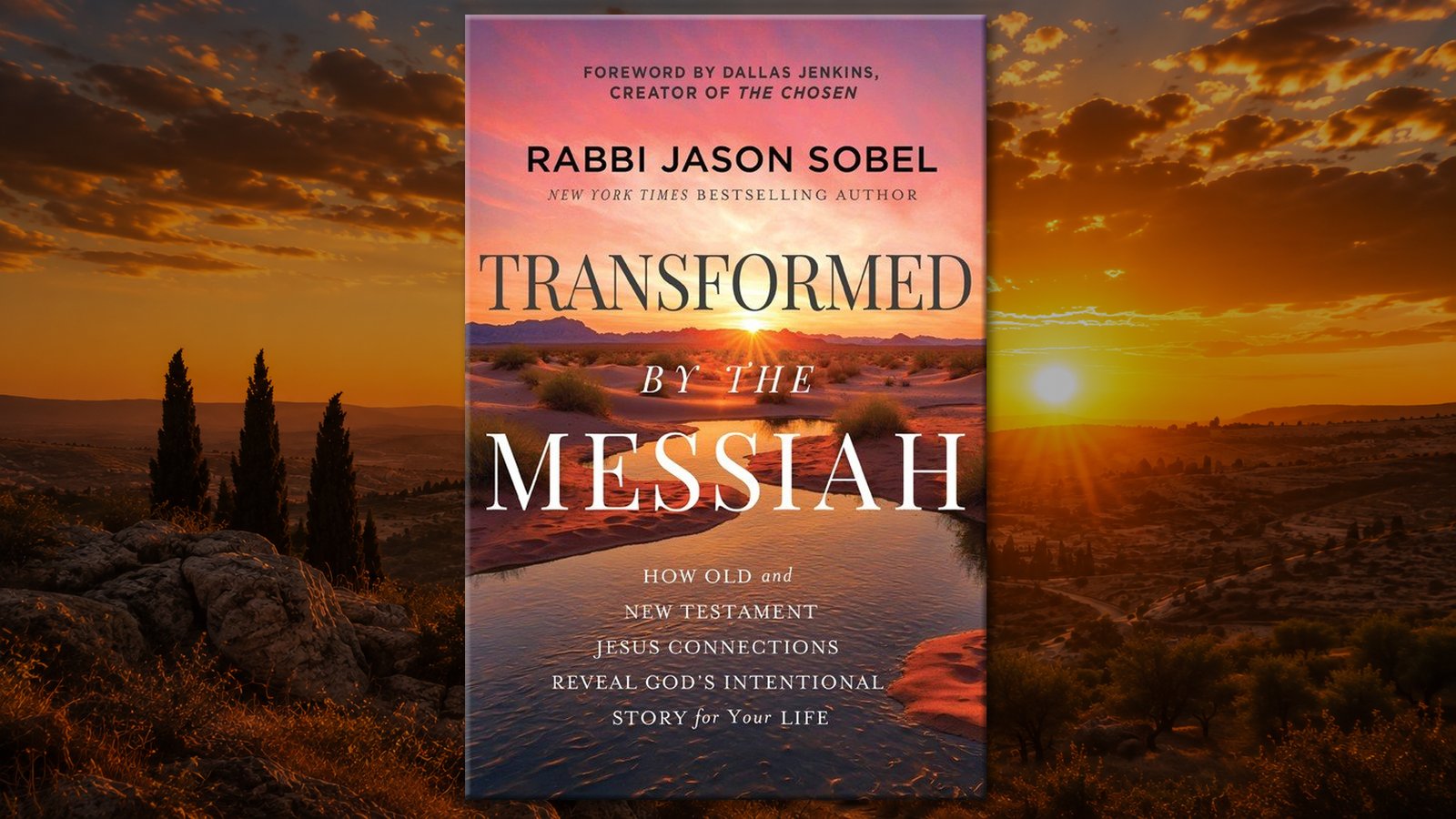
Related reading: Read how that calling continued in I Was in Prison and You Came to Me, then explore why following Jesus still requires Christian community.




One Response
Brian, this hit close to home. I’ve walked a version of this road myself, and I know the particular pain of losing not just a role, but a piece of your identity—and then watching people you love become collateral damage for choices that weren’t theirs.
What you said about confusing ministry with position is exactly right, and it’s a truth I had to learn the hard way too. It’s easy to say, “God isn’t finished with me,” when things are going well. It’s a whole different level of faith to believe it while sitting in the wreckage.
What stands out most to me is what you wrote about your mom. That kind of quiet, undeserved loss is some of the hardest to watch because there’s nothing you can do to fix it or give back what was taken from her. But faithfulness like hers doesn’t go unnoticed by God, even when it goes unnoticed—or worse, is punished—by people. Position is something others can take away. Calling isn’t theirs to touch.
I’m praying for you both—that the doors God is opening become clearer with time and that the ones that closed begin to make more sense as He reveals what He is doing next.
Keep writing, Brian. This is ministry too.