Celebrating the courage, conviction, and biblical truths that changed Christianity forever.
On October 31, 1517, a relatively unknown German monk set in motion a series of events that would forever change the course of Christianity. He didn’t command an army. He didn’t possess great political power or enormous wealth. He wasn’t a king, a pope, or a ruler of nations. He was simply a theology professor with serious questions about the teachings and practices of the church.
His name was Martin Luther, and his actions helped ignite what we now know as the Protestant Reformation.
More than 500 years later, Christians around the world commemorate October 31 as Reformation Day, remembering a movement that challenged religious authority, transformed the church, and renewed attention to the foundational truths of Scripture.
But Reformation Day is more than an anniversary on the Christian calendar. It’s a reminder that God’s Word must remain central to our faith, that salvation is found in Jesus Christ, and that biblical truth is worth defending regardless of the consequences.
The Day That Changed Christianity
To understand the significance of Reformation Day, we need to travel back to 16th-century Europe. During this period, the Roman Catholic Church held tremendous religious, cultural, and political influence. For most European Christians, the church was central to everyday life. Yet serious concerns had developed over corruption, abuses of authority, and certain theological teachings.
One particularly controversial practice involved indulgences, which were associated with the remission of temporal punishment for sins. Although official Catholic teaching did not define indulgences as the purchase of forgiveness, some fundraising campaigns promoted them in ways that encouraged people to believe financial contributions could help release souls from purgatory.
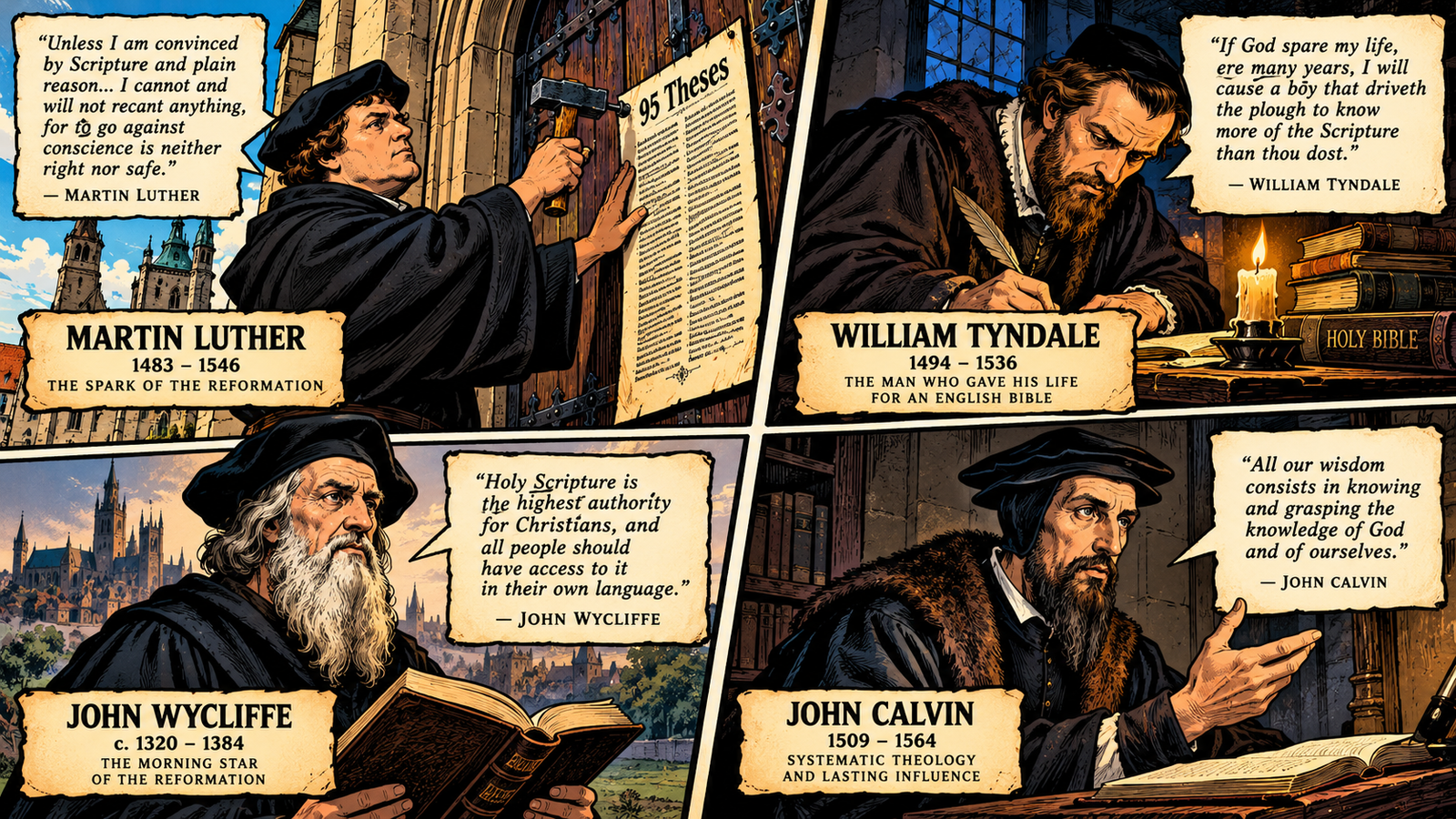
Martin Luther believed these practices were deeply misleading and undermined the biblical message of repentance and forgiveness. On October 31, 1517, Luther circulated his famous Ninety-Five Theses, a series of propositions intended to encourage theological debate.
According to longstanding tradition, Luther nailed his theses to the door of the Castle Church in Wittenberg, Germany. Historians debate whether this particular event occurred exactly as described, but there is no question that his writings helped spark a movement that would transform Christianity.
Initially, Luther sought reform within the existing church rather than the creation of a separate denomination. However, his challenges soon developed into a much broader theological conflict. At the heart of the controversy was a fundamental question: Who has the final authority over Christian faith and practice: human religious institutions or the inspired Word of God?
For Luther and the other Reformers, the answer was clear.
2 Timothy 3:16–17 declares: “All Scripture is breathed out by God and profitable for teaching, for reproof, for correction, and for training in righteousness, that the man of God may be complete, equipped for every good work.”
The Reformers believed that Scripture must remain the supreme authority by which Christian doctrine and religious practices are evaluated. That conviction would change everything.
Before Luther: The Morning Star of the Reformation
Although Martin Luther is often considered the central figure of the Protestant Reformation, calls for reform began long before he was born. More than a century earlier, an English theologian named John Wycliffe challenged the wealth, authority, and practices of the medieval church. Wycliffe believed that Scripture should be the ultimate authority in matters of faith and that ordinary Christians should have access to the Bible in their own language.
During the late 14th century, Wycliffe and those associated with his movement helped produce one of the earliest complete English translations of the Bible. These manuscripts were painstakingly copied by hand, long before the printing press made widespread distribution possible.
Wycliffe’s teachings influenced later reform movements, including the work of Jan Hus in Bohemia. Hus likewise challenged abuses within the church and emphasized the authority of Scripture. In 1415, he was condemned as a heretic and executed by burning.
Wycliffe himself had died decades earlier, but his teachings remained so controversial that church authorities ordered his remains exhumed and burned in 1428. These men helped prepare the way for the changes that would eventually sweep across Europe.
The Reformation didn’t suddenly appear in 1517. It was preceded by generations of Christians who questioned religious abuses and called for a return to biblical truth.
The Printing Press: How One Man’s Words Changed the World
One of the most fascinating aspects of the Protestant Reformation is how rapidly Luther’s ideas spread throughout Europe. Just decades earlier, such a movement would have been extraordinarily difficult to sustain. But Luther lived at a pivotal moment in history.
Around 1450, Johannes Gutenberg had helped revolutionize European printing through the development of movable metal type and a practical printing system. By the early 1500s, printing presses were operating in cities throughout Europe.
For centuries, books had been painstakingly copied by hand, making them expensive and difficult to obtain. The printing press dramatically increased the speed at which written material could be reproduced and distributed, and Luther’s writings became some of the most influential publications of the era.
Within weeks of their circulation, his Ninety-Five Theses were being printed and shared far beyond Wittenberg. Over the following years, his sermons, pamphlets, and theological writings reached an enormous audience.
The printing press gave the Reformation something previous reform movements had lacked: the ability to spread ideas across an entire continent with unprecedented speed.
Luther also recognized the importance of making Scripture accessible to ordinary people. In 1522, he published his German translation of the New Testament. His complete German Bible followed in 1534. Although German Bible translations existed before Luther, his work made a lasting contribution to the accessibility of Scripture and the development of the German language.
The Bible was no longer something that ordinary believers had to encounter primarily through clergy and church services. Increasingly, people could read and study God’s Word for themselves. This was revolutionary.
The principle behind it is beautifully illustrated in Acts 17:11, where the Bereans were commended because: “They received the word with all eagerness, examining the Scriptures daily to see if these things were so.”
The Reformers wanted Christians to examine Scripture, understand its teachings, and measure what they heard against the Word of God.
Here I Stand: The Courage of Martin Luther
By 1521, Luther’s writings had created an enormous controversy. He had been excommunicated by Pope Leo X, and his teachings were being condemned by religious authorities. That April, Luther was summoned to appear before the Diet of Worms, an imperial assembly convened under Holy Roman Emperor Charles V.
There, surrounded by some of the most powerful religious and political figures in Europe, Luther was asked whether he would retract his writings. The stakes could hardly have been higher. Luther knew that refusing to recant could result in severe punishment, including imprisonment or death. Earlier reformers had faced persecution for challenging established religious authority.
Yet Luther refused to withdraw his teachings unless he could be convinced through Scripture and sound reasoning that he was wrong. His response has become one of the most famous moments in church history. Although historians question whether Luther actually concluded his statement with the words “Here I stand, I can do no other,” the phrase captures the substance of his conviction.
He believed that his conscience was bound to the Word of God. Imagine the courage required to stand before an emperor, powerful church officials, and the political establishment of an entire continent and refuse to compromise one’s convictions.
Luther was eventually declared an outlaw under the Edict of Worms. However, Frederick the Wise, Elector of Saxony, arranged for him to be taken into protective custody at Wartburg Castle. During his time in hiding, Luther translated the New Testament into German.
What appeared to be an attempt to silence him instead became an opportunity to place Scripture into the hands of countless ordinary believers.
Luther was far from perfect. Some of his later writings, particularly his attacks against Jewish people, were profoundly wrong and must not be excused. Nevertheless, his stand before the Diet of Worms remains a powerful example of the importance of holding religious teachings accountable to Scripture.
As Proverbs 29:25 reminds us: “The fear of man lays a snare, but whoever trusts in the LORD is safe.”
William Tyndale: The Man Who Gave His Life for the Bible
The Protestant Reformation was much larger than Martin Luther. Throughout Europe, men and women risked their reputations, livelihoods, freedom, and sometimes their lives to advance what they believed to be biblical truth. Among them was William Tyndale, an English scholar whose contributions to the English Bible remain extraordinarily significant.
During Tyndale’s lifetime, translating and distributing Scripture without ecclesiastical authorization could bring severe punishment in England. Tyndale believed that ordinary English-speaking Christians should be able to read the Bible in their own language. In 1526, he published an English translation of the New Testament directly from the Greek. Because his work faced opposition in England, copies were printed on the European continent and smuggled into the country.
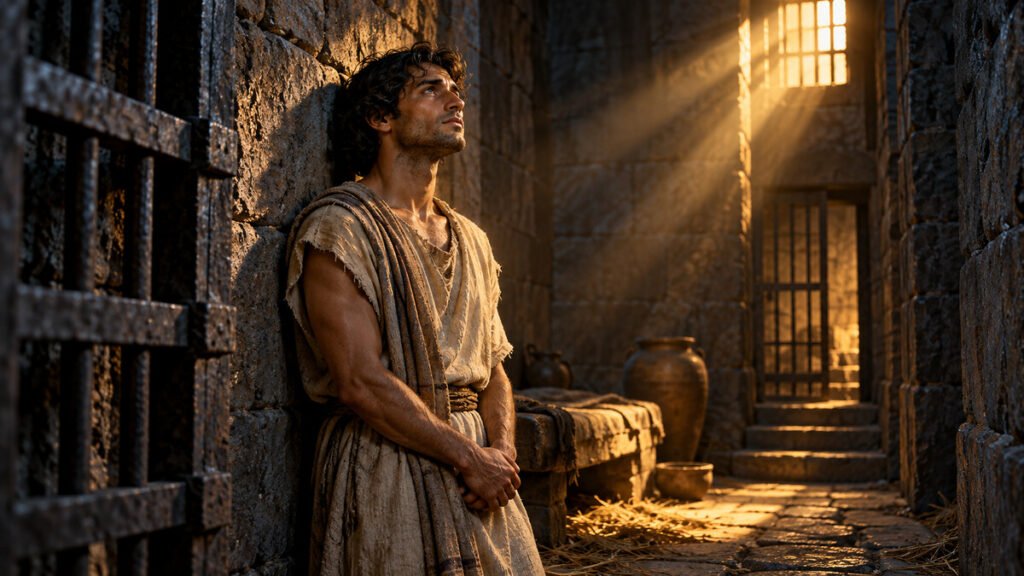
Tyndale continued his translation efforts despite the considerable danger. Eventually, he was betrayed, arrested, and imprisoned near Brussels. In 1536, he was executed for heresy. According to historical tradition, his final prayer was: “Lord, open the King of England’s eyes.” Within just a few years, English Bible translations were being authorized for use in churches under King Henry VIII.
Tyndale’s influence extended far beyond his lifetime. Much of his language was preserved in later English translations, including the King James Version of 1611. His story serves as a remarkable reminder of something modern Christians can easily take for granted.
Today, many of us have multiple Bibles sitting on shelves, several translations available on our phones, and immediate access to Scripture through websites, apps, and audio recordings. Yet there was a time when people risked their lives to make God’s Word available in the language of ordinary believers.
The Bible we can so easily access today came to us through generations of believers who believed its message was worth preserving, translating, and proclaiming.
The Five Solas: The Heart of the Reformation
Although the Reformation involved political struggles, institutional conflicts, and significant changes throughout European society, its most enduring legacy was theological. The movement emphasized several foundational biblical doctrines that later came to be summarized through the Five Solas. These five Latin expressions help explain the central convictions of Protestant Christianity.
1. Sola Scriptura — Scripture Alone
Scripture is the final, infallible authority for Christian faith and practice. The Reformers did not necessarily reject every church tradition or historical teaching. Rather, they insisted that no human institution, religious leader, or tradition should possess authority equal to or greater than God’s inspired Word.
2 Timothy 3:16 reminds us: “All Scripture is breathed out by God and profitable for teaching, for reproof, for correction, and for training in righteousness.”
2. Sola Fide — Faith Alone
We are justified before God through faith in Jesus Christ, not through our own religious achievements or good works.
Romans 3:28 declares: “For we hold that one is justified by faith apart from works of the law.”
Good works remain an important part of Christian living, but they are the fruit of salvation, not the means by which we earn it.
3. Sola Gratia — Grace Alone
Salvation is entirely a gift of God’s grace. No amount of money, religious activity, personal achievement, or moral effort can purchase forgiveness or earn eternal life.
Ephesians 2:8–9 states: “For by grace you have been saved through faith. And this is not your own doing; it is the gift of God, not a result of works, so that no one may boast.”
4. Solus Christus — Christ Alone
Jesus Christ is the only mediator between God and humanity. Our salvation rests upon His perfect life, sacrificial death, and victorious resurrection.
1 Timothy 2:5 teaches: “For there is one God, and there is one mediator between God and men, the man Christ Jesus.”
5. Soli Deo Gloria — Glory to God Alone
All glory for our salvation belongs to God. Because salvation is accomplished through His grace and the finished work of Jesus Christ, no human being can claim credit for redemption.
1 Corinthians 10:31 instructs us: “So, whether you eat or drink, or whatever you do, do all to the glory of God.”
Together, these five principles summarize much of the theological foundation of the Protestant Reformation. They remind us that salvation is by grace alone, through faith alone, in Christ alone, according to Scripture alone, and for the glory of God alone.
Why Reformation Day Still Matters
More than five centuries have passed since Martin Luther circulated his Ninety-Five Theses. The world has changed dramatically. Nations have risen and fallen. Technology has transformed nearly every aspect of human life. Churches have grown, divided, merged, and established countless traditions.
Yet the fundamental questions raised during the Reformation remain remarkably relevant.
What is the ultimate authority for what Christians believe?
How can sinful people be reconciled to a holy God?
Is salvation something we earn, or something we receive through faith?
Does our worship point people toward Jesus Christ or toward human personalities and institutions?
These are not merely questions for historians and theologians. They concern every Christian.
The church today faces its own challenges. Biblical teaching can become overshadowed by cultural trends, political movements, entertainment, celebrity pastors, and the desire for popularity. Even sincere believers can become more attached to religious traditions or personal preferences than to the clear teachings of Scripture.
The Reformation reminds us that Christians must continually examine their beliefs and practices in light of God’s Word. In Romans 12:2, Paul writes: “Do not be conformed to this world, but be transformed by the renewal of your mind, that by testing you may discern what is the will of God, what is good and acceptable and perfect.”
The goal isn’t change simply for the sake of change. It’s a continual return to biblical truth. A church that faithfully follows Scripture must remain willing to recognize its mistakes, correct its errors, and submit to the authority of Jesus Christ. That principle is as important today as it was in 1517.
Remembering the Reformers Without Idolizing Them
Celebrating Reformation Day doesn’t mean pretending the Protestant Reformation was a flawless movement or that its leaders were perfect Christians. They weren’t. The Reformation brought important theological reforms, but it also contributed to bitter divisions, political struggles, persecution, and religious violence. Martin Luther, John Calvin, Ulrich Zwingli, John Knox, and other influential figures held differing theological views and sometimes demonstrated serious personal and moral failures.
Their accomplishments should be examined honestly, alongside their mistakes. Also, Reformation Day is not an excuse to ridicule or attack Catholic Christians. The theological disagreements that emerged during the Reformation remain significant, but they should be discussed with historical accuracy, humility, and respect. The Reformers were human beings, not saviors.
The value of remembering these historical figures lies in understanding how God worked through imperfect people and how their efforts helped shape the Christian church. Their stories should ultimately direct our attention away from themselves and toward the authority of Scripture and the saving work of Jesus Christ.
A Legacy Worth Celebrating
Reformation Day provides an opportunity to reflect on an extraordinary chapter of Christian history. It reminds us of a time when the authority of Scripture was fiercely debated, when translating the Bible could place a person’s life in danger, and when challenging established religious teachings could bring devastating consequences. It reminds us of the importance of studying God’s Word rather than blindly accepting whatever we are told. It reminds us that salvation cannot be purchased, earned, or achieved through human effort, and perhaps most importantly, it reminds us that the Gospel is not about what humanity can accomplish for God, but about what God has accomplished for humanity through Jesus Christ.
The Protestant Reformation changed the course of history, but its most valuable legacy isn’t found in political revolutions, denominational structures, or famous theological debates. It’s found in the enduring truths of Scripture.
The greatest way to honor the Reformation isn’t simply to remember what happened in Wittenberg 509 years ago. It’s to remain faithful to the Word of God today. So on October 31, take a moment to remember the men and women who sacrificed so much to defend and proclaim biblical truth. Open your Bible. Study its teachings. Reflect on the incredible gift of salvation through Jesus Christ, and remember that the same Gospel proclaimed by the Reformers remains just as powerful and relevant today.
Happy Reformation Day!
Soli Deo Gloria — To God alone be the glory.