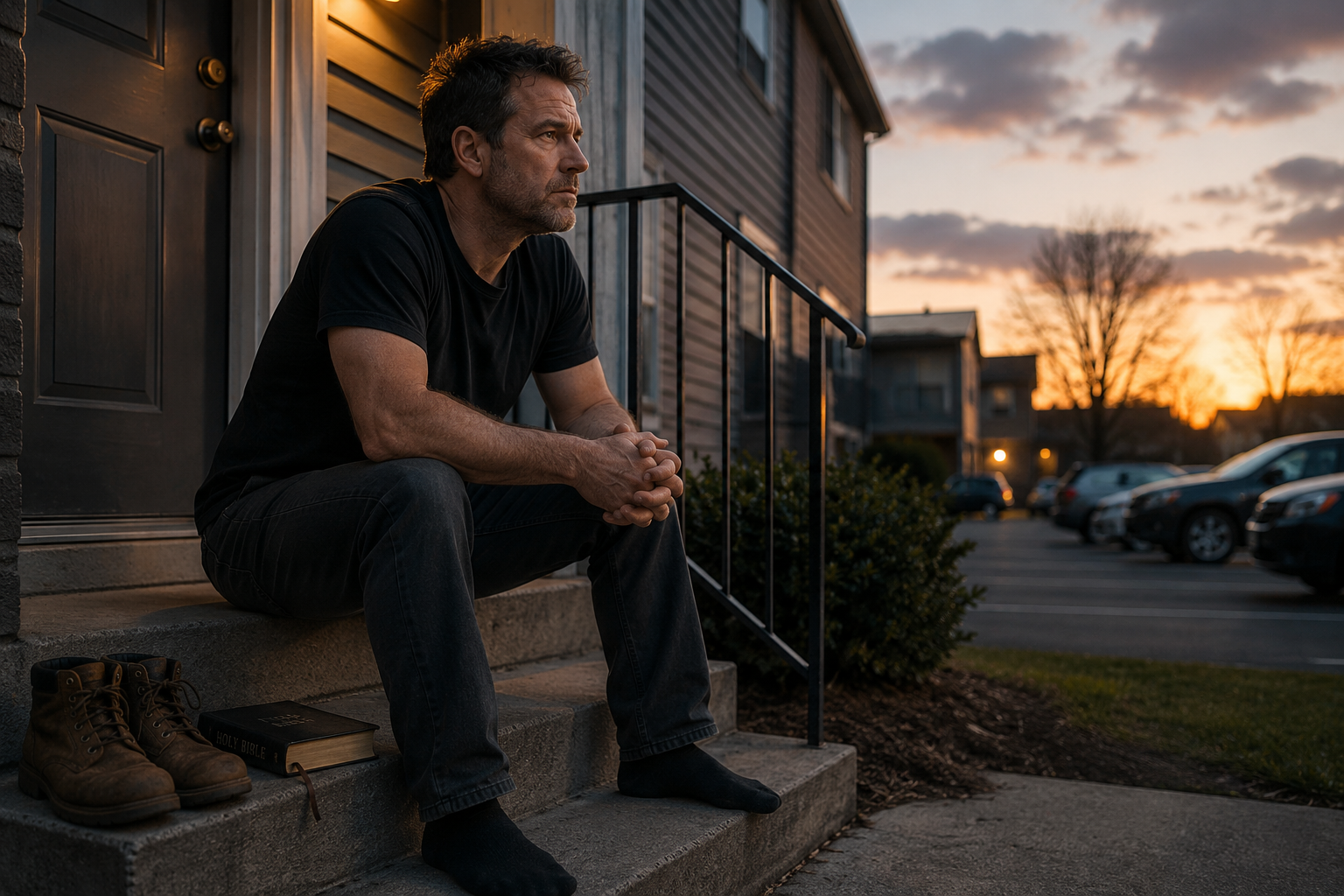
I had the receipts. I had the truth. But neither one stopped the damage.
When you are falsely accused, having the truth on your side does not always stop the damage.
Brian recently wrote about responding wisely when you are falsely accused. As I read it, my mind went back almost twenty years to a season when being right and being believed turned out to be two very different things.
It was a season when one thing came after another before I could catch my breath from the thing before it.
The Knock at the Door
Months earlier, as I wrote about in The Widow Maker, doctors had found my main artery 99% blocked—one step from the kind of heart attack that doesn’t leave you a second chance. I never had the heart attack. God got me through it before it happened.
While I was still catching my breath from that, the sheriff knocked on my door.
I wasn’t home. Work had me on the road in Cincinnati for the week. My wife answered. The sheriff opened his laptop, showed her a photo, and asked if that was me.
She said yes.
Then he told her there was a felony warrant out for my arrest for non-payment of child support.
She didn’t panic or argue. She said, “Hold on a second,” and walked to get her purse.
Inside it were receipts. Every one of them.
My wife paid my support every week because I was always on the road and couldn’t get to the office in time myself. She made sure it never got missed. She laid every receipt out for him, one by one.
I wasn’t dodging anything. I had paid every dollar required under the agreement that was in place.
The sheriff went through the receipts with a look on his face like the pieces weren’t adding up.
“This is weird,” he said.
Then he apologized. “Ma’am, I’m just doing my job.”
A Number That Shouldn’t Have Been There
My wife got me on the phone. The sheriff asked where I was. I didn’t tell him—not because I was running, but because I wanted to speak with my attorney before I turned myself in to anyone.
My attorney began communicating with the court and digging into what had happened. The court knew I wasn’t trying to disappear or avoid the situation. After speaking with them, my attorney advised me to turn myself in, so I did.
What he discovered was a secret indictment against me even though the court had approved a lower, manageable payment based on my actual income. The warrant used the old amount—an income I hadn’t made in a long time. With penalties added, the system said I owed a little more than $20,000.
I had faithfully paid what the approved agreement required, and I had the receipts to prove it.
To this day, I still don’t have a good answer for how that happened.
Paid in Full
I turned myself in and sat in jail until my court date.
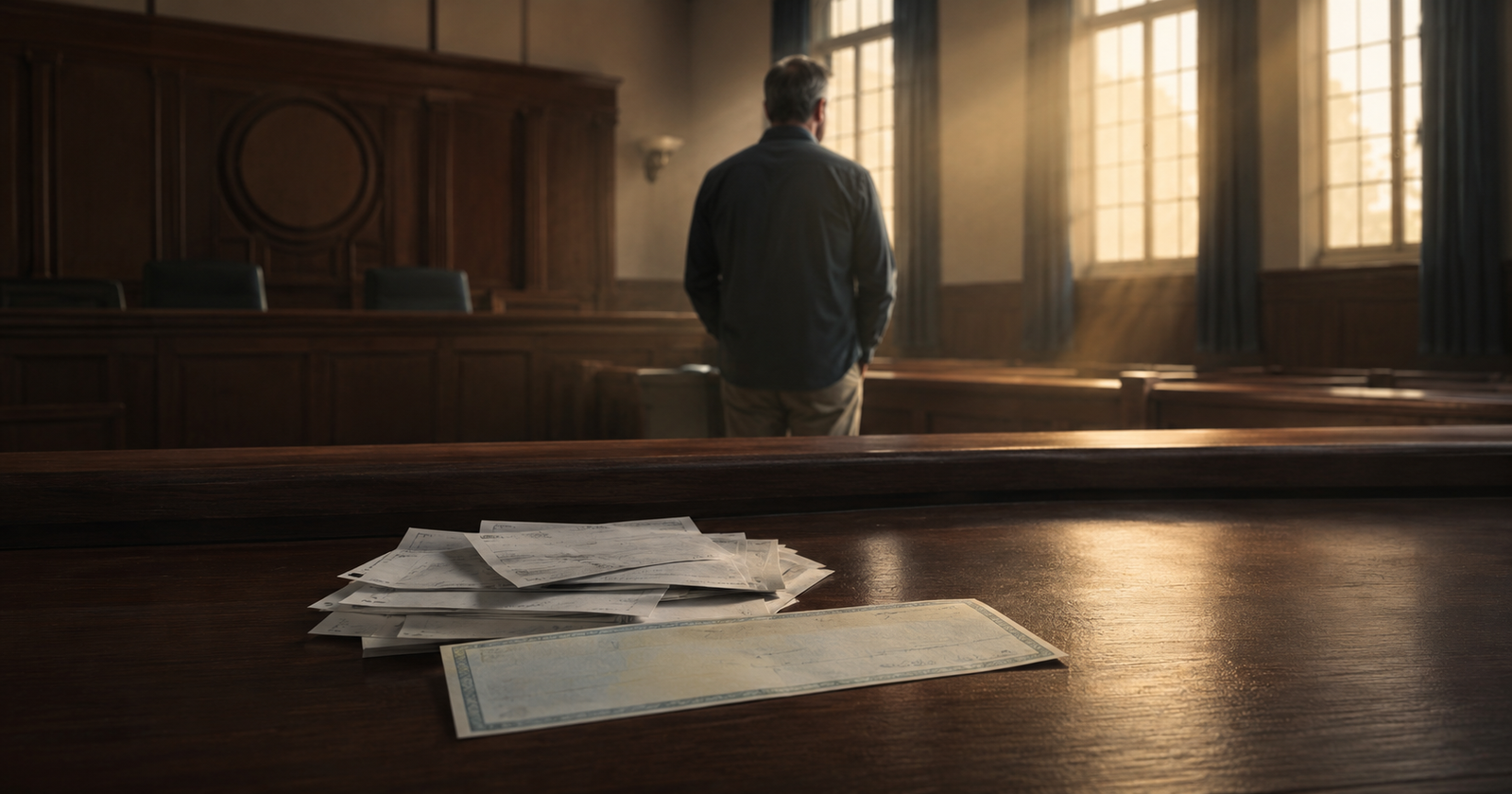
While I was there, my wife pulled together the little more than $20,000 the system said I owed. On the day I stood before the judge, she handed me one cashier’s check for the entire amount, and I laid it on the bench.
Paid in full.
Settled.
The courtroom didn’t seem interested in hearing my side when I first walked in. But when that check hit the bench, the room’s whole posture changed.
Satisfied. Surprised.
I could see it on their faces. They hadn’t expected it.
The felony charge was dismissed. There is no felony on my record.
You would think that would have been the end of it.
It wasn’t.
When You Are Falsely Accused and the Damage Keeps Coming
I lost my job because of the arrest.
It took time—and my attorney working to get everything straightened out—before I could find work again. When I finally did, the same child support enforcement agency suspended my commercial driver’s license.
By mistake.
They admitted it. Their error was on record. Yet I still had to pay the fines and reinstatement costs to get my license back. My new employer began asking questions and wondering whether keeping me was worth all the trouble following me.
Even my caseworker at the child support office cried with me. Actual tears. She told me people above her were making the decisions and there was nothing she could do.
The caseworker believed me.
Still, she couldn’t fix it.
There were also seasons when I couldn’t see my two older children. On and off, access to them seemed to depend on things that had nothing to do with whether I was a good father. It felt as though they were being used as leverage in a fight that was never supposed to involve them.
I don’t believe my ex-wife made every one of those decisions entirely on her own. It always seemed there was more pressure behind some of it than what appeared on the surface. That part isn’t fully my story to tell, so I won’t go any further.
But it is part of why that season cost me far more than money.
What I Need to Say About Forgiveness
Before I go any further, I need to say this clearly: I don’t hold anything against my ex-wife or anyone else involved in this story. I have forgiven them.
When you are falsely accused, forgiveness can feel like surrendering the one thing you still control—your anger. But holding onto it would have allowed that season to keep taking from me.
That doesn’t mean I call everything that happened right or pretend the damage disappeared. Forgiveness doesn’t require me to rewrite the past. It means I refuse to let the past keep writing the rest of my life.
I’ve written about what happens when you’ve forgiven but the anger comes back. Forgiveness isn’t the absence of memory or pain. Sometimes you must choose it again when an old wound gets touched.
If I carried resentment over this for the rest of my life, it wouldn’t punish anyone I believed had wronged me. It would only punish me again.
The felony charge was dismissed. I refuse to let bitterness keep me serving a sentence long after the case ended.
In Forgiveness Doesn’t Care What Gender You Are, I wrote that forgiveness isn’t releasing people from what they did. It is releasing yourself from its grip. That is how I understand this season now.
I am not telling this story to reopen an old case or put anyone else on trial. The reason I tell it is that truth matters—and somebody living through something similar may need to know that both things can be true: what happened can be wrong, and forgiveness can still be possible.
Like the Messengers in Job
When I remember that season, I think about Job. Not because I lost everything the way he did. I didn’t.
But I understand something about the way the news came.
When you are falsely accused while other parts of life are already falling apart, the accusation can feel like another messenger arriving with more bad news.
Job didn’t receive one piece of bad news and then get time to recover. He got messenger after messenger, each one arriving with something worse before he had caught his breath from the last.
That was what this season felt like.
A main artery blocked at 99%.
Then a warrant at my door.
Jail followed.
After that, I lost my job.
Time away from my children came next.
Then a commercial driver’s license suspended because of somebody else’s mistake.
I had to pay fines for a mistake that wasn’t mine.
Meanwhile, a new employer wondered whether I was worth the risk.
One thing, then the next thing, before I had finished absorbing the one before it.
When the Truth Arrives Too Late
When you are falsely accused, having proof does not guarantee that people will hear you before the damage is done.
I had the receipts. I had the court’s approval in writing. None of it stopped the warrant, the arrest, the jail cell, the lost job, or the time I lost with my children.
Proverbs 18:17 says, “The first to speak in court sounds right—until the cross-examination begins.”
I learned the hard way that being right and being believed aren’t always the same thing. Sometimes proof only catches up after the damage has already been done.
Previously, I wrote that half the truth can destroy a life. That wasn’t written from a distance. I know what it feels like to have facts on paper while a different version of your life reaches people first.
During that season, I started going numb toward people, systems, and the hope that anyone would actually listen or care. I understand why Job eventually stopped trying to make his friends understand. The truth still mattered; he had simply stopped expecting them to hear it.
What I Can See Now
I wish I could say that I recognized God’s presence clearly while all of this was happening.
I didn’t.
Mostly, I was trying to survive the next phone call, bill, court decision, and threat of something else falling apart. It took years before I could recognize that God had been present through all of it.
Now I see Him in the doctors finding the blockage, my wife keeping every receipt, the sheriff recognizing that something wasn’t adding up, my attorney’s help, and my caseworker’s tears. He was still there when the court corrected what it could but couldn’t return everything already taken.
David prayed, “Declare me innocent, O Lord, for I have acted with integrity”.
I understand that prayer differently now. Sometimes it is the prayer of someone who has reached the end of what he can prove and places his name in the hands of the only Judge who already knows everything.
The Only Verdict That Matters
If you are living through a season when you are falsely accused and the truth doesn’t seem to be moving fast enough, I don’t have a tidy ending for you. I can’t promise that every person will believe you, every mistake will be corrected, or you will recover everything taken from you.
But I can tell you what took me years to see:
God is not waiting for all the evidence. He already knows.
The truth may be delayed. Justice may be incomplete. People may never understand every part of your story.
But God has never misunderstood you.
I am not a perfect man. Perfection has never been my claim. God continues to work on me, and He has had His hand on my life more times than I can count.
That is what matters.
There is no felony on my record. The charge was dismissed. But my identity was never going to be settled by a court record anyway.
I belong to Almighty God—the King of kings.
I am His work in progress in this life, and because of Jesus Christ, I have eternity with Him in my future.
That is the only verdict that will ultimately matter.
Keep Reading
Explore more articles about forgiveness, anger, and healing
A question to consider: When the truth is known by God but misunderstood by people, what helps you keep trusting Him?