There is an album by the Christian metal band Zao called The Fear Is What Keeps Us Here. I’ve always thought that was an interesting title because, whether Zao intended it this way or not, those six words describe something very real about fear: fear has a way of keeping us stuck. It keeps us in places we know we should leave. It keeps us from doing things we know we should do. It keeps us replaying yesterday, worrying about tomorrow, and sometimes completely missing what God is doing today.
Fear asks questions like, What if something goes wrong? What if I lose this? What if I fail? What if I get sick? What if someone hurts me? What if things never get better? Before long, we can construct an entire life around things that haven’t even happened. We make decisions based on possibilities instead of truth. We stay where we are because the uncertainty of moving forward seems more frightening than remaining where we have been. The fear is what keeps us here.
But that isn’t how God calls His children to live.
One of the clearest statements about fear in Scripture comes from 2 Timothy 1:7: “for God gave us a spirit not of fear but of power and love and self-control.” The familiar King James wording ends with “a sound mind.” Notice the contrast. Fear can produce instability, hesitation and confusion. God gives His people power, love and self-control. Our lives are not supposed to be governed by fear.
That doesn’t mean Christians never feel afraid. There is an important difference between experiencing fear and living under the control of fear. David certainly experienced it. He didn’t pretend otherwise. In Psalm 56:3, David says, “When I am afraid, I put my trust in you.” He doesn’t say, “I am never afraid.” He says, “When I am afraid.” Fear came, but David chose where to place his trust. Faith isn’t necessarily the absence of fear. Faith is choosing whom we will trust when fear arrives.
That distinction matters because Christians sometimes treat fear as though experiencing it automatically means we don’t have enough faith. Scripture is much more realistic than that. Moses was afraid. Elijah experienced fear. David experienced fear. The disciples were afraid. Paul faced circumstances that would terrify most of us. Courage wasn’t the complete absence of fear in their lives. Courage meant trusting and obeying God in spite of frightening circumstances. The problem begins when fear moves from being an emotion we experience to becoming the authority that makes our decisions.
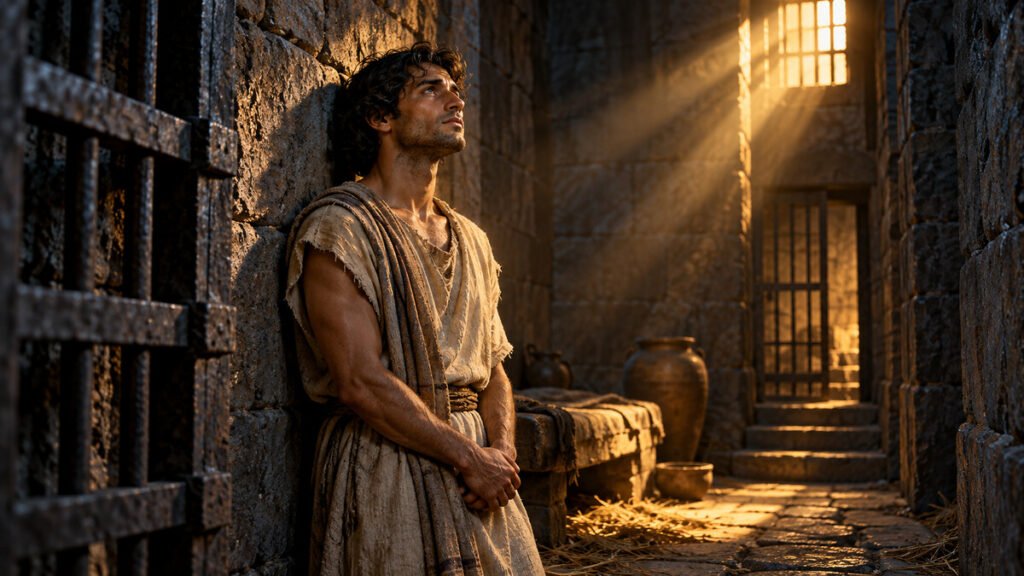
Fear can become a prison.
Paul makes that connection in Romans 8:15: “For you did not receive the spirit of slavery to fall back into fear, but you have received the Spirit of adoption as sons, by whom we cry, ‘Abba! Father!’” Fear and slavery appear right beside each other. There is something about continually living in fear that puts chains around us. Christ, on the other hand, reminds us that we belong to the Father. Maybe that is one reason fear is so powerful: fear constantly tries to make us forget who our Father is.
There are almost endless things we can be afraid of if we allow our minds to continually ask, What if? We can fear losing our jobs, running out of money, not being able to pay the bills or watching our financial security disappear. We can fear cancer, heart attacks, unexpected diagnoses, viruses, infections and rare diseases we happened to read about somewhere. We can worry about our children swimming in a lake because of the possibility of a brain-eating amoeba, or encounter some other extremely rare danger and suddenly begin living as though that possibility is waiting around every corner.
We can fear tornadoes, thunderstorms, lightning, flooding, high winds, snowstorms and every severe-weather alert that appears on our phones. We can fear car accidents, house fires, crime, strangers and what might happen to our children when we aren’t there to protect them. We can fear infidelity, betrayal, abandonment, divorce or losing someone we love. We can fear failure. We can fear rejection. We can fear getting older. We can fear dying. We can even become afraid of simply making the wrong decision because we don’t know what consequences might follow.
And here’s the difficult truth: almost every one of those things is possible.
People get cancer. Tornadoes happen. Marriages fail. Jobs disappear. Accidents occur. People betray one another. Children get hurt. Rare diseases really do exist. Pretending those things aren’t real isn’t faith; it’s denial. But acknowledging that something can happen is very different from living as though it will happen.
That’s where wisdom and fear begin to separate.
Wisdom hears that severe weather is approaching and takes appropriate precautions. Fear becomes consumed with the possibility that catastrophe is coming. Wisdom takes reasonable precautions against illness. Fear begins treating every unlikely disease as an imminent threat. Wisdom manages money responsibly and prepares for difficult seasons. Fear continually says there will never be enough. Wisdom recognizes that relationships require trust, boundaries and faithfulness. Fear becomes consumed with the possibility of betrayal. Wisdom responds appropriately to reality. Fear can become consumed by possibility.
And possibilities are endless.
If our peace depends upon eliminating every possibility of something going wrong, we will never have peace. There will always be another disease. Another storm. Another financial uncertainty. Another danger to our children. Another relationship that could fail. Another headline telling us about something terrible that happened somewhere to somebody.
Eventually we have to recognize something humbling: we were never in control of most of these things to begin with.
Jesus asks in Matthew 6:27, “And which of you by being anxious can add a single hour to his span of life?” Worry can make us feel as though we’re accomplishing something because our minds are constantly working. But worrying about cancer doesn’t prevent cancer. Worrying about a tornado doesn’t change the weather. Worrying about money doesn’t put another dollar in the bank. Worrying about betrayal cannot force another person to remain faithful.
Jesus expands on this throughout Matthew 6:25–34. He points His followers toward the birds and the flowers and reminds them of the Father’s care. Then He brings the issue back to today: “Therefore do not be anxious about tomorrow, for tomorrow will be anxious for itself.” Think about how much suffering we can create by doing exactly the opposite. We experience today’s actual problems and then add tomorrow’s imaginary ones.
There are things we can do, and there are things we must entrust to God. Go to the doctor. Save for emergencies. Watch the weather when conditions are dangerous. Protect your children. Build a faithful marriage. Lock the doors. Make wise decisions. Take reasonable precautions.
And then live.
Because there comes a point when caution stops protecting our lives and fear starts preventing us from living them.
That brings to mind another song: Zach Williams’ Fear Is a Liar. Even the title contains an important biblical truth. Fear tells us things that simply aren’t true. Fear tells us we’re alone. It tells us there is no hope. It tells us our worst-case scenario is inevitable. It tells us we’ll never recover. It tells us God has forgotten us. It tells us that because we can’t see a way forward, there isn’t one.
Fear is convincing because it often begins with something that could happen and quietly transforms it in our minds into something that will happen. But God never asked us to place our faith in our predictions. He asked us to place our faith in Him.
God repeatedly tells His people not to fear. Isaiah 41:10 says, “fear not, for I am with you; be not dismayed, for I am your God.” Notice that God doesn’t merely command us not to fear and leave it there. He gives us a reason: He is with us. Our confidence isn’t supposed to come from believing nothing bad can happen. Our confidence comes from knowing that whatever happens, God has not abandoned us.
Jesus gives His disciples the same assurance in John 14:27: “Peace I leave with you; my peace I give to you. Not as the world gives do I give to you. Let not your hearts be troubled, neither let them be afraid.” He wasn’t speaking to men who were about to experience easy lives. These men would experience persecution, rejection, loss and tremendous suffering. Their peace therefore couldn’t depend upon their circumstances. It had to come from Christ.
That’s the kind of peace I want. Not the peace that comes because everything around me finally worked out the way I wanted it to, but the peace that exists even when it hasn’t.
There is another powerful statement in 1 John 4:18: “There is no fear in love, but perfect love casts out fear.” God’s answer to fear isn’t simply greater human courage. It is a deeper confidence in Him and His love. The more securely we understand who God is and how completely we belong to Him, the less power fear has to dictate our lives.
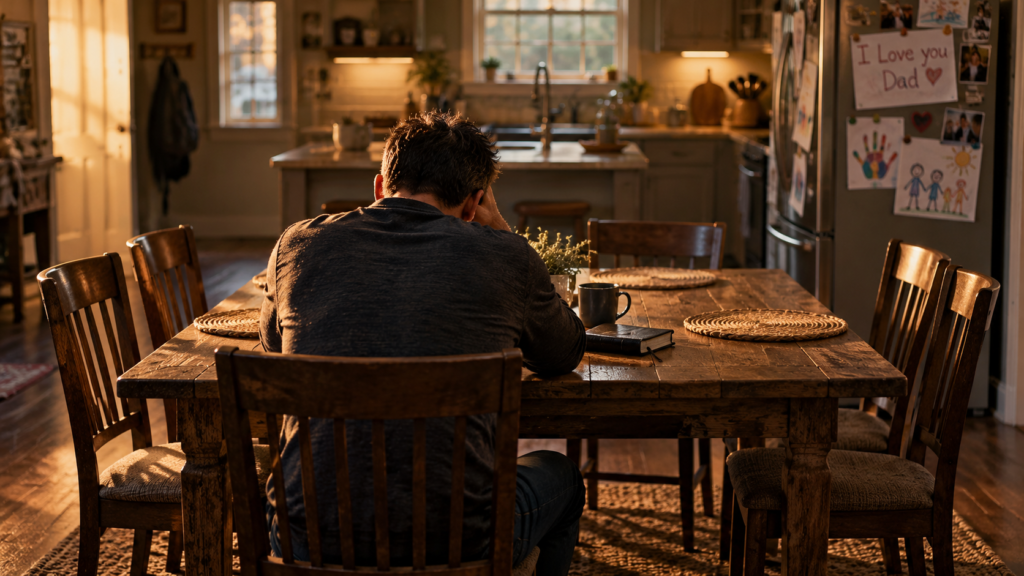
This matters in our homes as well. Fear doesn’t only affect the person who is afraid. It can shape the atmosphere of an entire family. When fear becomes the filter through which decisions are made, everyone can begin living within its boundaries. Instead of asking, What is wise? What is true? What does God want us to do? we can begin asking only, What if something bad happens?
As parents, we can unintentionally pass those fears to our children. Our children need wisdom and discernment. They need to understand that there are genuine dangers in this world and that actions have consequences. But they also need to see what it looks like to trust God in a world we cannot control. We cannot protect our children from every illness, every disappointment, every failure, every dangerous situation or every difficult person they will encounter. Eventually they have to learn the same thing we do: their ultimate security is not found in controlling everything around them. It is found in Christ.
Faith doesn’t mean becoming reckless. There is a difference between wisdom and fear. Wisdom sees danger and responds appropriately. Fear sees danger everywhere and becomes paralyzed. Wisdom says, I should be careful. Fear says, I can’t move. Wisdom considers reality. Fear continually imagines catastrophe. Wisdom seeks God and moves forward.
Fear keeps us here.
Perhaps that is the question worth asking ourselves: Where has fear been keeping me?
Maybe fear keeps you trapped in the past because you’re afraid of what moving forward means. Maybe it keeps you from forgiving because you’re afraid forgiveness will make you vulnerable. Maybe it keeps you from loving because you’ve been hurt before. Maybe it keeps you from pursuing something God has placed before you because failure seems unbearable. Maybe fear keeps you desperately trying to control circumstances that were never yours to control in the first place.
Eventually, fear and faith collide.
Fear says, But what if?
Faith says, Even if.
Even if the diagnosis comes. Even if the storm hits. Even if the money gets tight. Even if someone disappoints me. Even if something happens that I never saw coming, God will still be God. That doesn’t mean the pain won’t be real. It doesn’t mean we won’t grieve, struggle or sometimes feel afraid. It means our circumstances do not get the final word.
That is the freedom fear desperately tries to steal from us.
God hasn’t promised us a life without frightening circumstances. He has promised that we won’t face them alone. He hasn’t promised that tomorrow will unfold exactly as we want. He has promised that He will still be God when tomorrow arrives.
So when fear says, You can’t, God reminds us that His power is greater than our weakness. When fear says, You’re alone, God says, I am with you. When fear says, Everything is out of control, faith reminds us that nothing is outside God’s sovereign control. When fear says, Stay here, faith says, trust God and take the next step.
We don’t have to know exactly where that step leads. We don’t have to understand everything God is doing. We don’t have to solve tomorrow before we go to bed tonight. We simply have to trust the One who is already there.
There will always be another what if.
But there will also always be the same God.
Sometimes the greatest thing standing between where we are and where God is leading us isn’t the obstacle in front of us. Sometimes the prison isn’t the danger itself. It is spending our lives afraid that the danger might come.
The fear is what keeps us here.