
We are now in the middle of October, and with Halloween fast approaching, we’re surrounded by costumes, masks, make-believe, and fantasy worlds. For one night, people get to pretend they’re someone they’re not. They put on costumes, assume different identities, and step into imaginary realities. It’s all part of the season. When Halloween is over, the costumes come off, the decorations come down, and everyone returns to reality.
But what happens when someone never takes off the costume? What happens when the fantasy becomes so convincing that a person begins believing they’re actually the character they’ve created?
I’m not talking about Halloween anymore.
There’s a place some people choose to live that I like to call Victim Fantasyland. It’s not a real place, of course, but it might as well be. It’s a world where someone is always the victim, someone else is always responsible, and personal accountability is practically nonexistent. In this imaginary world, feelings become facts, accusations become truth, and every unfortunate circumstance becomes further evidence that life has somehow treated them unfairly.
The troubling thing about Victim Fantasyland is that the person living there may genuinely believe the story they’ve created. They’ve repeated it so many times, justified it in so many ways, and perhaps surrounded themselves with enough people who reinforce it that they no longer question whether their version of reality is accurate. What began as hurt, misunderstanding, resentment, or even a deliberate distortion can eventually become the lens through which they interpret everything.
Just because you believe something doesn’t make it true. Just because you feel like a victim doesn’t mean you’re innocent of wrongdoing. Halloween might be about pretending for a night, but Victim Fantasyland is about what happens when pretending becomes a way of life.
When We Begin Believing Our Own Lies
One of the most sobering passages in Scripture comes from Jeremiah 17:9: “The heart is deceitful above all things and beyond cure. Who can understand it?”
Think about that for a moment. The Bible doesn’t merely warn us that other people might deceive us. It warns us that our own hearts can deceive us. We are capable of convincing ourselves of things that simply aren’t true, particularly when those beliefs protect our pride, justify our anger, or excuse our behavior.
That’s what makes self-deception so dangerous. A person who knowingly tells a lie might eventually feel convicted about it. But someone who has convinced themselves that their distorted version of events is true may see absolutely no reason to repent. They don’t recognize their own contribution to the problem because, in their mind, they haven’t done anything wrong.
The longer someone lives inside that narrative, the harder it can become to challenge it. Every disagreement feels like another attack. Every attempt at accountability feels like persecution. Every uncomfortable truth becomes something that must be explained away. The greatest danger of living a lie is eventually losing the willingness to recognize the truth.
The Blame Game Is as Old as Sin
Victim Fantasyland isn’t some modern invention. In fact, we can trace the human tendency to shift blame all the way back to the Garden of Eden. When God confronted Adam after he ate the forbidden fruit, Adam didn’t simply acknowledge his disobedience. Instead, he pointed toward Eve and, indirectly, toward God Himself. In Genesis 3:12, Adam replied, “The woman you put here with me—she gave me some fruit from the tree, and I ate it.” Notice what Adam did. He acknowledged the action, but he immediately redirected responsibility. Eve was to blame. Since God had given him Eve, perhaps God was partly responsible, too. Then Eve blamed the serpent.
It’s fascinating how quickly humanity learned to point fingers rather than accept responsibility. Thousands of years later, we’re still doing exactly the same thing. When something goes wrong, it’s easier to identify someone else’s failures than examine our own. It’s easier to rehearse how we’ve been mistreated than consider how our choices may have contributed to the situation. It’s certainly easier to demand accountability from someone else than practice it ourselves.
But God wasn’t interested in Adam’s excuses. He wanted Adam to answer for Adam’s actions. He expects the same from us.
When Being the Victim Becomes Your Identity
There’s an important distinction we need to make here. People really do suffer injustice. People are abused, betrayed, falsely accused, abandoned, and mistreated. Scripture repeatedly acknowledges the suffering of innocent people, and God cares deeply about those who have been wronged. However, experiencing genuine suffering is not the same thing as building your entire identity around being a victim.
A victim mentality can develop when someone begins interpreting nearly every conflict through the assumption that they are being wronged. Instead of evaluating each situation honestly, they begin with a predetermined conclusion: I’m the innocent one, and someone else is responsible.
In that mindset, being wronged can become a source of moral superiority. If I’m always the victim, then I’m never the offender. If someone else is always responsible for my unhappiness, then I never have to examine my own behavior. If every criticism is an attack, then I never have to consider whether that criticism contains some truth. The Apostle John confronts this kind of self-righteousness in 1 John 1:8: “If we claim to be without sin, we deceive ourselves and the truth is not in us.”
That’s a powerful statement. None of us is innocent of every wrongdoing. None of us has handled every relationship perfectly. None of us has always responded to adversity with wisdom, humility, or grace. We may be genuinely wronged in one situation while being responsible for our own sinful reactions in another. Both things can be true. Christian maturity requires the humility to recognize that distinction.
The Danger of Surrounding Yourself With People Who Reinforce the Lie
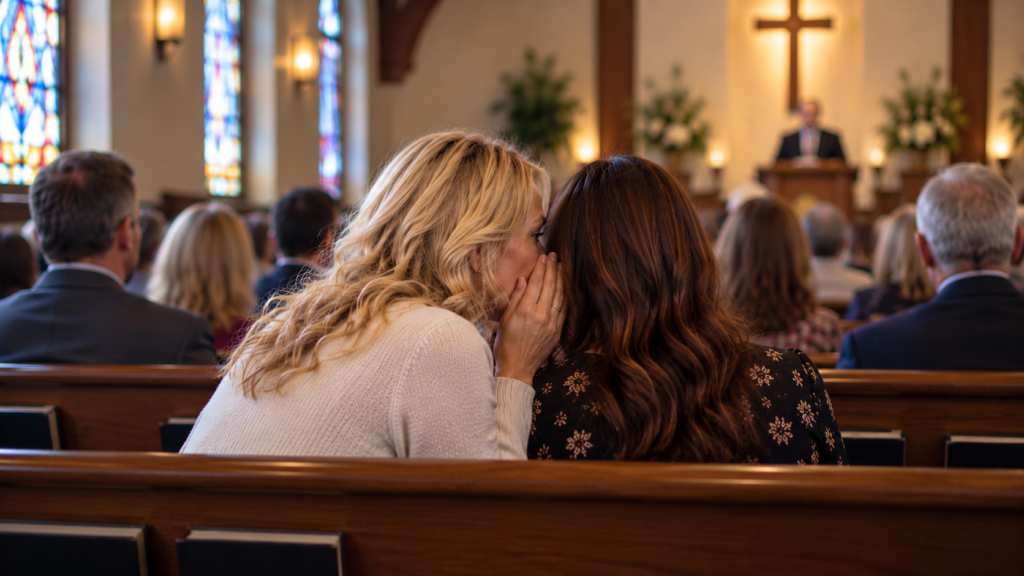
One of the most dangerous aspects of Victim Fantasyland is that it can become a very crowded place. When people are convinced they’ve been wronged, they may naturally gravitate toward others who validate their perspective. Sometimes those people are genuinely trying to help. Other times, they may be hearing only one side of the story, offering poor advice, or reinforcing assumptions that have never been examined.
The problem isn’t seeking support. We all need encouragement and wise counsel. The problem arises when we seek only the kind of counsel that tells us what we want to hear. (If I’m sounding redundant here, or this sounds like the last article, it’s because I’m attempting to create a narrative. For some out there, this message just needs to sink in.) Proverbs 18:17 offers a remarkably practical warning: “In a lawsuit the first to speak seems right, until someone comes forward and cross-examines.” In other words, hearing one person’s version of events isn’t necessarily the same as understanding the truth.
Yet how often do people make judgments, take sides, and offer advice without ever considering another perspective? How often do family members, friends, or even fellow Christians become participants in a conflict simply because they’ve accepted someone’s account without examining it? Wise counsel doesn’t merely affirm our feelings. It challenges our assumptions, asks difficult questions, and points us toward God’s truth. Someone who genuinely loves us should be willing to tell us when we’re wrong. We should be humble enough to listen.
Bitterness Builds the Walls of Fantasyland
I believe bitterness is one of the strongest forces that can keep someone trapped in a distorted understanding of reality. When we refuse to deal with anger and resentment, those emotions can begin influencing how we interpret other people’s actions. We assume the worst. We assign motives without evidence. We revisit old grievances and interpret new situations through the pain of the past.
Eventually, bitterness can become so deeply rooted that even attempts at reconciliation are interpreted as manipulation, and even sincere kindness is viewed with suspicion. The writer of Hebrews warns us in Hebrews 12:15 to make sure that no bitter root grows up to cause trouble and defile many. Notice that bitterness doesn’t necessarily remain confined to one person. It spreads. It damages relationships, divides families, and influences others who may have had nothing to do with the original conflict.
I’ve learned that bitterness can make us prisoners of our own grievances. We replay what happened, rehearse what someone supposedly owes us, and convince ourselves that peace is impossible until someone else changes, but scripture doesn’t give us permission to harbor bitterness simply because we believe we’ve been wronged.
In Ephesians 4:31–32, Paul calls believers to put away bitterness, rage, anger, and malice, replacing them with kindness, compassion, and forgiveness. That doesn’t mean pretending wrongdoing never occurred. It doesn’t mean abandoning appropriate boundaries or accountability. It means refusing to allow resentment to control our hearts.
When Feelings Become More Important Than Facts
We live in a culture that frequently treats personal feelings as unquestionable truth. Someone says, “I feel attacked,” and therefore assumes an attack occurred. Someone says, “I feel manipulated,” and therefore concludes another person must have intended manipulation. Someone says, “I feel unsafe,” and assumes that feeling, by itself, establishes that another person has acted dangerously.
But feelings, while important, are not always accurate interpretations of reality. Equally, the absence of visible evidence doesn’t automatically mean someone’s fear or experience is unfounded. Fear can make us suspicious. Anger can make us unreasonable. Hurt can make us defensive. Past experiences can influence how we interpret present circumstances.
That’s why Christians must learn to distinguish between what we feel, what we believe, and what we can honestly establish as true. Proverbs 12:15 tells us, “The way of fools seems right to them, but the wise listen to advice.” Notice the difference between seeming right and actually being right.
God never instructs us to ignore our emotions. But He also never tells us to elevate our emotions above truth. We are called to exercise discernment, examine evidence fairly, seek wisdom, and remain open to correction.
The Freedom of Leaving Fantasyland
Perhaps the saddest thing about Victim Fantasyland is that people can spend years living inside a story that keeps them angry, isolated, and spiritually stagnant. They may believe they’re protecting themselves when they’re actually protecting their pride. They may think they’re pursuing justice when they’re really pursuing vindication. They may demand apologies from everyone around them while remaining unwilling to acknowledge their own failures.
But the Christian life offers something far better than endlessly defending our own innocence. It offers repentance. Repentance requires us to stop defending every action, justifying every emotion, and blaming everyone else. It requires us to examine ourselves honestly before God and acknowledge where we’ve fallen short. In Psalm 139:23–24, David invites God to search his heart, test his thoughts, and reveal anything offensive within him.
I’ve returned to this passage repeatedly because I believe it captures something essential about genuine Christian growth. David doesn’t ask God to expose everyone else’s sins. He asks God to examine his own heart. That’s the kind of humility that leads to spiritual freedom.
In John 8:32, Jesus declares, “Then you will know the truth, and the truth will set you free.” In context, Jesus is speaking about abiding in His teaching and the freedom He provides from sin. But that truth also challenges our willingness to cling to falsehood and self-deception. Freedom doesn’t come from convincing everyone that we’re right. It doesn’t come from collecting supporters, rehearsing grievances, or winning every argument. It comes from submitting ourselves to Christ and allowing His truth to transform us.
The Truth Doesn’t Need a Fantasyland
Here’s something I’ve come to appreciate more deeply through my own experiences: I don’t have to be innocent of every mistake to be honest about what happened to me. I’ve made mistakes. I’ve responded poorly to situations. I’ve allowed anger to influence decisions I later regretted. I’ve had to confront those things, acknowledge them, and make changes.
But acknowledging my own failures doesn’t require accepting responsibility for things I didn’t do. Believing I’ve been wronged doesn’t give me permission to distort the truth about someone else. Those distinctions matter. I believe one of the greatest marks of spiritual maturity is the ability to say, “I was wrong about that,” without feeling as though our entire identity is threatened. It’s also the ability to say, “That accusation isn’t true,” without becoming consumed by bitterness or revenge.
The Christian life isn’t about proving that we’re always the hero in our own story. It’s about allowing Jesus Christ to be Lord over every part of that story, including the parts we’d rather not examine. Victim Fantasyland might offer temporary comfort. It might provide an explanation for every disappointment, someone to blame for every problem, and an excuse for every regrettable decision, but it cannot provide genuine peace because genuine peace cannot be built on self-deception.
At some point, every one of us must decide whether we want to be right in our own eyes or righteous before God.
Eventually, Halloween ends. The costumes are packed away, the masks come off, and the imaginary worlds disappear. But for someone living in Victim Fantasyland, the costume may have become so comfortable that taking it off feels threatening. Admitting the truth would mean confronting uncomfortable realities, acknowledging personal responsibility, and surrendering the identity they’ve worked so hard to protect.
Perhaps that’s the scariest thing about Victim Fantasyland. It’s not that someone might fool everyone around them. It’s that they might spend their entire life fooling themselves.
Sometimes, the first step toward freedom is having the courage to walk away from the story we’ve been telling ourselves and ask God to show us the truth.