Rating: ★★★★★ (5/5)
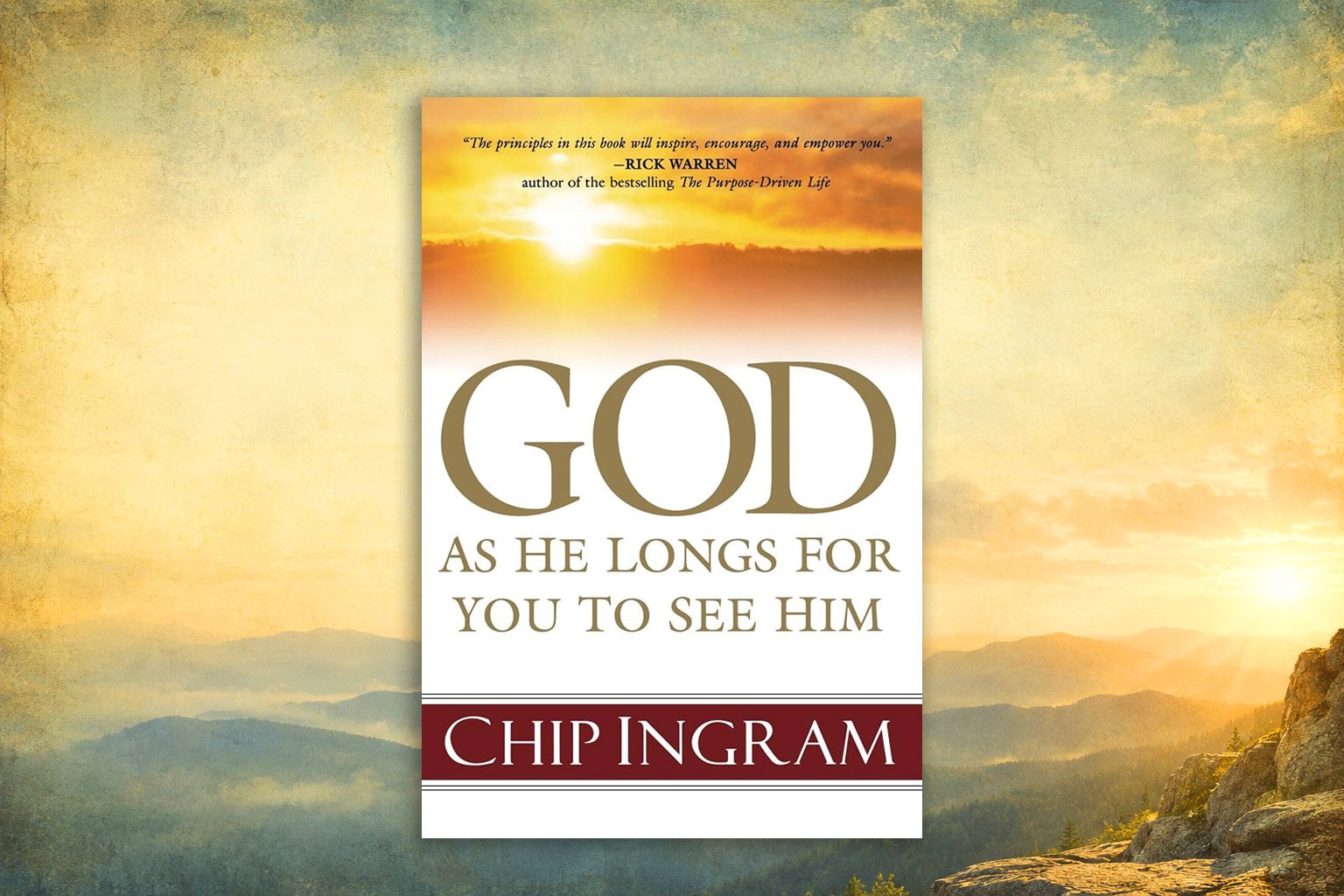
There are books that teach you something new about God, and then there are books that force you to examine whether the God you think you know is actually the God revealed in Scripture. God: As He Longs for You to See Him by Chip Ingram did the latter for me. It was gifted to me by a dear lady in my small group.
The central idea of the book is surprisingly simple: what we believe about God affects virtually everything about the way we live. Ingram walks through seven attributes of God, His goodness, sovereignty, holiness, wisdom, justice, love, and faithfulness, and challenges us not merely to know these things intellectually, but to allow them to change the way we see God and live our lives.
If I believe God is good, I will respond differently when something painful happens. If I believe He is sovereign, I will view circumstances outside my control differently. If I believe He is wise, I can trust Him when His plans make absolutely no sense to me. If I understand His holiness, I will take sin more seriously. If I believe He is just, I don’t have to spend my life trying to settle every score myself. And if I really believe He loves me and is faithful, I can keep walking even when everything around me seems to be falling apart.
That’s what I appreciate about this book. It isn’t simply a theology textbook filled with definitions. It forces you to ask a much more personal question: If this is really what God is like, how should that change the way I live? That question hits differently when life is going well than it does when life hurts.
I’ve spent much of the last year wrestling with questions about God that I never expected to ask. I’ve experienced loss, separation from people I love, accusations, disappointment, loneliness, financial pressure, anger, and circumstances I desperately wanted God to change but couldn’t change myself. There have been plenty of moments when I’ve wondered, God, where are You in all of this?
That’s one reason this book connected with me so deeply. It’s easy for me to say God is good when life is good. It’s much harder when something I love has been taken away. It’s easy to say God is sovereign when everything is going according to plan. It’s harder when my plans have been completely demolished. It’s easy to say God is wise when I understand what He’s doing. It’s much harder when I can’t see any logical reason for what He has allowed. It’s easy to believe God is just when justice happens quickly. It’s much harder when I believe I’ve been wronged and nothing seems to be happening about it.
And it’s easy to sing about God’s faithfulness when I’m standing on the mountaintop. Faithfulness becomes something altogether different when I’m trying to believe it from the valley. Proverbs 3:5–6 says, “Trust in the LORD with all thine heart; and lean not unto thine own understanding. In all thy ways acknowledge him, and he shall direct thy paths.” That phrase, “lean not unto thine own understanding,” has become increasingly important to me. There are things about my life right now that I simply do not understand. Maybe someday I will. Maybe I won’t. But understanding God and understanding everything God allows are two very different things.
One of the attributes Ingram examines is God’s goodness. Psalm 34:8 says, “O taste and see that the LORD is good: blessed is the man that trusteth in him.” I’ve had to wrestle with that word good. If God is good, why does He allow suffering? Why doesn’t He immediately stop injustice? Why does He allow families to break apart? Why does He allow prayers to seemingly go unanswered? Those aren’t theoretical theological questions for me anymore.
But perhaps I’ve sometimes made the mistake of defining God’s goodness by my circumstances. If something good happens, God is good. If something painful happens, I question whether He is. Scripture reverses that equation. God doesn’t become good because something good happened to me. God is good because goodness is part of who He is. My circumstances change. God’s character doesn’t.
The same is true of God’s sovereignty and wisdom, and those may be two of the hardest attributes for me to accept right now. Romans 8:28 tells us, “And we know that all things work together for good to them that love God.” Paul doesn’t say that all things are good. Some things are genuinely painful. Some things are sinful. Some things happen because we live in a fallen world populated by fallen people, including ourselves. The promise is that God can work through all of it.
That means the chapters of my story that I would gladly tear out may someday become chapters God uses. I don’t know how. That’s where God’s wisdom enters the picture. Isaiah 55:8–9 reminds us that God’s thoughts are not our thoughts and His ways are higher than ours. There are moments when I desperately want God to explain Himself. I want the blueprint. I want to see where this road leads. I want Him to tell me why certain things happened and when He’s going to fix them. Instead, He often gives me enough light for the next step and asks me to trust Him with the rest.
God’s holiness also prevents this from becoming simply an exercise in making ourselves feel better. Isaiah’s encounter with God demonstrates what happens when someone gets a genuine glimpse of God’s holiness. His immediate response wasn’t to point out everyone else’s sins. He said, “Woe is me! for I am undone” (Isaiah 6:5).
That’s important for me because pain has a way of making me very aware of what other people have done wrong. I can make lists. I can rehearse conversations. I can remember betrayals and offenses. But standing before a holy God changes the direction of my finger. Instead of constantly asking, What have they done?, sometimes I need to ask, God, what are You trying to change in me? His holiness reminds me that nobody standing at the foot of the cross gets to boast. We all need grace.
God’s justice may be the attribute I’ve struggled with the most. I want justice. There are situations in my life where I believe things have happened that were profoundly unfair. My natural instinct is to want everything exposed, corrected, and made right. But Scripture continually reminds me that ultimate justice doesn’t belong to me.
Romans 12:19 says, “Vengeance is mine; I will repay, saith the Lord.” That doesn’t mean Christians shouldn’t appropriately seek justice or tell the truth about what happened. It means revenge cannot become our mission. There is tremendous freedom in realizing that God doesn’t need me to be the judge of everyone who has hurt me. He knows. He saw it, and He will judge perfectly.
Then there is God’s love. Romans 5:8 says, “But God commendeth his love toward us, in that, while we were yet sinners, Christ died for us.” Those words matter: while we were yet sinners. God didn’t wait until we cleaned ourselves up. He didn’t wait until we repaired everything we’d broken. He loved us while we were still sinners, and the cross became the ultimate demonstration of that love.
Finally, there is God’s faithfulness. This may be where everything else in the book eventually leads. Can I trust God when I cannot see what He’s doing Lamentations 3:22–23 says, “It is of the LORD’S mercies that we are not consumed, because his compassions fail not. They are new every morning: great is thy faithfulness.”
I’ve discovered that suffering can distort the way I see God if I’m not careful. Pain whispers, God abandoned you. Scripture says He is faithful. Fear says, Everything is out of control. Scripture says He is sovereign. Confusion says, None of this makes sense. Scripture says He is wise. Anger says, You need to make them pay. Scripture says He is just. Shame says, God doesn’t want you anymore. Scripture points me toward His love.
That’s ultimately why I recommend God: As He Longs for You to See Him. This isn’t simply a book about seven theological attributes. It’s an invitation to examine the picture of God you’ve been carrying around in your head. Is that picture actually biblical? Or has it been distorted by your childhood, church experiences, suffering, disappointments, unanswered prayers, or the people who have hurt you?
I still don’t understand everything God has allowed in my life. I still have questions. I still have wounds. I still have prayers that haven’t been answered the way I wanted. But maybe faith isn’t having every question answered. Maybe faith is knowing enough about the character of God that when I don’t understand what He’s doing, I can still trust who He is.
He is good.
He is sovereign.
He is holy.
He is wise.
He is just.
He is loving.
He is faithful.
Sometimes we don’t need God to explain everything He’s doing. Sometimes we need to see more clearly the God who has been there all along.