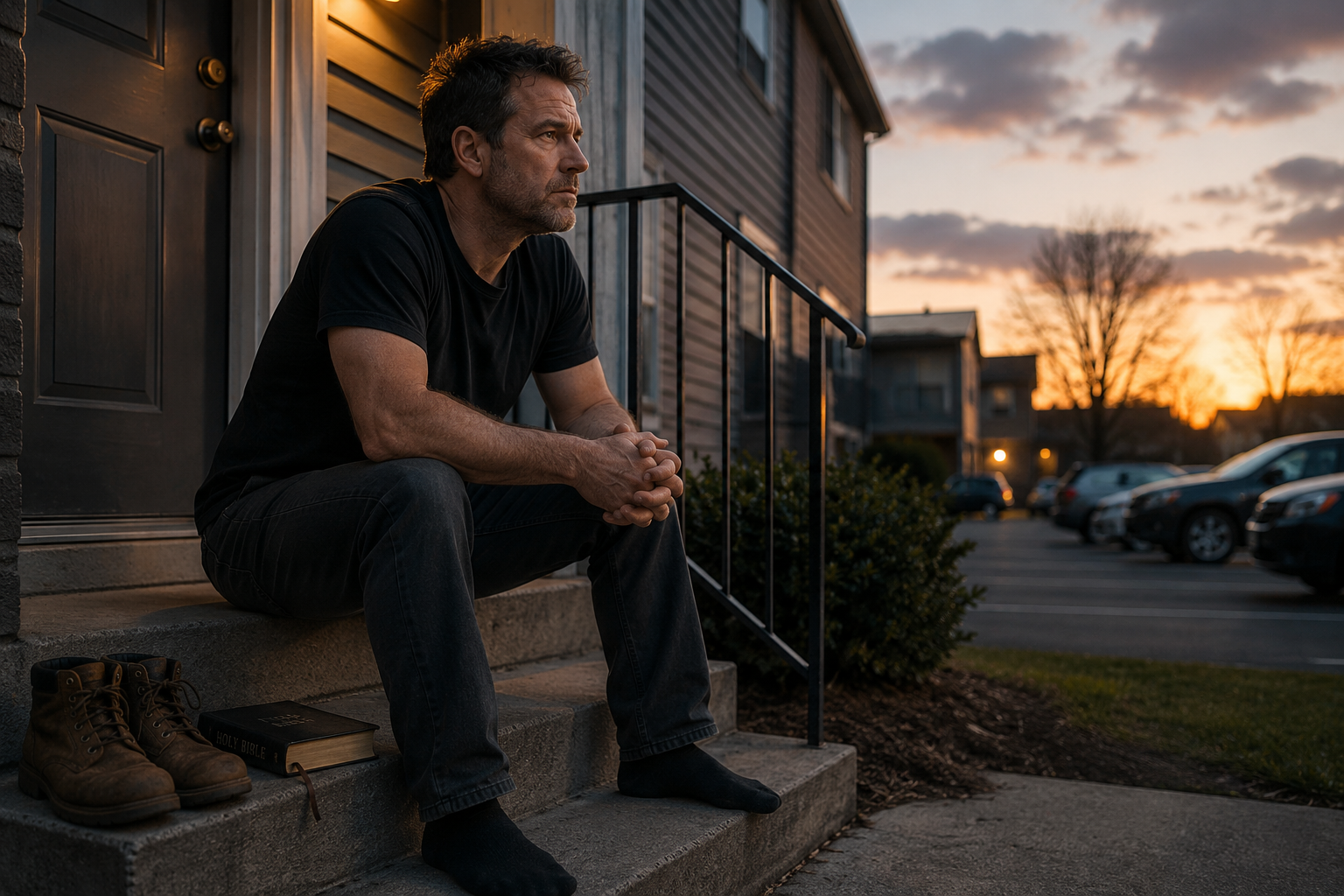
There is a question that has been running through my mind lately: How long must I be punished? I’m not asking that question because I believe God is sitting in heaven looking for another way to make my life miserable. I’m talking about punishment at the hands of people, the kind that seems to keep going long after you believe you’ve already paid the price for what happened.
I’ve spent a lot of time examining myself throughout this season. I’ve admitted where I’ve been wrong. I’ve repented of things I needed to repent of. I’ve sought counseling, studied God’s Word, surrounded myself with godly men, and tried to allow God to change me through one of the most difficult seasons of my life. I’m not claiming perfection, and I’m not pretending I haven’t made mistakes. But accepting responsibility for my mistakes doesn’t mean that I have to believe every consequence imposed upon me is reasonable or deserved. At some point, I’ve had to ask: When is enough, enough?
Missing My Boys
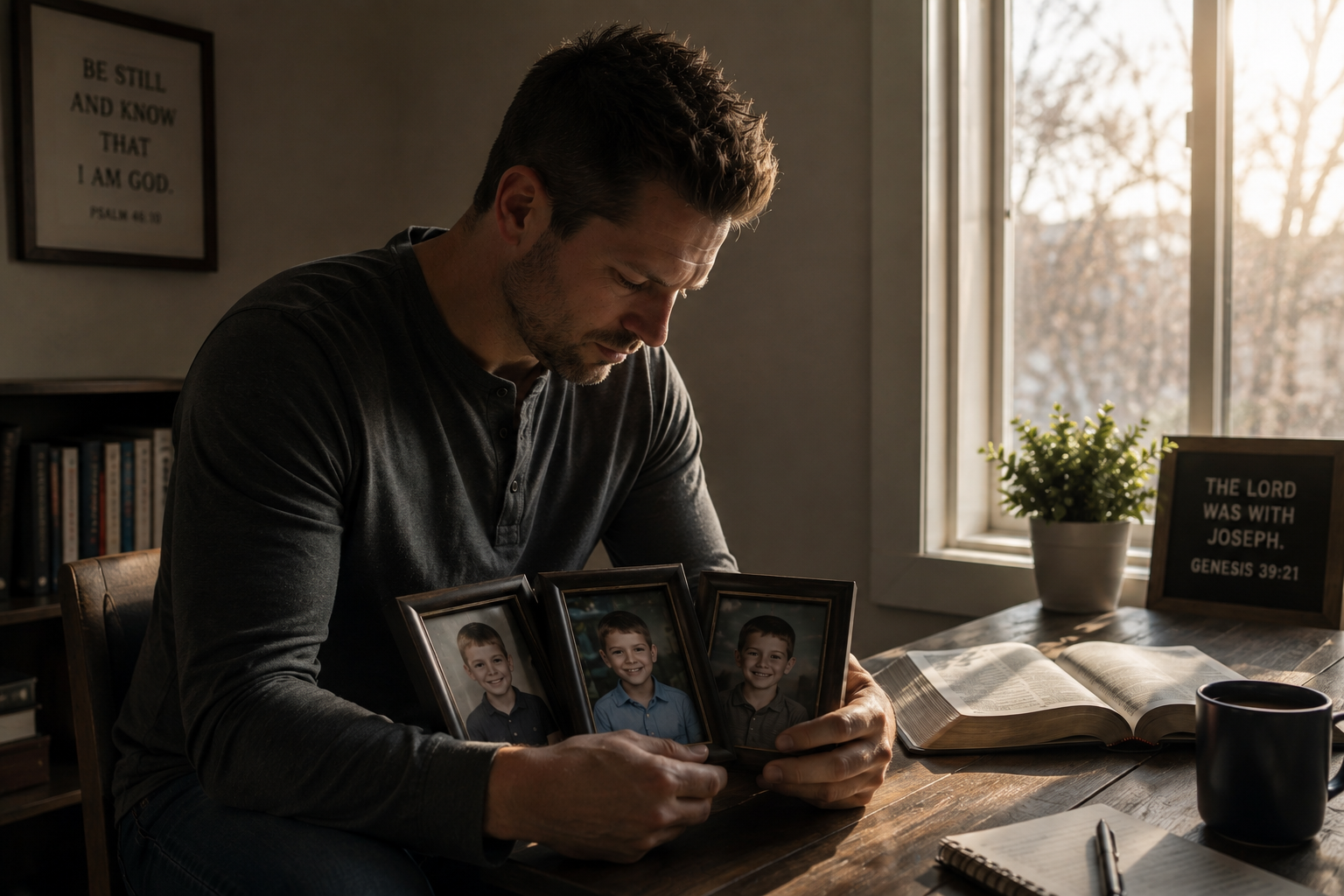
For more than a year, I’ve lived without my children. That sentence is difficult even to write. I’ve missed ordinary days and important ones. I’ve missed conversations, activities, milestones, sports, birthdays, and memories. I’ve watched dates come and go knowing that my boys are continuing to grow up somewhere else while I remain separated from them.
Even at Christmas, I wasn’t able to speak with my boys, my wife wouldn’t allow it. I couldn’t hear their voices and tell them Merry Christmas. At my sentencing, I was told by in court that my boys did not want to write a letter to their father. That sounded coerced to me. These aren’t possessions I’ve lost. They’re my children.
Childhood doesn’t stop while adults resolve their conflicts. Kids keep growing. Birthdays keep coming. Christmas still happens. Another school year begins, and another summer disappears. Those years cannot simply be handed back later.
That’s what makes this kind of separation so devastating. Someday my boys will be adults. They’ll have jobs, families, responsibilities, and lives of their own. The years I have with them as children are limited, and every month that disappears is a month none of us can recover.
I understand that legal restrictions complicate my situation, and I will continue obeying them even when I strongly disagree with them. But there have also been moments throughout this process when I desperately wished there could have been some appropriate avenue for maintaining even the smallest connection between a father and his sons, a Christmas conversation, a letter, or simply some indication that Dad hasn’t disappeared. Instead, there has been silence, and silence can feel a lot like punishment.
When Reconciliation Goes Nowhere
One of the hardest parts of this entire situation has been feeling completely powerless to repair anything. On June 30, my wife agreed to pursue reconciliation through counseling. For me, that meant something. After everything that had happened, there was finally going to be an opportunity for my wife and me to sit down with someone, talk honestly about our marriage, confront what had gone wrong, and determine whether there was anything left that could be repaired.
I didn’t expect one counseling session to magically fix fifteen years of marriage. I didn’t expect everything suddenly to return to normal. I simply wanted the opportunity to sit at the table. Yet nearly two months have passed, and as I write this, not a single counseling session has been scheduled. That’s incredibly frustrating, and I keep coming back to a very simple question: How hard is it to schedule a counseling session?
I’m not saying counseling would save our marriage. Maybe we would sit down together and discover there truly is no path back. Maybe counseling would begin a process of reconciliation. Maybe it would simply allow two people who spent fifteen years together to understand what happened and find a healthier way forward for the sake of three boys who still have both a mother and a father. But we’ll never know if we never sit down.
That’s what makes the waiting so difficult. I can say I’m willing to participate. I can show up when given the opportunity. I can examine my failures. I can listen. I can apologize where an apology is warranted. I can forgive. I can ask for forgiveness. I can pursue peace, but reconciliation in any form requires two people willing to come to the table.
Meanwhile, the clock keeps moving. My children continue growing up. Another week becomes another month, and another month becomes another year. At some point, doing nothing becomes its own kind of decision.
When Consequences Become Years
Then there is the legal side of everything. I understand that courts have a responsibility to protect people. I understand that actions have consequences. I understand that there are different perspectives surrounding what happened in my family. But I also believe there should be room to ask whether consequences have become disproportionate to what actually occurred.
I spent time in jail, an outcome I continue to believe was unjust under the circumstances. Ultimately, my case resulted in a misdemeanor, yet the consequences affecting my relationship with my family extend years into the future.
Four years isn’t just a number to me. It’s four years of childhood. Four years of birthdays, Christmases, summers, school, sports, accomplishments, disappointments, scraped knees, inside jokes, growing taller, changing voices, and becoming young men. How do you give those years back? You can’t.
That’s where I struggle. There is a difference between saying, “I made mistakes,” and saying, “Therefore, everything that has happened to me afterward must be justified.” Those aren’t the same statement. I can own what belongs to me without accepting every accusation as my identity. I can repent of actual sin without confessing to things I don’t believe are true. I can respect the authority of a court while still believing that a particular decision was excessive or unjust. And I can still ask the question: How long must I be punished?
Joseph Knew Something About This
That question isn’t unique to me. Joseph knew what it was like to have other people dramatically alter the course of his life. His own brothers rejected him and sold him into slavery. Later, when Joseph refused the advances of Potiphar’s wife, she falsely accused him. Joseph ended up in prison for something Scripture tells us he had refused to do.
Imagine Joseph sitting inside that prison. He knew what happened. Potiphar’s wife knew what happened. And God knew what happened. But knowing the truth didn’t immediately open the prison door.
That’s a difficult biblical reality. Sometimes knowing the truth doesn’t immediately change your circumstances. Sometimes telling the truth doesn’t immediately restore your reputation. Sometimes doing the right thing doesn’t immediately result in vindication. Sometimes the prison door stays closed.
And yet Genesis 39:21 contains an extraordinary statement: “But the LORD was with Joseph…”
I keep coming back to those words. The Lord was with Joseph, not after Joseph got out, not after Pharaoh promoted him, and not after Joseph’s reputation was restored. God was with him while he was still in prison. People could put Joseph behind bars, but they couldn’t put God outside the prison.
I know something about sitting behind a locked door wondering how my life ended up there. I know what it’s like to replay events in my mind and wonder how everything escalated so far. And I know what it’s like to desperately want somebody to understand the entire story. But Joseph reminds me that God’s presence isn’t determined by whether other people believe my side of the story.
People can restrict where I go. People can choose whether they want a relationship with me. People can refuse to speak to me. People can believe things about me that I desperately wish they understood differently. Courts can place restrictions upon my life. But nobody gets to decide whether God is with me.
What Do I Do With the Anger?
That’s where another battle begins: anger. When you believe something profoundly unfair has happened, anger comes naturally. When you believe you’re continuing to be punished beyond what is reasonable, bitterness starts knocking on the door. And when your children are involved, that anger becomes much harder to control.
I don’t want to pretend that struggle doesn’t exist. It does. But I also don’t want what has happened to me to determine who I become.
David understood something about being treated like an enemy. Saul pursued him relentlessly, yet when David had opportunities to take vengeance into his own hands, he refused. David said, “The LORD judge between me and thee… but mine hand shall not be upon thee.” — 1 Samuel 24:12
That’s difficult Christianity. It’s easy to say, I’ll show them. It’s much harder to say, God, You know the whole story. I’m going to pursue what I believe is right, but I’m not going to allow hatred to own my heart.
That doesn’t mean remaining silent. Forgiveness doesn’t mean pretending something was right. Trusting God doesn’t mean refusing to challenge something you believe is unjust, and pursuing peace doesn’t require abandoning the truth. It means I can advocate without hating. I can challenge without seeking revenge. I can fight for my relationship with my children without dragging them into an adult conflict. I can tell my story without making the destruction of someone else’s reputation my goal. And I can leave final judgment to God.
I Cannot Stand at the Door Forever
That brings me back to my marriage. Divorce isn’t the ending I wanted for my family. I wanted my wife. I wanted my boys. I wanted our home. I wanted Christmas mornings, vacations, baseball games, family dinners, arguments over chores, laughter from another room, and all the completely ordinary things that don’t seem precious until they’re gone.
I wanted the opportunity to repair what was broken, and part of me still does. That’s why, when counseling became an agreed-upon path on June 30, I believed we were finally going to have an opportunity to determine whether reconciliation was actually possible. Nearly two months later, however, I’m still waiting for that process even to begin.
In other articles I’ve written about moving toward divorce, and I don’t want this article to give the impression that I’ve changed my mind and decided to wait indefinitely. I haven’t. I am preparing myself for the very real possibility that this marriage is going to end. At the same time, as long as there is still an opportunity for genuine reconciliation, I don’t want to slam that door shut prematurely, but there is a difference between leaving a door open and standing in the doorway forever.
For me, the next court date has become an important line in the sand. If genuine reconciliation has begun by then, if we’re actually sitting down, participating in counseling, communicating honestly, and making a sincere effort to determine whether our marriage can be repaired, then I am willing to walk that road and see where God takes it, but if we reach that date and nothing has changed, then I believe I have my answer.
At that point, I intend to move forward with divorce and turn my attention toward fighting through the proper legal channels to restore my relationship with my children. I don’t say that as a threat, and I don’t say it out of revenge. I say it because there comes a point when waiting becomes standing still. My children are growing up while I wait, and I cannot continue indefinitely hoping something will happen while nothing actually changes.
I also don’t want to confuse reconciliation with simply delaying divorce. They aren’t the same thing. Reconciliation requires movement. It requires communication, counseling, honesty, repentance, forgiveness, and effort from both people. Agreeing to reconciliation means very little if nobody ever takes the next step.
Romans 12:18 says, “If it be possible, as much as lieth in you, live peaceably with all men.” There are two parts of that verse that matter deeply to me right now. There is “if it be possible,” and there is “as much as lieth in you.” Scripture recognizes that peace requires me to do what lies within my power, but it doesn’t tell me that I possess the power to make another person reconcile with me. So I’m leaving the door open, but I’m not leaving my life in permanent limbo.
If counseling begins and there is a genuine effort toward reconciliation, I am willing to participate wholeheartedly. I’m willing to listen. I’m willing to examine myself. I’m willing to forgive. I’m willing to ask forgiveness. I’m willing to have difficult conversations and see whether anything can still be rebuilt, but willingness cannot exist on only one side forever.
If nothing begins by the next court date, I will move forward. That doesn’t mean the last fifteen years meant nothing. It doesn’t mean I suddenly stopped caring about my wife. It doesn’t mean reconciliation wasn’t what I wanted, and it certainly doesn’t mean I’ve stopped loving my family. It means I’ve accepted that I cannot reconcile a marriage by myself.
There is also another responsibility I can no longer ignore: I am still a father. Whatever ultimately happens to my marriage, I will continue pursuing a relationship with my boys. I will use the appropriate legal avenues available to me and continue fighting for the opportunity to be present in their lives. Not because I want to fight their mother. Not because I want my children placed in the middle. But because I love my sons, and I believe being their father is worth fighting for.
Maybe that’s the distinction I’m finally beginning to understand. I don’t have to fight against my wife in order to fight for my children, and I don’t have to abandon the possibility of reconciliation simply because I’ve established a point at which I will move forward if reconciliation never actually begins.
For now, the door remains open, but it will not remain open forever. Sometimes surrender means accepting there are things you cannot fix alone, and sometimes moving forward isn’t giving up. Sometimes it’s finally acknowledging that you’ve waited, prayed, asked, and remained willing, and now you have to take the next faithful step.
Related reading: Continue with Releasing What I Cannot Restore and When the Covenant Is Broken but the Marriage Isn’t Over.