

I have questions for God. Some days, if I’m being completely transparent, I’m angry with Him. I know all the right Christian answers. I know God is sovereign. I know His timing is perfect. I know He sees things I cannot see. I know He can take what the enemy intends for evil and somehow use it for good. I know He promises never to leave me or forsake me. I know those things, but knowing them and understanding what God is doing are two very different things.
There are moments when I look at my life and simply ask, “God, what are You doing?” Where is this going? Why did You allow this? Why haven’t You changed this situation? Why does it seem like one door after another keeps closing? Why have some of my prayers seemingly gone unanswered? Why does doing the right thing sometimes seem to produce absolutely nothing? And maybe the hardest question of all: What am I supposed to do now?
Is It Wrong to Question God?
For a long time, I think I had this idea that questioning God somehow demonstrated a lack of faith. Good Christians trust God. Good Christians don’t get angry with God. Good Christians don’t shake their fists toward heaven and ask why. Except when I read the Bible, I find people doing exactly that.
David repeatedly cried out to God in confusion and anguish: “How long wilt thou forget me, O LORD? for ever? how long wilt thou hide thy face from me?” (Psalm 13:1). Habakkuk asked, “O LORD, how long shall I cry, and thou wilt not hear!” (Habakkuk 1:2). Job poured out his anguish before God after losing nearly everything. Even Jesus, while hanging on the cross, cried, “My God, my God, why hast thou forsaken me?” (Matthew 27:46).
The Bible isn’t filled with people pretending everything is okay. It is filled with broken people bringing their confusion, grief, frustration, fear, and questions directly to God. That is one of the things I learned while studying biblical lament and reading Dark Clouds, Deep Mercy. Lament doesn’t mean running away from God with our pain; it means bringing our pain directly to Him. I wrote more about that experience in Dark Clouds, Deep Mercy: How Learning to Lament Changed My Faith.
There is a difference between questioning God and rejecting God. There is a difference between saying, “God, I don’t understand You,” and saying, “God, I don’t want You.” Sometimes questioning God may actually demonstrate that we still believe He is there. After all, why cry out to Someone you no longer believe is listening?
What About Being Angry With God?
This one is harder for me. There have been times when my prayers weren’t polite. There have been times when I have told God exactly how frustrated I am. There have been moments when I have wondered why He allowed certain things to happen when He certainly had the power to stop them. I don’t think there is much point in pretending with God. He already knows what I am thinking before I say it. He knows the anger underneath my prayers, the questions I am afraid to ask, the bitterness I am fighting, and the moments when I am disappointed with Him. So I might as well bring it to Him.
I’ve written before about how anger itself isn’t necessarily the problem. Scripture even tells us, “Be ye angry, and sin not” (Ephesians 4:26). The question is what we allow our anger to do to us and what we do with it. In The Truth About Anger: Why Feeling Angry Doesn’t Make You an Angry Person, I explored how anger can reveal hurt, injustice, fear, frustration, and even our desire to control things that ultimately belong in God’s hands. Being angry with God raises that struggle to another level, but even then, I think God would rather have my honest prayer than a fake one.
Chuck Swindoll once told a story about his friend Dennis that has always stuck with me. Dennis had moved to Los Angeles to study psychology at USC. While he was there, tragedy struck when his four-year-old son wandered into a neighbor’s swimming pool and drowned. Dennis was devastated. After losing his son, he got into his car and started driving the freeways of Los Angeles for hours, pouring everything out to God. He screamed. He grieved. He was angry. He questioned God. There was no polished prayer or carefully chosen Christian language. It was the raw anguish of a father whose little boy had just died.
He drove through the night. Around dawn, Dennis finally pulled back into his driveway, exhausted and drenched in sweat. After everything he had said to God, he came away with a simple realization: God could handle everything he had said. There is something incredibly freeing about that. God could handle Dennis’s anger. God could handle Job’s questions. God could handle David asking, “How long?” And God can handle mine.
That doesn’t mean everything I say when I’m angry is right. It doesn’t mean every accusation I make against God is true. It doesn’t mean anger should become bitterness or that I should allow my questions to drive me away from Him. But God isn’t frightened by my questions. He isn’t intimidated by my anger. He already knows what is in my heart anyway. Maybe the important thing isn’t that I never become angry with God. Maybe the important thing is where I take that anger. I can run away from God with it, or I can run toward Him with it.
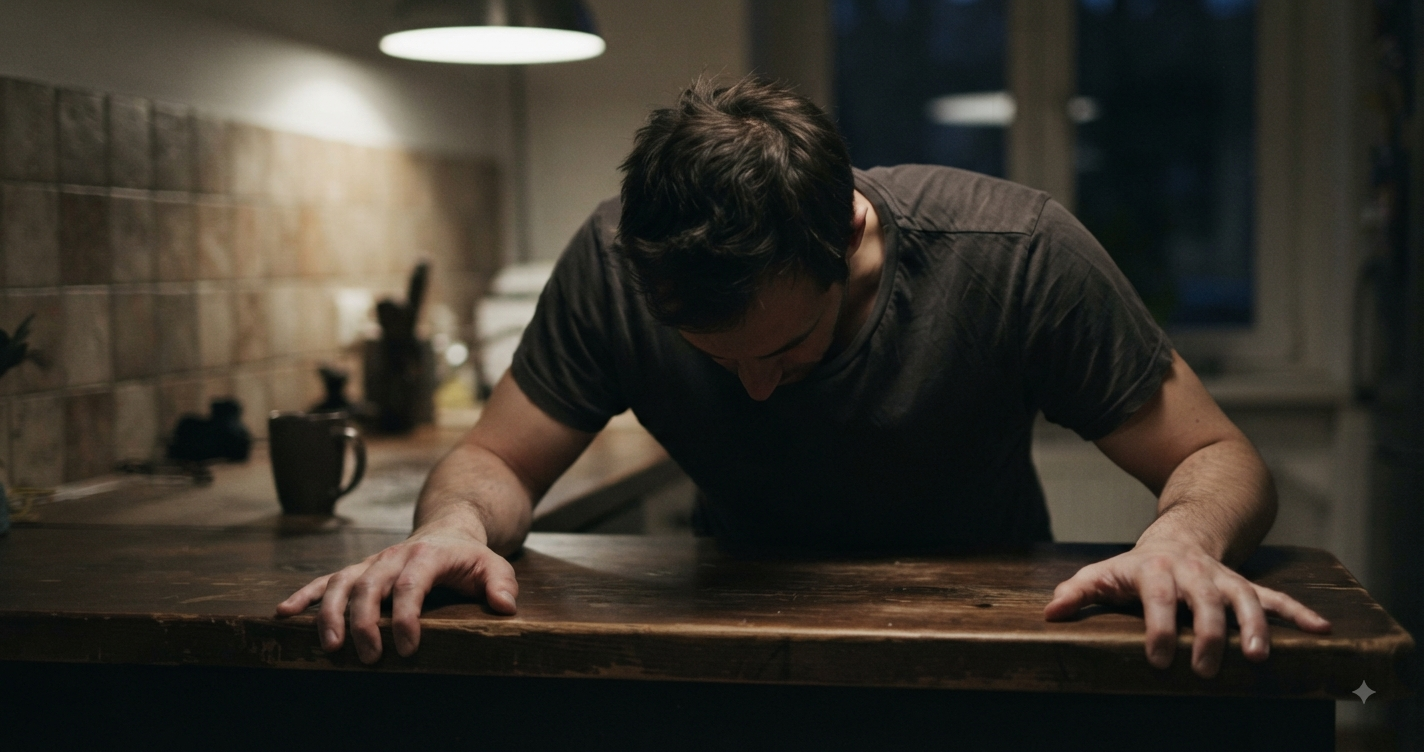
Dennis drove around Los Angeles yelling at God all night, but he was still talking to God. Job lamented, but he lamented before God. David questioned God, but he kept crying out to God. Sometimes the most honest prayer I can pray isn’t, “Lord, I understand and completely trust what You’re doing.” Sometimes it is simply, “God, I don’t understand this. I don’t like this. I’m angry. I’m hurt. I don’t know what You’re doing. But I’m still here.”
Seeing My Own Anger in Someone Else
When all of this started for me more than a year ago, I didn’t want to say I was angry with God. I knew better, or at least I thought I did. But if I’m being truthful, somewhere deep inside, I was angry. I didn’t understand why God had allowed so much pain into my life or why He hadn’t stepped in and changed things when I desperately wanted Him to.
Part of me still wants justice. Part of me still wants wrongs to be made right and questions to be answered. But I’ve also had to learn that vengeance and judgment don’t belong to me. Romans 12:19 reminds us, “Vengeance is mine; I will repay, saith the Lord.” I can desire what is right without allowing the pursuit of justice to consume me. At some point, I have to put that into God’s hands too.
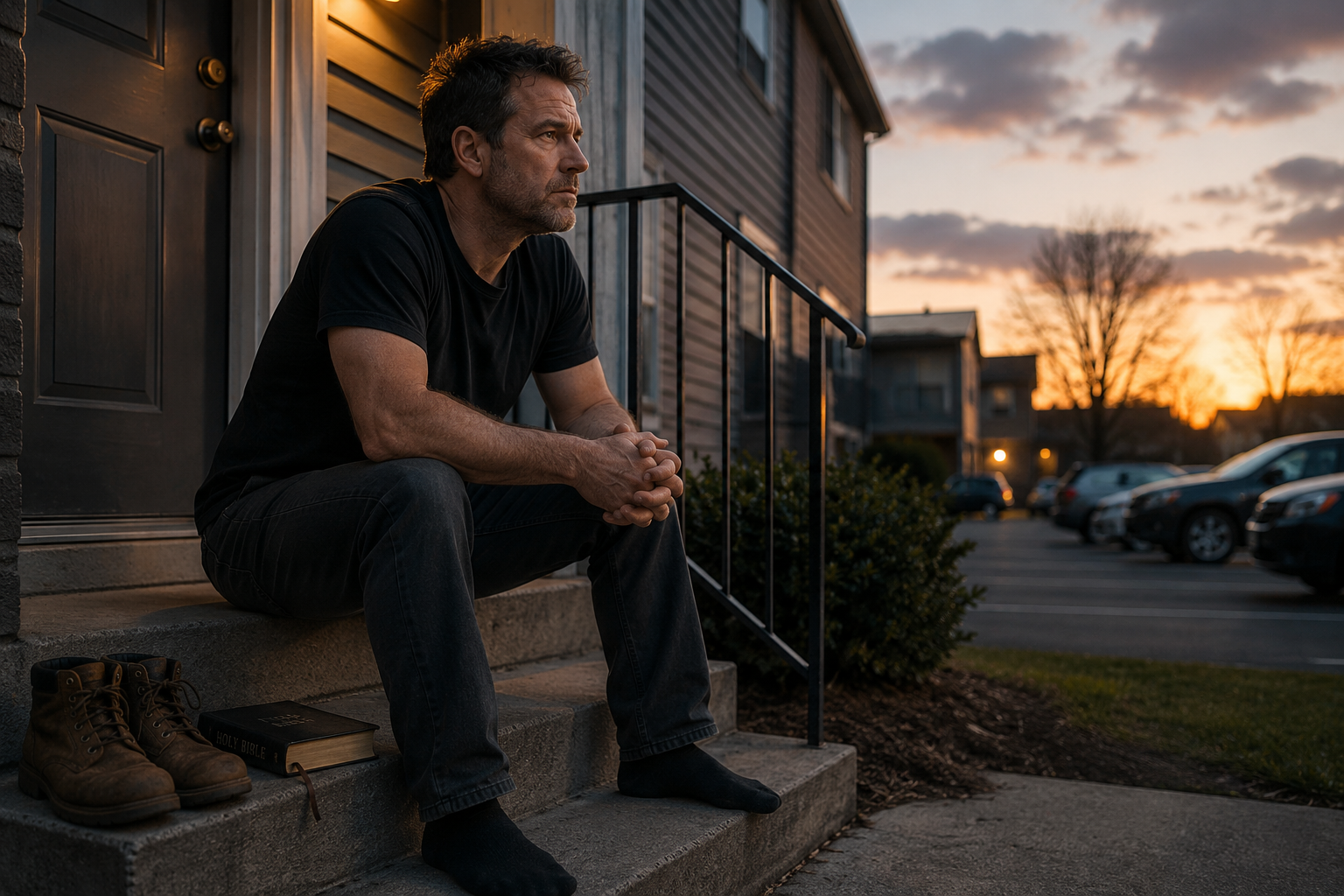
Recently, I came into contact with a man very close to my age who is walking through circumstances remarkably similar to some of what I’ve experienced. He has been separated from his wife and children for many months and feels powerless against a system that, has accepted false accusations about him without giving him a meaningful opportunity to defend himself. He has no formal charges against him, but his loss and pain are very real.
Recently, we talked on the phone for a couple of hours. During that conversation, he went through just about every emotion imaginable. Eventually, his anger turned toward God. “What has God ever done for me?” he pleaded. He vented. He cursed. He questioned God. He was angry, and for a while he simply let everything that had been building inside him come pouring out.
Did I rebuke him? No. Did I interrupt him with Bible verses and try to win a theological argument? No. I listened. I wept for him. I prayed for him. I tried to console him the best I could. Eventually, I reminded him of something that can be difficult to hear when life has fallen apart: God doesn’t owe us the life we expected. He doesn’t owe us comfort, prosperity, an explanation, or a life without suffering. But God has already given us something infinitely greater. He gave us Jesus Christ.
God loved us enough that Christ died for our sins while we were still sinners. That doesn’t make suffering painless. It doesn’t answer every “why.” It doesn’t suddenly make injustice feel fair. But when I begin asking, “What has God ever done for me?” I eventually have to look toward the cross.
Somewhere during that conversation, something unexpected happened. I realized how much God has changed me. Listening to this man reminded me of where I was when everything first began. I recognize some of his anger because I’ve felt it. I recognize the confusion. I recognize the desperation to know why God isn’t fixing everything. I recognize the desire for justice. I recognize what it is like to stare down a road you never wanted to travel and have absolutely no idea where it leads.
But I’m not standing where I was a year ago. Through talking with him, I realized that I’m stronger now than I was when all of this started, maybe stronger than I’ve ever been. Not because I’ve figured everything out. I haven’t. Not because everything has been restored. It hasn’t. And certainly not because I suddenly understand everything God has allowed. I’m stronger because God has carried me through things I once thought would destroy me.
I don’t know why God brought this man into my life. Maybe someday I’ll understand it better. Right now, I’m only a little farther down a similar road than he is. But those months have taught me things I couldn’t have learned from a book. I’ve learned about grief, anger, forgiveness, loneliness, surrender, friendship, prayer, and what it means to keep following God when I can’t see where He is taking me.
Maybe some of what I’ve walked through wasn’t only about me. Paul writes in 2 Corinthians 1:4 that God “comforteth us in all our tribulation, that we may be able to comfort them which are in any trouble.” Maybe God can use the darkness we have walked through so that, when we meet someone a few steps behind us on a similar road, we can turn around and say, “I’ve been through some of this darkness too. I don’t have all the answers, but I’ll walk with you.”
A Lamp Unto My Feet
That brings me back to something I’m still learning about the path God has put in front of me. One of the most familiar verses in Scripture has taken on a different meaning for me lately: “Thy word is a lamp unto my feet, and a light unto my path.” (Psalm 119:105).
Think about what a lamp would have meant when that Psalm was written. It wasn’t a modern flashlight capable of throwing a beam hundreds of feet into the darkness. It wasn’t a spotlight illuminating an entire road. It was a small source of light. You could see where your feet were and a little of the path ahead. Then you had to walk.
That is such a strange concept when you’re living through uncertainty because I want God to illuminate the entire path. I want Him to show me where I’ll be next year. I want to know how everything will work out. I want to know which relationships will be restored and which ones won’t. I want to know what doors will open and which ones will stay closed. I want to understand why certain things happened. I want to know how God is going to redeem things I cannot possibly imagine being redeemed.
Instead, sometimes it seems like God simply says, “Here’s enough light for today. Walk.” Then tomorrow, perhaps the lamp illuminates another few feet, so I walk again.
I Want a Floodlight
That’s the tension. I want a floodlight, but God gives me a lamp. I want a map, but God gives me a step. I want an explanation, but God says, “Trust Me.”
Proverbs 3:5–6 tells us, “Trust in the LORD with all thine heart; and lean not unto thine own understanding. In all thy ways acknowledge him, and he shall direct thy paths.” That verse sounds beautiful when everything is going well. It becomes much more difficult when you actually have to live it. “Lean not unto thine own understanding” means there are going to be times when my understanding isn’t enough. There will be seasons that don’t make sense. There will be prayers whose answers I cannot yet see. There will be roads I would never have chosen. There will be moments when God’s direction seems painfully slow because I can only see a few feet in front of me.
But perhaps that is exactly where faith begins. If God showed me the entire path, explained every reason, answered every question, revealed every outcome, and showed me exactly how everything would eventually work together, I wouldn’t need much faith. I’d simply be following the map. Instead, He gives me a lamp. And now I wonder whether sometimes that lamp gives me just enough light not only for my own next step, but also enough to help someone else take theirs.
Maybe I Don’t Need the Whole Path
I’ve spent a lot of time wanting God to show me how the story ends. Maybe I don’t need to know. Hebrews 11:1 says, “Now faith is the substance of things hoped for, the evidence of things not seen.” Those last two words are difficult: not seen.
I want to see. I want evidence that everything is going to work out before I take another step. I want reassurance that the pain has a purpose. I want God to show me exactly what He is building from the wreckage before I trust Him with another day. But faith says I can walk even when I cannot see very far, not because I understand the road, but because I trust the One who does.
Maybe that is what I am slowly learning. God’s promise isn’t necessarily that I will understand everything He allows. His promise isn’t that He will give me a five-year plan or explain every painful chapter before asking me to live through it. Sometimes His provision is simply enough grace for today and enough light for the next step.
God Can Handle My Questions
So yes, I question God sometimes. Sometimes I’m angry with Him. Sometimes I tell Him that I don’t understand what He’s doing. Sometimes my prayers probably sound more like complaints than prayers. Sometimes I ask Him the same questions I have already asked a hundred times. But I’m still talking to Him. I’m still opening His Word. I’m still asking Him to lead me. I’m still trying to follow the little bit of light He has placed in front of me.
Maybe that is what faith looks like in a season like this. It isn’t pretending I have no questions. It isn’t pretending I’m never angry. It isn’t pretending everything makes sense. It is continuing to walk toward God even while asking Him, “Why?”
I don’t know what the entire road ahead looks like. I don’t know where every turn leads. I don’t know which prayers God will answer the way I hope He will. I don’t know what He will restore, what He will replace, what He will remove, or what He will ask me to release. But I’m beginning to see something I couldn’t see when this road started: God has been changing me while I’ve been walking it.
Maybe part of the reason I can sit on the phone with another hurting man for hours, listen to his anger, weep with him, pray for him, and tell him there is still hope is because God has already walked me through some of the road he is just beginning to travel. I still don’t know where my own path ultimately leads. Right now, I can only see a little way ahead, and maybe that is enough.
At the end of the day, God is good. He doesn’t owe me an explanation for everything He permits. He doesn’t owe me the life I planned for myself. Yet He chooses to love me unconditionally, not because I earned it, but because love is who He is. When I’m tempted to ask, “What has God ever done for me?” I can look backward at how far He has carried me. I can look upward and remember His faithfulness. I can look toward the cross and remember what Christ has already done for me. Then I can look down at the small patch of illuminated ground in front of my feet and take another step.
God never promised to hand me a floodlight and show me my entire future. He gave me something much more personal: a lamp for my feet and a light for my path. It is enough light to take another step, and when I reach the edge of that light, I have to trust that God will illuminate the next one.
Keep Reading
Explore more articles about faith in hard times
A question to consider: Have you ever been angry with God while still believing He was the only One you could turn to?





2 Responses
Amen, I’ve had to live life most of my unhealthy journey like this! Finding JOY in this journey can be difficult! You are doing well! Stay in HIS Word, stay strong! 🙏
Many times in my walk the “faith” verses have come to me. Without faith it is impossible to please Him. Faith cometh by hearing, and hearing the Word of God. Yes, faith is taking the step when we are blind…. Believing God. I have related so much to this blog that it brought tears. Life is agonizing at times. Alvin and I have spoken about the heart pain we have experienced….Sometimes we’d rather take physical pain than heart pain…. But praise the Lord, we have the Great Physician who heals all our hurts. I appreciate your words, your transparency and your honesty.