The Warning on the Dock
Back in 2008, I was over the road in Pennsylvania, unloading a reefer trailer by hand. Food products, tiered skids, warehouse standards — the kind of work that doesn’t care how tired you are or how old you’re getting. I’d done it a thousand times.
I was 38 years old.
Then it hit me.
Chest pain like I had never felt before. Not discomfort. Not a pulled muscle. It dropped me to my knees, right there on the dock. Unable to finish the load, I paid lumpers out of my own pocket to unload the rest of my trailer. Then I did the thing so many men do when their body is screaming at them.
I drove home. I went to bed.
This part matters, so I want to be honest about it. There was no call to anyone. No trip to the ER that night. Just a quiet decision to sleep it off, because 38-year-old men don’t have heart problems — or so I told myself. That’s not bravery. That’s denial, and I know it now for what it was.
Nothing Obvious, Admitted Anyway
The next morning I went to the hospital. Tests ran, but nothing obvious showed up right away. A man my age with normal-looking results could, by all rights, have been sent home with some instructions and a follow-up appointment. But my doctor knew my family history, and she admitted me anyway, early Saturday morning.
That decision saved my life.
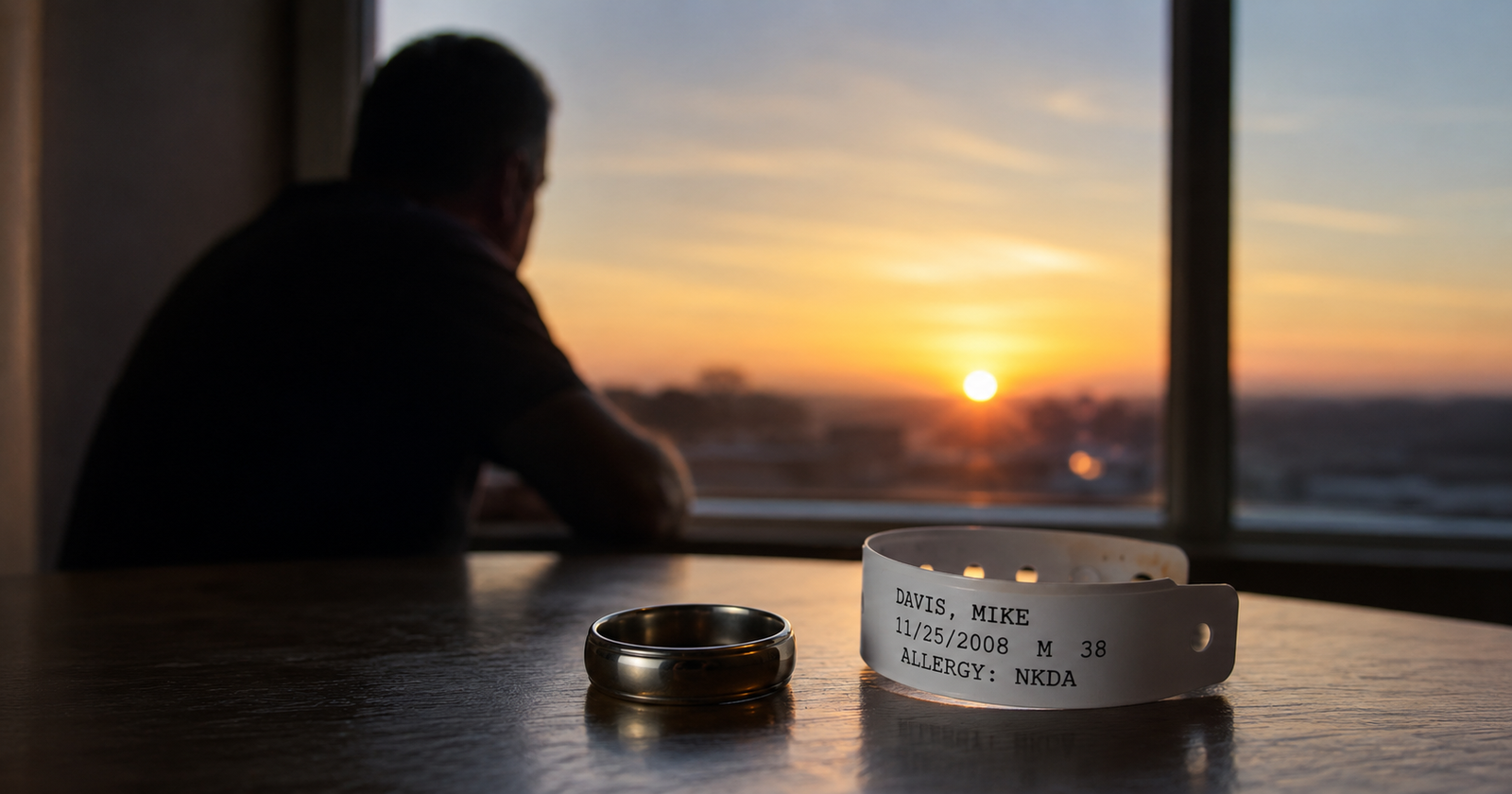
Through the weekend, I sat in that hospital bed while she reviewed my case. On Tuesday, November 25, 2008, she scheduled a catheterization. That’s when they found it — my LAD, the artery cardiologists call “the widow maker,” 99% blocked. At 38.
One month earlier, on October 25, 2008, I had married Annita.
Weeks later, doing the math myself, I finally understood the full weight of that artery’s name. The widow maker. And I had just made a woman my wife.
There’s a reason that artery has that name. When it goes all the way, most men don’t get a warning. They just don’t wake up, or they don’t make it to the hospital in time. It’s the artery that turns wives into widows and kids into kids who grow up without their dad — at any age, and sometimes only weeks into a marriage that was supposed to have a lifetime ahead of it.
An Echo of My Father
My father, Murl Davis, died from his second massive heart attack in November of 1983 — twenty-five years later, God gave me my own November reckoning. I was in study hall when it happened to him. Something felt wrong before anyone told me, and I’ve carried that day with me for over forty years. Heart disease running in my family was something I grew up knowing, watching the kind of man my father was. What I never imagined was that it would come looking for me before I turned 40, and one month into a marriage.
Lying in that recovery room in 2008, I heard my doctor say she didn’t know how I had driven myself home, gone to sleep, and woken up the next day with an artery that blocked. “I don’t know how you ever made it this long,” she said. That wasn’t just a medical opinion. It was an echo of my father’s death, standing right next to my own, decades sooner than I ever expected to hear it, and right next to a marriage that had barely started.
The Words I’ll Never Forget
“There is a higher power watching over you.”
She wasn’t a pastor. Ministering to me wasn’t her intent — she was a cardiologist stating a fact she couldn’t otherwise explain, looking at a 38-year-old newlywed who had no business still being upright. I teared up right there in that hospital bed, because she was right, and she didn’t even know how right she was. November 1983 meant nothing to her. Neither did October 25. All she had were the numbers in front of her, and the truth they told her: this shouldn’t have gone the way it went.
What I Believe Now
That was almost eighteen years ago now. Since that November in 2008, I’ve come to believe God doesn’t only show up after the crisis to comfort us. Sometimes He shows up before it, in ways we don’t even recognize until later — a doctor’s gut instinct, a family history flagged on a form, a decision to admit a patient when “nothing obvious showed up right away.” Psalm 139 says all my days were written before one of them came to be. Listening to my body isn’t what saved me. Doing anything right isn’t what saved me. My days weren’t finished at 38 — and neither was my marriage.
My father didn’t get that same outcome. Why him and not me, why he didn’t get a warning and I did — I’ve had to sit with that, and I don’t have a clean answer. What I do have is this: I got a warning at 38 that my father never got at all, one month into a marriage I almost didn’t live to see past its first thirty days. Every year since, I’ve tried to make sure it wasn’t wasted on me — on either of us.
This is one part of a longer story I’ve been telling about how many times a man can be broken and put back together.
If you’re reading this and you’ve felt something in your chest, your body, your spirit that you’ve been driving home from instead of dealing with — stop denying it. Age doesn’t make you safe. Newlywed doesn’t make you safe. Go get checked. And if a doctor, a stranger, or a moment you can’t explain ever tells you that someone was watching over you, don’t argue with it. Say thank you, and go live like you believe it.
Keep Reading
Explore more articles about faith in hard times
A question to consider: What has a health scare or second chance taught you about the life God has already given you?