
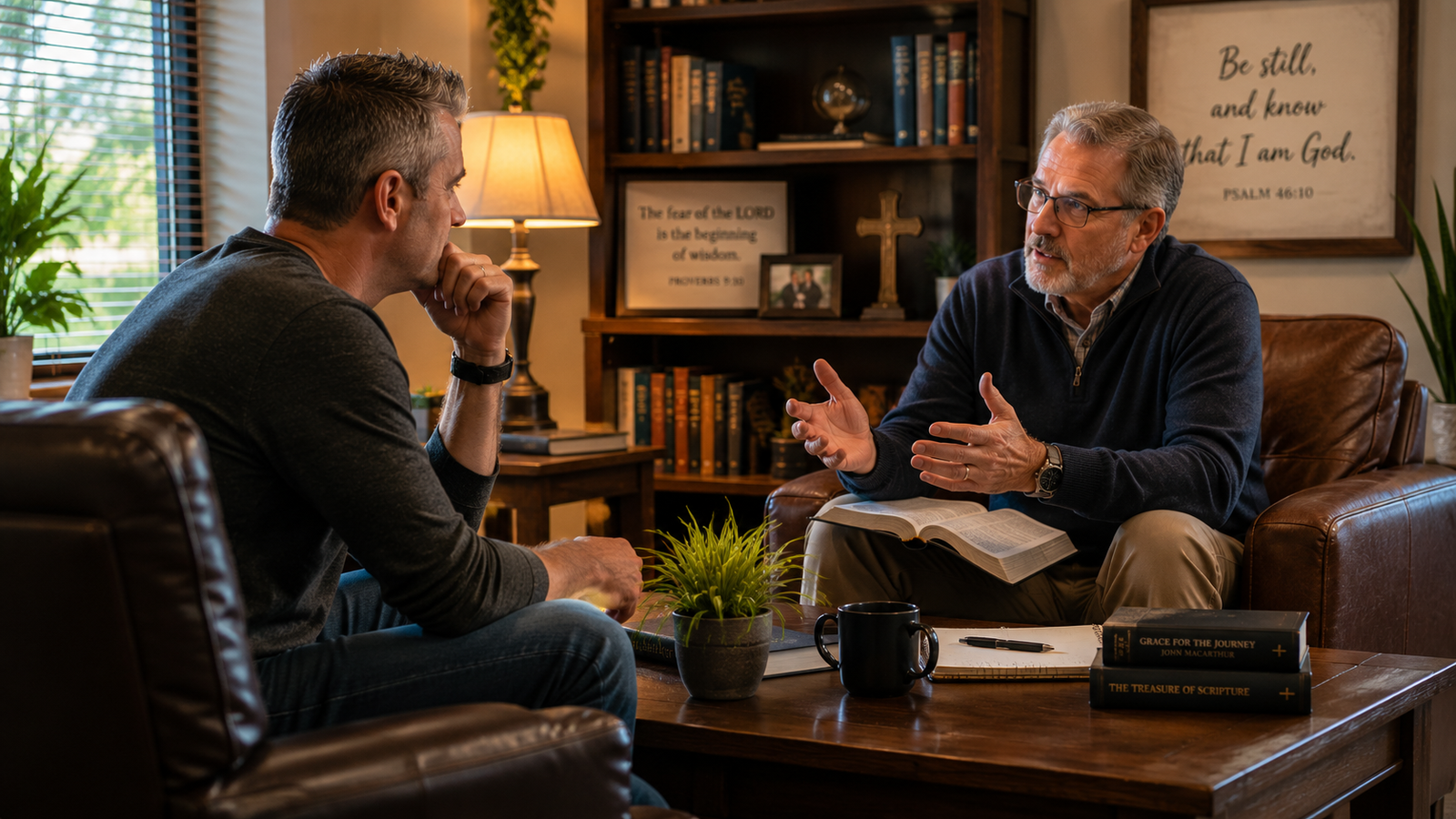
One of the beautiful things about the Christian life is that God never intended for believers to walk alone. Scripture repeatedly emphasizes the importance of wise counsel, accountability, and learning from mature believers. At the same time, the Bible also warns against becoming dependent on human affirmation, chasing opinions, or surrounding ourselves with voices that simply tell us what we want to hear.
There is a difference between seeking wisdom and seeking validation.
In a world filled with endless opinions, social media advice, influencers, self-help philosophies, and even conflicting voices within the church, Christians must learn how to discern wise counsel from false guidance. The question is not whether we should seek counsel, scripture clearly says we should. The real question is whose counsel are we listening to, and why are we seeking it?
Why the Bible Encourages Wise Counsel
Scripture consistently teaches that wise counsel is beneficial and protective.
In Proverbs 11:14, Solomon writes:
“Where there is no guidance, a people falls, but in an abundance of counselors there is safety.”
Likewise, Proverbs 15:22 says:
“Without counsel plans fail, but with many advisers they succeed.”
God often uses other believers to provide wisdom, correction, encouragement, and perspective. No Christian knows everything. Mature believers can help us see blind spots, challenge sinful thinking, and guide us toward biblical truth.
Even Moses, one of the greatest leaders of the Old Testament, needed counsel. In Exodus 18, Moses was overwhelmed trying to lead Israel alone. His father-in-law Jethro wisely advised him to delegate responsibilities. Moses listened, and the nation benefited.
The New Testament continues this principle. Paul constantly discipled younger believers like Timothy and Titus. Christians are called to teach, encourage, exhort, and sharpen one another.
Proverbs 27:17 says:
“Iron sharpens iron, and one man sharpens another.”
God designed the body of Christ to function in community, not isolation.
My Personal Journey Through Counseling
I have personally experienced both the blessing and the complexity of seeking counsel. During the current difficult season of my life, I spent many months meeting with different counselors, pastors, and mentors and friends in search of wisdom, healing, and understanding. Even my steadfast uncle Mike, has been a great encourager and provider of wisdom.
The first counselor I worked with was compassionate, insightful, and genuinely helpful. He provided a safe place to process many of the struggles I was facing. Yet he was also a young, recent graduate who had not yet experienced many of the realities that come with marriage, raising children, and enduring significant life hardships. His training was valuable, but there were moments when I needed wisdom that could only come from experience.
Later, I sought counsel from a pastor who was also a certified counselor. He possessed biblical knowledge, life experience, and a sincere desire to help. His approach, however, was much different. He focused heavily on correction, solutions, and practical steps forward. While I benefited from his counsel, I often felt that he was more interested in fixing my problems than understanding the wounds that were causing them.
Eventually, God led me to an older man, an exceptional biblical counselor whom I still meet with today. Over time he became much more than a counselor; he became a trusted friend, mentor, and fellow traveler in my spiritual journey. He is deeply rooted in Scripture, but he is equally interested in understanding the human heart.
Some observations he shared with me was that I am easily misunderstood, but dedicated to truth and justice, even though justice is not something I need to seek as vengeance is the Lord’s. He told me that I have been continually hurt, and that I carry anger, but not necessarily sinful anger. Rather, much of my anger is understandable given the circumstances I have endured. He helped me see that beneath my frustration is a soft and tender heart that values loyalty, commitment, and relationships deeply. Yet repeated hurt, rejection, betrayal and disrespect had caused me to become defensive and guarded.
His counsel reminded me of Proverbs 4:23:
“Keep your heart with all vigilance, for from it flow the springs of life.”
For years I had focused primarily on changing my circumstances. He helped me understand that God was equally concerned with the condition of my heart. Rather than simply helping me manage behaviors or emotions, he challenged me to examine my motives, surrender my hurts to Christ, and allow God to transform me from the inside out.
That experience taught me something important about biblical counseling. The best counselors are not merely problem solvers. They are shepherds of the soul. They care about truth and grace. They care about doctrine and compassion. They help us see ourselves honestly while continually pointing us back to Christ.
Hebrews 3:13 says:
“But exhort one another every day, as long as it is called ‘today,’ that none of you may be hardened by the deceitfulness of sin.”
Good counsel does more than offer advice. It helps keep our hearts soft toward God.
At the same time, my journey taught me that no counselor is perfect. Every counselor brings strengths and weaknesses. Every counselor sees through the lens of their own experiences. Wise counselors can be an incredible gift from God, but they were never meant to replace prayer, Scripture, and the guidance of the Holy Spirit.
The greatest counselors are those who help us become less dependent upon them and more dependent upon Christ.
The Danger of Seeking Constant Affirmation
While wise counsel is biblical, constantly seeking affirmation about every decision is not spiritual maturity. Sometimes people seek advice not because they genuinely want wisdom, but because they want reassurance, approval, or permission to do what they already desire.
This becomes dangerous when we prioritize human approval over obedience to God.
Galatians 1:10 says:
“For am I now seeking the approval of man, or of God? Or am I trying to please man? If I were still trying to please man, I would not be a servant of Christ.”
A Christian who constantly needs affirmation from others can become spiritually unstable, anxious, and easily manipulated. Instead of developing conviction rooted in God’s Word, they become dependent on the opinions of people.
At times, excessive counsel-seeking can even become avoidance of responsibility. We may ask five people for advice because we are afraid to obey what God has already made clear.
There are moments when believers must simply trust God, walk in wisdom, and act in faith.
James 1:5 tells us:
“If any of you lacks wisdom, let him ask God, who gives generously to all without reproach, and it will be given him.”
Notice that James first points believers to God.
Human counsel is valuable, but it should never replace prayer, Scripture, and the guidance of the Holy Spirit.
Why Not Every Spiritual Voice Is Wise
One of the greatest mistakes Christians make is assuming that all advice from religious people is godly advice. The Bible repeatedly warns believers to test what they hear.
1 John 4:1 says:
“Beloved, do not believe every spirit, but test the spirits to see whether they are from God.”
Not all counsel is wise simply because it sounds spiritual.
Some advice is rooted in worldly thinking, emotional reasoning, personal bias, fear, pride, or even deception. Scripture warns that there will always be false teachers and people who distort truth.
2 Timothy 4:3-4 warns:
“For the time is coming when people will not endure sound teaching, but having itching ears they will accumulate for themselves teachers to suit their own passions, and will turn away from listening to the truth and wander off into myths.”
Seek Wisdom, Not Validation
Wise counsel is one of God’s gifts to His people. Throughout Scripture, we see God using pastors, mentors, friends, counselors, and fellow believers to provide guidance, correction, encouragement, and perspective. To reject all counsel is often an act of pride. Yet to become dependent upon the approval of others can be equally dangerous.
The goal of the Christian life is not to collect opinions until we find one we like. Neither is it to surround ourselves with people who simply affirm our feelings, justify our decisions, or tell us what we want to hear. The goal is to seek truth.
Sometimes wise counsel will comfort us. Other times it will challenge us. Sometimes it will validate legitimate pain. Other times it will lovingly confront sinful attitudes or faulty thinking. The mark of godly counsel is not whether it makes us feel better in the moment, but whether it draws us closer to Christ and aligns us more fully with His Word.
Trusting God Above Human Approval
Looking back on my own journey, I am grateful for every counselor, pastor, mentor, and friend God placed in my path. Each contributed something valuable. Yet the greatest lesson I learned was that no human being can serve as my ultimate source of wisdom, peace, or direction. Only God can fill that role.
Proverbs 3:5-6 reminds us:
“Trust in the Lord with all your heart, and do not lean on your own understanding. In all your ways acknowledge him, and he will make straight your paths.”
Good counselors point us to that truth. Great counselors live by it.
Conclusion: Seek Wisdom, Not Validation
So seek counsel. Listen humbly. Learn from those who have walked faithfully before you. But above all else, seek the Lord. Test every voice against Scripture. Guard your heart from the temptation to seek constant validation. And remember that the wisest counsel will always lead you not deeper into dependence upon people, but deeper into dependence upon Christ.








One Response
Great article, validation is what most people want, it is hard to stand alone and allow God alone to give guidance through His Holy Spirit in each of our lives but it is most valuable in our becoming like Christ!