
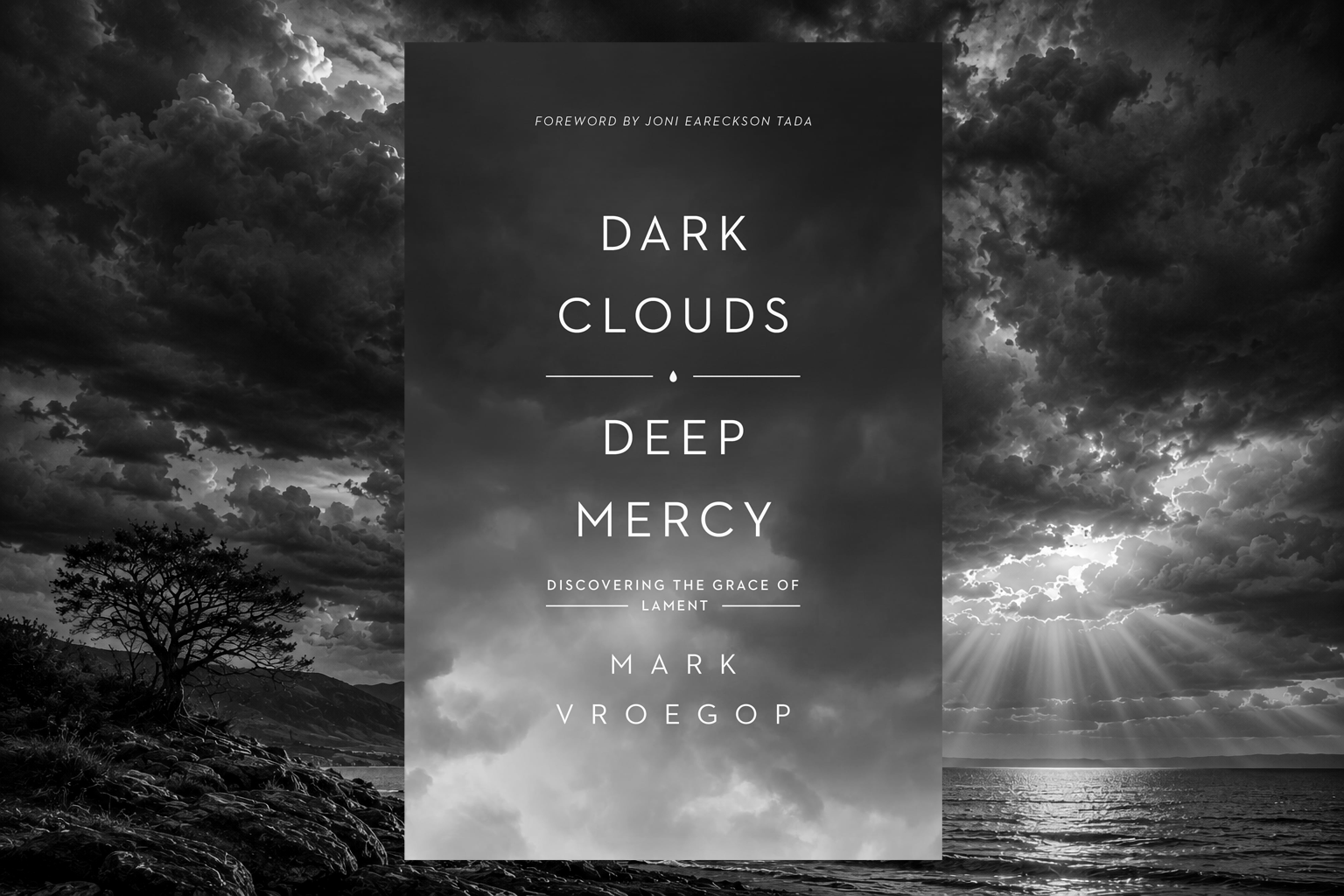
There are some books you read and enjoy. There are others that inform you. Then there are the rare books that meet you exactly where you are, challenge your assumptions, and permanently change the way you see God and your own circumstances. For me, Dark Clouds, Deep Mercy by Mark Vroegop was one of those books.
When I first picked up this book, I was walking through one of the most difficult seasons of my life. Loss, disappointment, broken relationships, uncertainty, and deep emotional pain had become constant companions. Like many Christians, I had spent years believing that faith meant being strong, staying positive, and pushing forward no matter what. I knew how to pray prayers of gratitude. I knew how to celebrate victories. What I didn’t know was how to suffer biblically.
In many ways, I had unknowingly developed the belief that bringing my complaints, frustrations, and grief before God was somehow a sign of weak faith. I thought mature Christians should have answers. I thought trust meant suppressing pain rather than expressing it.
Dark Clouds, Deep Mercy shattered those misconceptions.
One of the book’s central themes is that lament is “a prayer in pain that leads to trust.” That simple statement profoundly changed my perspective. I began to see that lament isn’t the opposite of faith. It’s one of faith’s most honest expressions.
As Vroegop walked through the Psalms and the book of Lamentations, I discovered something I had overlooked for years: some of the most faithful people in Scripture cried out to God with confusion, grief, anger, disappointment, and unanswered questions. David lamented. Jeremiah lamented. Job lamented. Even Jesus lamented.
Rather than condemning these prayers, God preserved them in His Word. That realization was both liberating and healing.
The book introduced me to a biblical framework for lament:
- Turn to God.
- Complain honestly.
- Ask boldly.
- Trust faithfully.
At first, the idea of “complaining honestly” felt uncomfortable. Yet as I studied Scripture, I realized that biblical lament isn’t grumbling against God. It’s bringing our pain directly to Him. Instead of turning away from God in suffering, lament turns toward Him.
That distinction transformed my prayer life.
For the first time in a long time, I stopped trying to clean up my emotions before bringing them to God. I stopped pretending I was okay when I wasn’t. I learned that God could handle my tears, my confusion, my fears, and my questions.
But the book wasn’t the only thing that changed me.
I had the privilege of reading Dark Clouds, Deep Mercy alongside an online Christian community called The Redeemed. What began as a book study quickly became something much deeper.
As we journeyed through the pages together, people began sharing their stories.
Stories of loss.
Stories of betrayal.
Stories of broken families.
Stories of grief that many had carried silently for years.
As heartbreaking as many of those stories were, they revealed something beautiful. I realized I wasn’t alone. The pain I carried felt unique until I heard others courageously sharing theirs. Some were lamenting strained relationships. Others were mourning shattered dreams, broken marriages, damaged reputations, or years of suffering they couldn’t explain.
Yet in the midst of all those stories, God was present.
We lamented together.
We prayed together.
We encouraged one another.
We pointed each other back to Christ.
What surprised me most was that many of these individuals became lifelong friends. Some of the deepest connections I’ve made came during conversations about suffering, faith, and God’s faithfulness in the darkest valleys of life.
There is a unique bond formed when people stop pretending and start being honest before God and one another. The Redeemed became a place where masks came off and grace took center stage.
Through both the book and the community surrounding it, I learned that lament is not a destination. It is a pathway. Lament doesn’t leave us in despair. It carries us through despair toward trust. It doesn’t ignore pain, but neither does it allow pain to have the final word. That’s what makes biblical lament so powerful. It gives us permission to acknowledge reality while holding tightly to God’s promises.
Today, I still don’t have answers to every question. There are wounds that haven’t fully healed and circumstances I wish were different. But I now understand something I didn’t before: God is not offended by my sorrow. He invites me to bring it to Him.
Dark Clouds, Deep Mercy taught me that faith isn’t pretending everything is fine. Faith is trusting God when everything isn’t fine. It taught me that lament isn’t weakness. It’s worship and sometimes the deepest expressions of trust are born from the darkest clouds.
For that lesson, and for the friends I gained while learning it, I will always be grateful.
Keep Reading
Explore more articles about trusted Christian books and resources
A question to consider: Has learning to lament changed the way you bring grief, disappointment, or unanswered prayer to God?







One Response
I was a member of the group that was walking though this book. We have all become friends even though we live all.across tge country this book struck a cord in the hearts of the men in that group and it was the tool we needed to find the strength and peace to truly allow ourselves to fully trust in God’s provisions. I was such blessong to learn how to walk though lament with these men of the Redeemed