
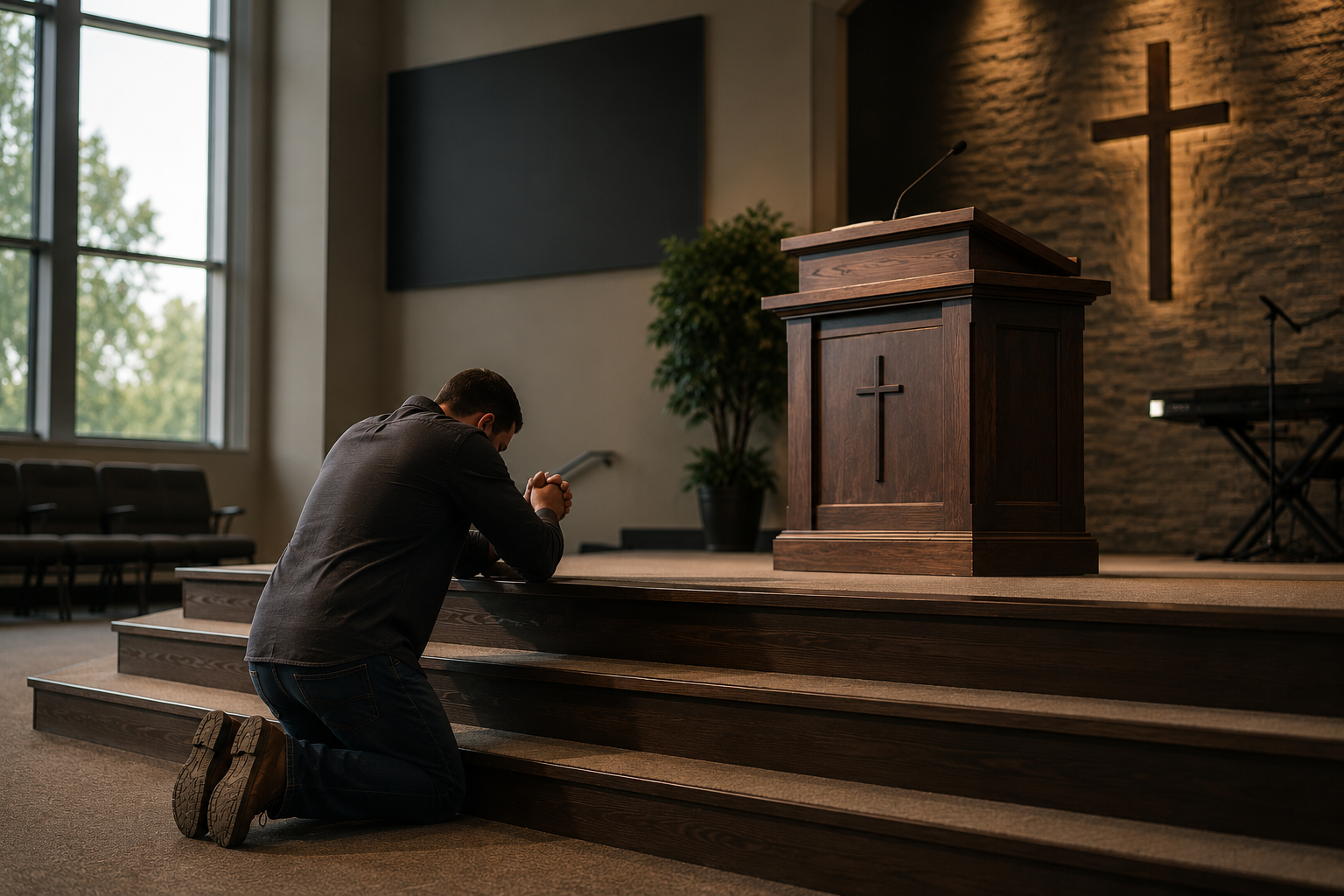
One of the most misunderstood realities in the Christian life is the relationship between a believer and sin. Many assume that once someone becomes a Christian, they will no longer struggle deeply with temptation or fall into serious sin. Others wrongly believe that because salvation is by grace, ongoing sin carries little consequence for the believer. But Scripture paints a far more sobering and honest picture.
The Bible shows that genuine believers can stumble, wander, resist conviction, and even live in sin for a season. Yet Scripture also makes clear that God does not permanently allow His children to remain comfortable in rebellion. A righteous Christian may sin temporarily, but God, in His love and holiness, will eventually discipline, expose, correct, and restore them.
God’s grace is not permission to sin without consequence. It is the mercy that pursues His children when they do.
Christians Still Battle the Flesh
Even mature believers continue to wrestle with sinful desires. The apostle Paul himself described this internal war in Romans 7:18-19:
“For I know that nothing good dwells in me, that is, in my flesh. For I have the desire to do what is right, but not the ability to carry it out. For I do not do the good I want, but the evil I do not want is what I keep on doing.”
This does not excuse sin, but it explains the ongoing battle every Christian faces between the flesh and the Spirit.
Galatians 5:17 says:
“For the desires of the flesh are against the Spirit, and the desires of the Spirit are against the flesh.”
A true believer is not sinless, but they are no longer fully at peace in their sin. The Holy Spirit convicts them, troubles them, and calls them toward repentance.
A Believer Can Sin for a Season
Scripture contains several examples of godly people who fell into serious sin and remained there temporarily before God confronted them. King David is perhaps the clearest example. David committed adultery with Bathsheba and later orchestrated the death of her husband Uriah (2 Samuel 11). For a period of time, David concealed his sin and continued functioning outwardly as king. But eventually, God confronted him through the prophet Nathan.
2 Samuel 12:7 records Nathan’s piercing words:
“You are the man!”
David’s sin had not escaped God’s notice simply because judgment was delayed. This is an important truth many believers forget: delayed discipline is not divine approval.
Ecclesiastes 8:11 warns:
“Because the sentence against an evil deed is not executed speedily, the heart of the children of man is fully set to do evil.”
Sometimes God allows time before discipline comes. During that season, a believer may wrongly assume they have hidden their sin, escaped consequences, or silenced conviction. But eventually, God deals with His children because He loves them too much to leave them enslaved.
God Disciplines Those He Loves
One of the clearest teachings in Scripture is that God disciplines genuine believers.
Hebrews 12:6 says:
“For the Lord disciplines the one he loves, and chastises every son whom he receives.”
Discipline is not condemnation. For the Christian, Christ already bore the eternal punishment for sin on the cross. Romans 8:1 declares:
“There is therefore now no condemnation for those who are in Christ Jesus.”
But while believers are free from eternal condemnation, they are not free from God’s fatherly correction. A loving father disciplines his children because he cares about their growth and holiness. In the same way, God will often use conviction, consequences, brokenness, exposure, loss, hardship, or inner turmoil to bring wandering believers back to repentance. Sometimes the discipline is internal, loss of peace, spiritual dryness, conviction, distance in fellowship with God. Other times it may involve painful earthly consequences that God allows to humble and restore His child.
Psalm 32 gives a vivid picture of David’s experience before repentance:
“For when I kept silent, my bones wasted away through my groaning all day long. For day and night your hand was heavy upon me.” (Psalm 32:3-4)
God would not allow David to remain comfortable in hidden sin indefinitely.
When God’s Discipline Became Personal
For many years, I read passages about God’s discipline as theological truths. I believed them, but I had never truly experienced them in a way that completely dismantled my life. Then I became the lesson.
Like many believers, I struggled with pride, anger, selfishness, and poor decisions. Looking back, there were many moments when God was warning me. There were opportunities to listen to wise counsel, humble myself, and honestly examine my own heart. Instead, I often focused on the failures of others while minimizing my own. I justified myself. I convinced myself that because consequences had not yet arrived, things were not as serious as they really were. But delayed consequences are not the same as absent consequences.
Eventually, the life I had built began to collapse. Relationships were damaged. My reputation was shattered. The consequences of my actions reached a point I never imagined possible. It was rock bottom. Everything I thought defined me had been stripped away. The future I had planned was gone. The image I had built for myself was gone. What remained was a broken man forced to confront truths he had spent years avoiding.
Yet it was there, at rock bottom, that God met me.
Over the past year, I began reading scripture with a hunger and desperation I had never known before. I also read more books than ive ever read in my life, to challenge and reshape my thinking. For the first time, I began to understand that God was using suffering to accomplish something in me. My circumstances forced me to see my need for Christ more clearly. They helped me understand, in a small way, the reality of suffering and the humility required to follow Him. They exposed areas of pride, self-reliance, and spiritual blindness that had been hidden beneath years of outward activity.
What felt like destruction was actually discipline. Not punishment from an angry God, but correction from a loving Father. God used this season to break me, but He also used it to rebuild me.
One of the greatest gifts He gave me during that time was compassion. Sitting among other inmates, hearing their stories, and witnessing their brokenness changed the way I viewed people. I began to realize that everyone is carrying wounds, failures, regrets, and struggles that only Christ can heal. I would never choose that path again. I would never recommend learning these lessons through painful consequences. Yet I can honestly say that God has used the darkest season of my life to draw me closer to Him than I had ever been before.
What I once viewed as the end of my story became the beginning of a deeper dependence on Christ.
The Danger of Unrepentance
The longer a believer remains in sin without repentance, the harder their heart can become. Sin deceives. It slowly dulls conviction, clouds judgment, and damages intimacy with God.
Hebrews 3:13 warns believers:
“But exhort one another every day… that none of you may be hardened by the deceitfulness of sin.”
This is why ongoing, unrepentant sin is spiritually dangerous. A Christian may convince themselves they are fine because external consequences have not yet arrived. But inwardly, spiritual damage is already occurring.
God’s discipline is often merciful because it interrupts this destructive path. Sometimes God allows exposure precisely to rescue someone from deeper destruction. In 1 Corinthians 11, Paul even explains that some believers experienced severe discipline because they treated holy things carelessly:
“But when we are judged by the Lord, we are disciplined so that we may not be condemned along with the world.” (1 Corinthians 11:32)
Notice the purpose of discipline: restoration, not destruction.
True Believers Eventually Repent
One of the marks of a genuine believer is not perfection, but eventual repentance. When Nathan confronted David, David finally broke:
“I have sinned against the Lord.” (2 Samuel 12:13)
Psalm 51 records David’s repentance and grief over sin. Though his consequences remained severe, his heart ultimately returned to God. A false convert may continue indefinitely in rebellion with little conviction. But a true child of God cannot permanently escape the pursuing discipline of the Father.
Philippians 1:6 gives believers hope:
“He who began a good work in you will bring it to completion at the day of Jesus Christ.”
God finishes what He starts. He convicts, corrects, humbles, restores, and sanctifies His people over time.
Grace Is Not a License to Sin
Some misuse God’s grace as permission to continue sinning casually. But Scripture strongly rejects this mindset. Romans 6:1-2 says:
“Are we to continue in sin that grace may abound? By no means!”
Grace does not make sin harmless. Sin still damages relationships, destroys peace, weakens testimony, and brings consequences. What grace does mean is that when believers fall, they are not abandoned. God pursues them as a Father, not as a judge condemning a criminal. The Christian life is not about pretending believers never fail. It is about a holy God faithfully transforming imperfect people through conviction, repentance, discipline, and restoration.
There Is Hope After Failure
One of the enemy’s favorite lies is that once we’ve fallen, our usefulness to God is over. Scripture tells a different story. The same God who restored David after adultery and murder, restored Peter after denying Christ, and restored countless broken saints throughout history is still restoring people today.
The road back is rarely easy. Consequences may remain. Trust may need to be rebuilt. Some wounds take years to heal. But God is not finished with His children. Galatians 6:9 reminds us:
“And let us not grow weary of doing good, for in due season we will reap, if we do not give up.”
For those walking through the consequences of sin, this verse is a lifeline. There were seasons after my own failures when growth seemed painfully slow. There were days when restoration felt impossible and the future seemed uncertain. Yet God continued His work one step at a time.
Healing came slowly.
Trust was rebuilt slowly.
Character was refined slowly.
But God was faithful through it all.
The harvest does not come immediately after the seed is planted. There is often a long season of waiting, watering, pruning, and growth before fruit appears. The believer who continues pursuing Christ, submitting to His discipline, and walking in repentance will eventually see evidence of God’s transforming work. Not because they are strong, but because God is faithful.
Conclusion
A righteous Christian may stumble into sin, wander for a season, or resist conviction temporarily. But God does not abandon His children to rebellion forever. Because He loves them, He disciplines them, corrects them, and calls them back to Himself. Delayed consequences should never be mistaken for God’s approval. Hidden sin is never truly hidden from the Lord. Numbers 32:23 warns:
“Be sure your sin will find you out.”
Yet even in discipline, there is mercy. God’s correction is evidence of His love for His children. His goal is not destruction, but restoration and holiness. The conviction that troubles the believer, the discipline that humbles them, and the repentance that follows are all signs of a faithful Father refusing to let His children remain far from Him.
And for those who have fallen, who are living with consequences, and who wonder whether God can still redeem what has been broken, remember this: if you continue pursuing Him, continue repenting, continue trusting His promises, and refuse to give up, there is still a harvest ahead. For the Christian, the answer to sin is not denial or despair, but repentance, surrender, and trust in the transforming grace of God.








One Response
Very good